
Why Every Rider Needs a Motorcycle Dash Cam in 2026
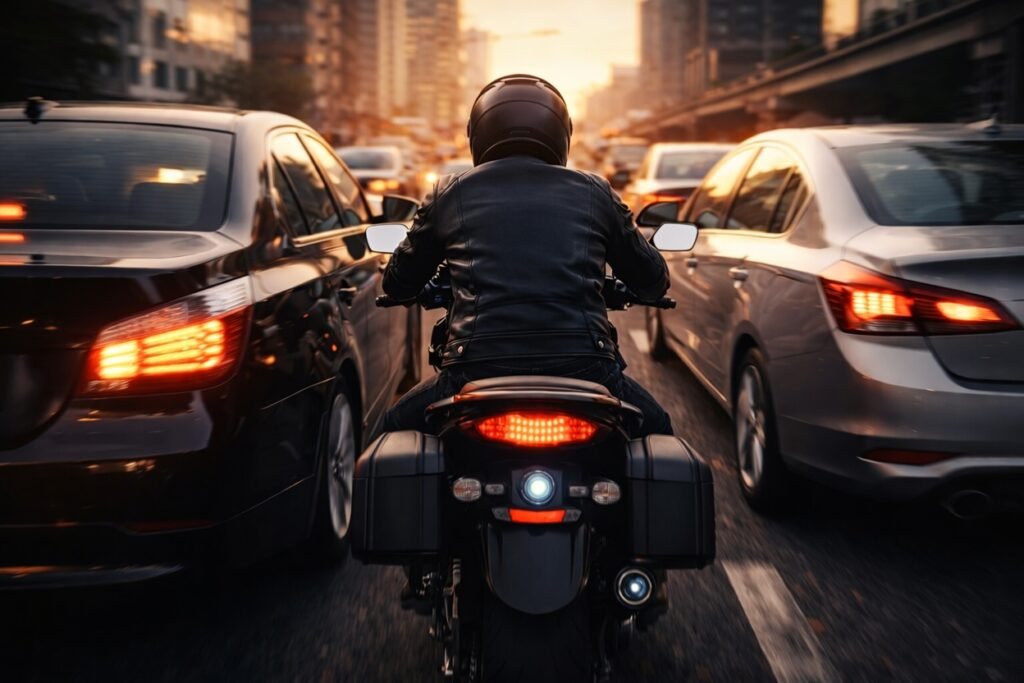
Motorcycling has always carried an element of risk — not just from your own decisions, but from the unpredictability of every other road user. A delivery van cuts you off. A distracted driver rear-ends you at a light. A hit-and-run happens in a parking lot. A tailgater forgets that two wheels require a very different stopping distance. In all these situations, a single front-facing camera only tells half the story — and that’s exactly why choosing the right motorcycle dash cam 2026 matters more than ever.
Dual-channel systems — recording simultaneously from both front and rear — have evolved rapidly. What used to be expensive and unreliable is now practical and widely accessible. Commuters depend on them for evidence in city traffic. Tourers use them for documenting routes and securing parked bikes. Adventure riders capture roads most people will never believe they’ve ridden. If you’re considering a motorcycle dash cam 2026, this guide cuts through the noise and focuses on what actually matters.
Why Dual-Channel Is the Standard for a Motorcycle Dash Cam in 2026
A front-only camera captures what’s ahead, but misses a critical part of the story. Rear-end collisions — often the most serious for riders — go completely unrecorded. Aggressive drivers approach from behind. Hit-and-runs can happen from any angle. Theft or vandalism occurs when you’re not even near your bike.
Dual-channel systems solve this problem by recording two synchronized video streams:
- A wide-angle front camera covering the road ahead
- A rear camera capturing everything behind
Modern systems timestamp and GPS-tag both feeds, making it easy to establish speed, direction, and sequence of events — crucial for insurance and legal cases.
Loop recording ensures storage never fills up. G-sensors automatically lock footage during impacts or sudden braking. Parking mode records activity even when the bike is off. WiFi connectivity allows instant footage access via your phone.
Most importantly, supercapacitors replace traditional batteries, making systems far more reliable in extreme heat — a key advantage in hot climates. GPS tracking, especially 10 Hz systems, records highly accurate speed and movement data, which can be decisive in disputes.
Must-Have Specs When Shopping for a Motorcycle Dash Cam in 2026
Marketing numbers can be misleading — here’s what truly matters.
RESOLUTION
-1080p is enough for basic evidence, but 2K significantly improves plate readability and clarity at distance. Most importantly, both cameras should match. A 2K front and 1080p rear setup weakens your evidence where it matters most — behind you — making it a poor choice for a motorcycle dash cam 2026.
WATERPROOFING AND BUILD
– Look for IP67-rated systems. Aluminium housings are more durable than plastic and handle vibration and heat better.
TEMPERATURE RESISTANCE
-Bikes parked in the sun can exceed 70°C. Supercapacitor systems outperform battery-based ones in these conditions.
IMAGE STABILIZATION (EIS)
– Motorcycles vibrate constantly. Good EIS smooths footage; poor EIS can make it worse.
STORAGE
-Always use high-endurance microSD cards.
- 256 GB minimum for daily riders
- 512 GB for long-distance touring
The Three Best Motorcycle Dash Cam 2026 Systems
The top performers this year are INNOVV K7, Vsysto Dual-Channel, and Thinkware M1 — consistently praised for reliability, video quality, and ease of use.
1. INNOVV K7 — Top-Ranked Motorcycle Dash Cam 2026
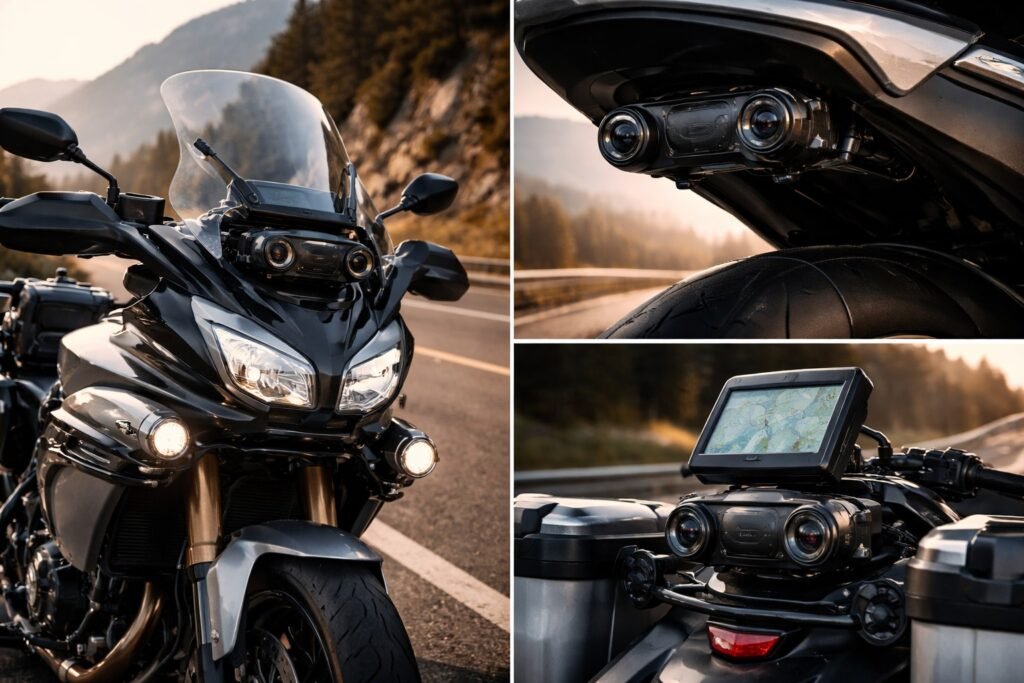
INNOVV has been building dedicated motorcycle systems since 2013, and the K7 is its most advanced model yet. It delivers true 2K resolution on both front and rear cameras — a major advantage.
Using Sony Starvis IMX335 sensors with F1.8 lenses, it captures significantly more light, producing clearer footage in low-light environments.
Key highlights:
- 2K recording on both cameras
- 10 Hz GPS tracking
- Dual-band WiFi
- 24-hour parking mode
- 512 GB storage support
Long-term riders report excellent reliability, even in extreme heat and heavy rain.
Pros: Premium sensors, true 2K/2K, strong GPS, durable build
Cons: EIS reduces resolution, app can be inconsistent, higher price
Best for: Tourers, commuters, and riders who want maximum evidence quality
2. Vsysto Dual-Channel — Best Budget Motorcycle Dash Cam 2026
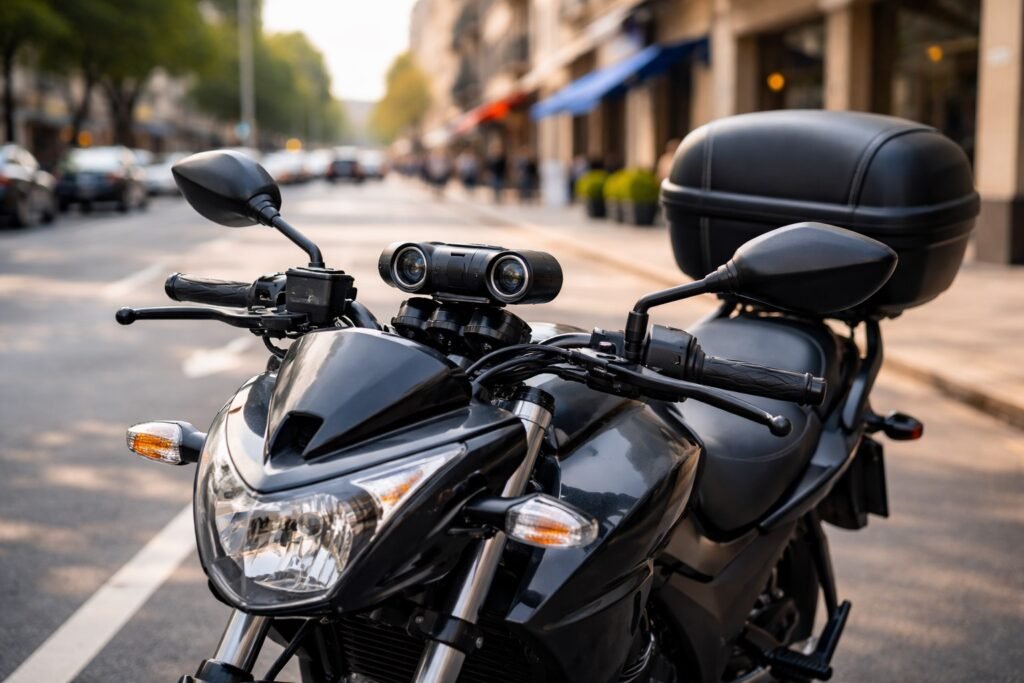
Vsysto offers reliable dual-channel systems at a fraction of the price. Models like the D6L and K26 Pro provide essential features without unnecessary extras.
At $85–$150, you get:
- Dual 1080p recording
- IP67 waterproofing
- WiFi connectivity
- G-sensor protection
Despite the lower price, performance is surprisingly solid, especially in low-light conditions.
Pros: Excellent value, durable, simple installation
Cons: Limited to 1080p, basic stabilization, limited parking features
Best for: Beginners and budget-conscious riders
3. Thinkware M1 — Premium Night Vision Motorcycle Dash Cam 2026
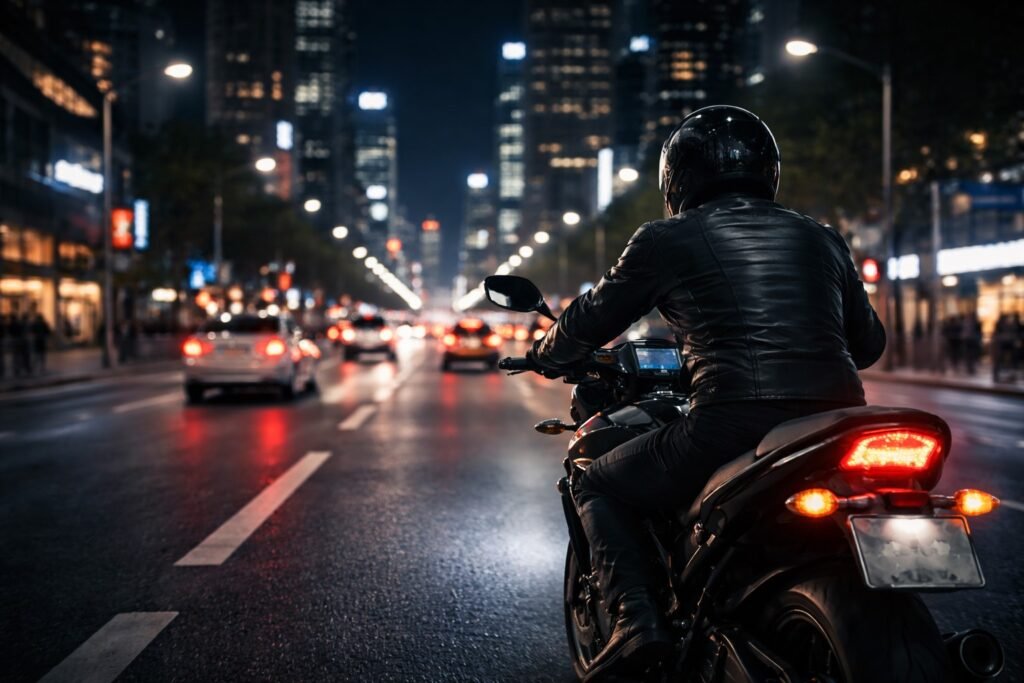
Thinkware brings decades of dash cam experience into the motorcycle space. The M1 focuses heavily on night performance.
Its Sony STARVIS 2 sensors and advanced processing deliver clear footage even in poor lighting conditions.
Key strengths:
- Outstanding night visibility
- Reliable software ecosystem
- Cloud backup support
Pros: Best low-light performance, strong software support
Cons: 1080p only, 64 GB limit, higher price
Best for: Night riders and urban commuters
Side-by-Side: Motorcycle Dash Cam 2026 Comparison
| Feature | INNOVV K7 | Vsysto Dual-Ch. | Thinkware M1 |
|---|---|---|---|
| Resolution | 2K / 2K | 1080p / 1080p | 1080p / 1080p |
| Sensor | Sony IMX335 | Starlight CMOS | Sony STARVIS 2 |
| Stabilization | Advanced EIS | Basic | Front only |
| Waterproof | IP67 | IP67 | IP66 |
| GPS | Built-in | Optional | Built-in |
| Storage | 512 GB | 256 GB | 64 GB |
| Price | $330–$400 | $85–$150 | $300–$400 |
Installation and Maintenance for Your Motorcycle Dash Cam 2026
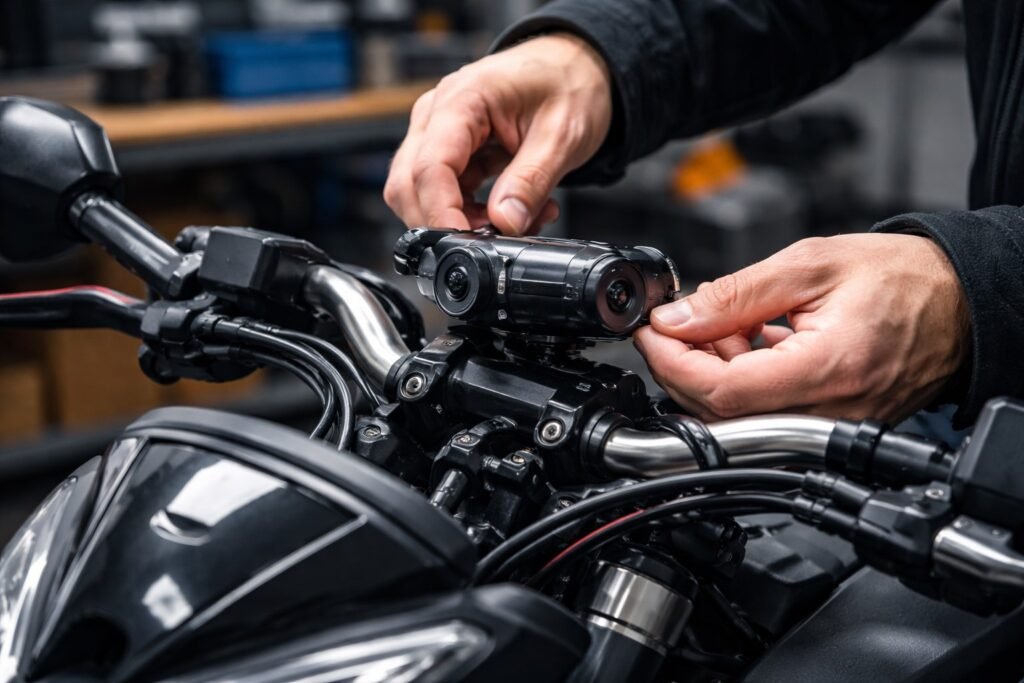
Position cameras carefully before routing cables.
- Front: clear forward view without obstruction
- Rear: centered for maximum coverage
Use proper wiring for parking mode, including a low-voltage cutoff to protect your battery.
Maintenance tips:
- Clean lenses regularly
- Format memory cards monthly
- Replace cards every 12–18 months
- Always check recording before riding
Frequently Asked Questions — Motorcycle Dash Cam 2026
- Are dual-channel systems legal?
-Yes, in most regions for personal and insurance use. - When should I use EIS?
-Enable it on rough roads or high-vibration bikes. - Which handles heat best?
-Supercapacitor-based systems like INNOVV and Vsysto perform best. - How much storage do I need?
-At least 256 GB — 512 GB is ideal for long rides. - Do they help with insurance claims?
-Yes — they often resolve disputes much faster.
Final Verdict: The Best Motorcycle Dash Cam 2026
Three riders, three strong choices:
- INNOVV K7 — the best overall motorcycle dash cam 2026, offering premium features and full 2K coverage
- Vsysto Dual-Channel — the best value option with reliable performance at a low price
- Thinkware M1 — the best for night riding with superior low-light clarity
No matter which you choose, proper installation and maintenance are essential. A good system doesn’t just record your ride — it protects you when it matters most.
Ride smart. Record everything. Ride with confidence