
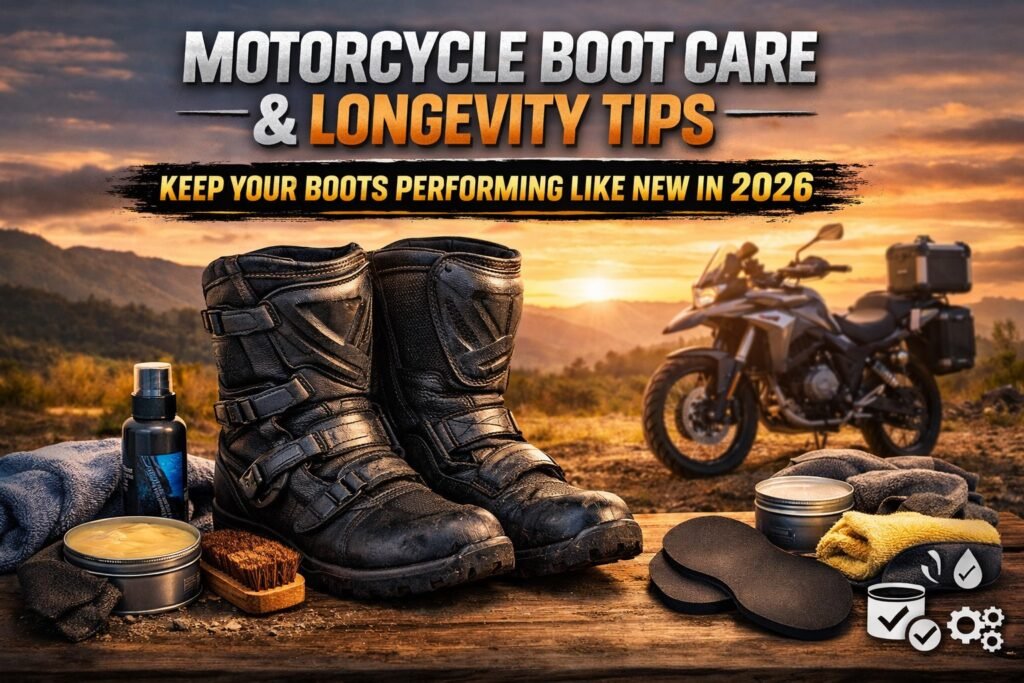
Master Motorcycle Boot Care to Protect Your Investment and Your Feet
Hey riders! Your motorcycle boots are more than just footwear—they’re critical safety gear that protect your feet from impacts, road rash, ankle twists, and extreme weather conditions every time you ride. But to keep that protection reliable (CE-rated armor, torsional rigidity, and waterproofing intact), regular motorcycle boot care is essential.
Proper motorcycle boot care prevents cracking, stiffness, reduced breathability, and premature wear. With consistent maintenance, many high-quality boots can last 5–10+ years, compared to only 2–4 years without proper care.
In this detailed guide, you’ll learn proven cleaning methods, conditioning techniques, waterproof membrane maintenance, inspection routines, storage habits, and professional longevity tips. These motorcycle boot care practices are based on manufacturer recommendations from trusted brands like Gore-Tex, Alpinestars, TCX, Sidi, and Daytona, along with real-world rider experience.
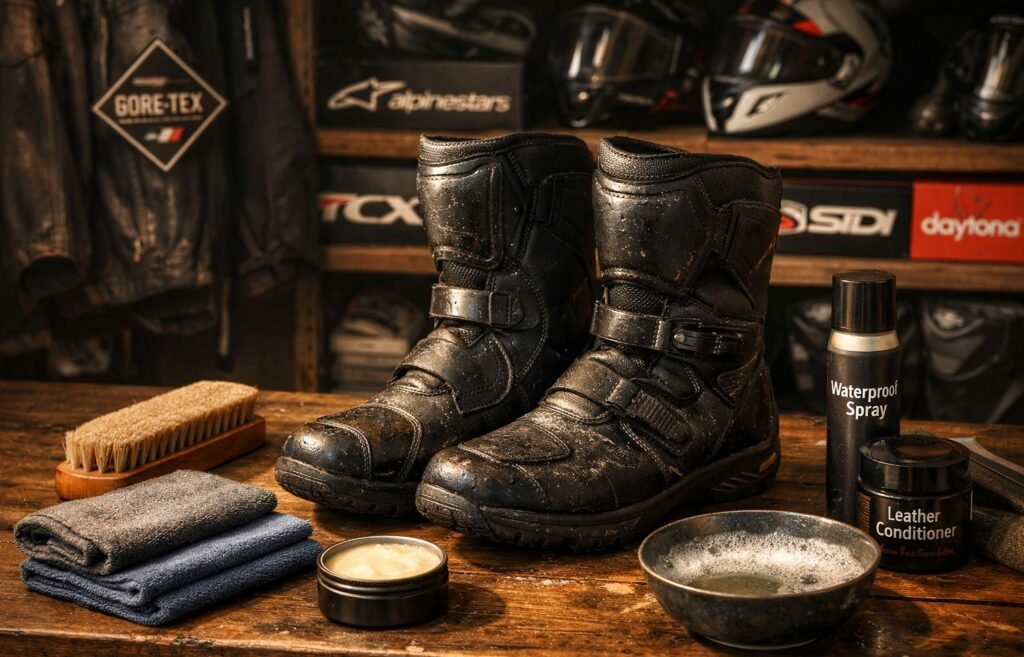
Let’s make sure your boots stay tough, comfortable, and crash-ready.
Why Consistent Motorcycle Boot Care Makes a Huge Difference
Motorcycle boots face brutal daily conditions, including:
- Road grime, mud, and desert dust
- Rain and moisture exposure
- Engine heat and friction
- UV sunlight damage
- Crash and abrasion stress
Without proper motorcycle boot care, several problems develop:
- Dirt buildup clogs ventilation and reduces airflow
- Leather dries, cracks, and loses impact resistance
- Waterproof coatings fail, causing boots to soak and feel clammy
- Structural protection weakens over time
Studies and rider safety reports show that boots receiving regular motorcycle boot care maintain better abrasion resistance and structural integrity, which may reduce foot and ankle injury severity during accidents.
Plus, properly maintained boots:
- Smell better
- Fit better
- Remain more comfortable on long rides
- Maintain resale value
Spending just 10–20 minutes every few rides can dramatically extend your boot lifespan and riding safety.
Step-by-Step Cleaning Routine for Motorcycle Boot Care
Cleaning is the foundation of effective motorcycle boot care.
1. Prep and Remove Loose Debris
Start by tapping boots together to remove loose mud and dirt. Use a soft brush or microfiber cloth to clean around:
- Buckles
- Soles
- Stitching and seams
- Gear-shift contact areas
Avoid high-pressure water hoses. They can force moisture into seams and internal armor layers.
2. Gentle Wash
Mix lukewarm water with mild soap such as:
- Baby shampoo
- Saddle soap (for leather boots)
- Dedicated cleaners like Nikwax Footwear Cleaning Gel
Use a sponge or soft brush and scrub gently using circular motions. Focus on high-contact areas like:
- Toe boxes
- Heel zones
- Gear lever contact panels
Never use bleach, fabric softeners, or harsh detergents. These damage protective coatings and membranes.
3. Rinse and Dry Correctly
Rinse thoroughly with clean water. Soap residue can weaken materials over time.
- Pat dry using a towel
- Remove insoles and laces
- Air dry in shaded, ventilated spaces
- Maintain room temperature drying
Never use:
- Radiators
- Hair dryers
- Direct sunlight
- Ovens
Heat causes leather cracking, synthetic warping, and waterproof membrane failure.
Pro Tip: For heavy mud, let boots dry first, then brush it off to avoid scratching materials.
Conditioning Leather Boots: Essential Motorcycle Boot Care
Leather requires regular nourishment to maintain flexibility and abrasion resistance.
Conditioning Frequency
Perform leather conditioning every 3–6 months, or more frequently in hot or dry climates.
Choose the Right Conditioner
Recommended breathable conditioners include:
- Lexol
- Bick 4
- Leather Honey
- Nikwax Conditioner for Leather
For Gore-Tex lined boots, avoid heavy oils like mink oil or Sno-Seal. Use membrane-safe options such as Daytona Special Leather Cream or Revivex.
Application Process
- Clean boots first
- Apply a thin conditioner layer using a soft cloth
- Allow absorption for 10–30 minutes
- Buff off excess product
Proper conditioning keeps leather pliable, prevents cracking, and preserves structural protection.
Reproofing Waterproof & Vented Boots: Advanced Motorcycle Boot Care
Waterproof boots rely on internal membranes like Gore-Tex, Drystar, or Drytex. However, outer coatings called DWR (Durable Water Repellent) are equally important.
When to Reproof
Reapply waterproof treatment when water stops beading on the surface. Typically every 6–12 months.
Best Reproofing Products
Use water-based treatments such as:
- Nikwax Fabric & Leather Proof
- Grangers Performance Repel
- Revivex Waterproofing Spray
Apply evenly to clean, dry boots and allow natural air drying.
Avoid wax-based waterproofing on membrane boots, as it blocks breathability.
Caring for Vented Boots
- Keep perforations clear of dust
- Avoid over-conditioning vent areas
- Brush vents regularly
This ensures airflow remains effective during hot weather riding.
Sole and Tread Maintenance in Motorcycle Boot Care
Soles provide grip, shock absorption, and stability. They often wear out before upper materials.
Inspect Soles Regularly
Look for:
- Uneven wear
- Reduced tread depth
- Peeling or separation
Many premium brands like Sidi and Daytona offer sole replacement services. Resoling can extend boot life significantly.
Zippers, Buckles, and Hardware Maintenance
Mechanical components are frequently overlooked in motorcycle boot care.
Maintenance Tips
- Clean zippers with soft brushes
- Lubricate zippers using silicone-based lubricant
- Tighten or replace loose screws on buckles
- Inspect Velcro closures for debris buildup
Proper hardware maintenance prevents sudden failures during rides.
Structural Safety Inspections: A Critical Motorcycle Boot Care Step
Even well-maintained boots eventually lose protective ability.
Check regularly for:
- Cracked internal armor
- Loose ankle support structures
- Broken stitching
- Loss of torsional rigidity
- Flattened impact padding
If boots feel excessively flexible or unstable, replacement is necessary—even if exterior condition looks good.
Climate-Specific Motorcycle Boot Care Tips
Hot and Desert Riding (Very Important)
Heat and UV exposure rapidly dry leather and adhesives.
- Condition leather more frequently
- Avoid storing boots inside hot garages or vehicles
- Use UV-protective leather conditioners
Wet and Humid Riding
- Prioritize drying and ventilation
- Use moisture absorbers like cedar inserts
- Increase waterproof reproofing frequency
Smart Storage & Daily Habits for Maximum Longevity
Storage is a vital part of motorcycle boot care.
Best Storage Practices
- Store in cool, ventilated spaces
- Use boot trees or cedar inserts
- Avoid sealed plastic containers
- Rotate multiple boot pairs when possible
Daily Maintenance Habits
- Wipe boots after rides
- Air out interiors
- Remove moisture immediately
For odor control:
- Baking soda overnight
- Activated charcoal inserts
- Cedar shoe trees
Crash Recovery Motorcycle Boot Care
After any crash or slide:
- Inspect boots internally and externally
- Check armor alignment
- Inspect stitching and sole bonding
- Replace boots showing structural compromise
Boots can absorb impact damage that isn’t visible externally.
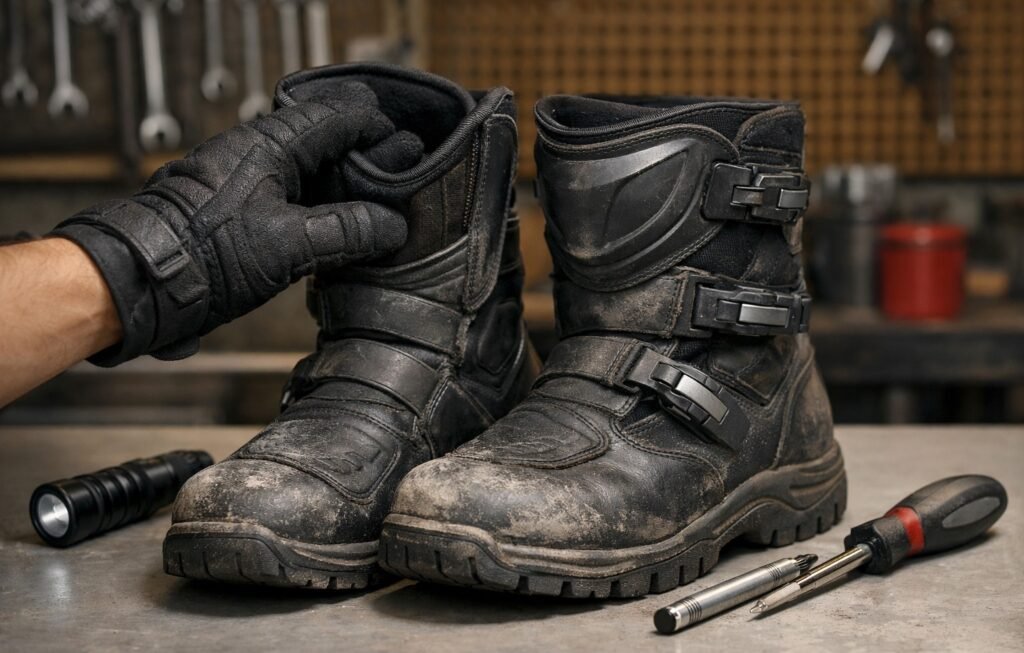
Maintenance Schedule Checklist for Motorcycle Boot Care
After Every Ride
- Wipe off dirt and dust
- Air dry and ventilate
Monthly
- Inspect soles, armor, stitching, and hardware
- Clean vents and zippers
Every 3–6 Months
- Condition leather boots
- Perform deep cleaning
Every 6–12 Months
- Reapply waterproof treatments
- Inspect structural rigidity
Common Mistakes to Avoid in Motorcycle Boot Care
- Machine washing boots
- Using household cleaners
- Applying heavy oils to membrane boots
- Drying with direct heat
- Ignoring waterproof reproofing
- Storing boots while damp
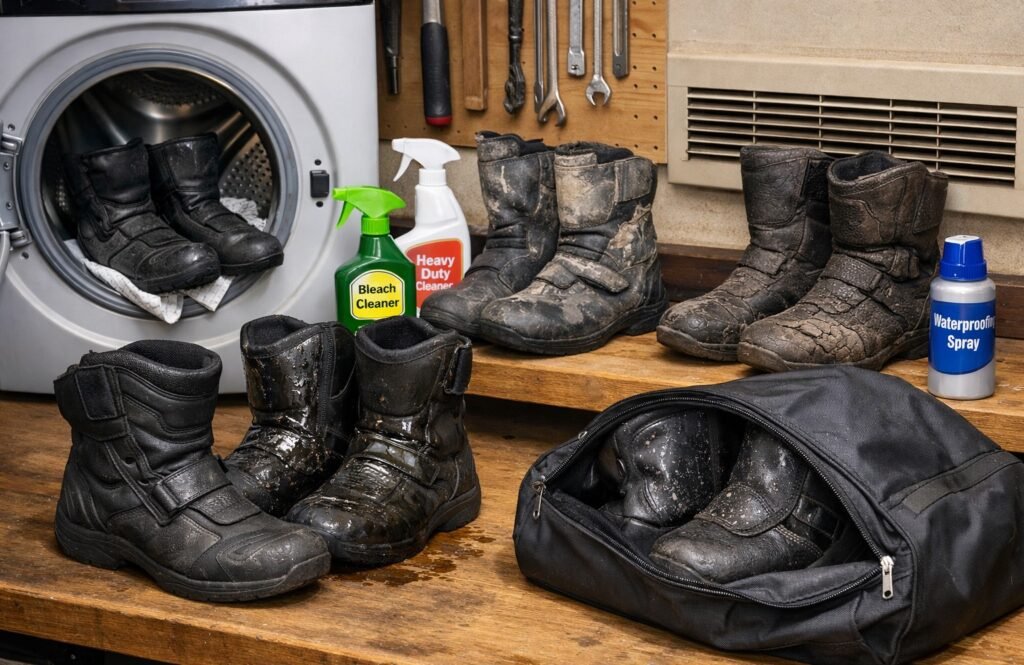
These mistakes dramatically reduce lifespan and safety performance.
FAQ: Frequently Asked Questions About Motorcycle Boot Care
Q: How often should I perform motorcycle boot care cleaning and conditioning?
Clean after dirty or wet rides. Condition leather every 3–6 months and reproof waterproofing every 6–12 months.
Q: Can I use regular shoe polish or household products for motorcycle boot care?
Neutral polish is acceptable for cosmetic shine, but avoid heavy or colored polish. Household cleaners should never be used.
Q: What’s the safest way to dry wet boots during motorcycle boot care?
Air-dry naturally in shaded, ventilated areas with insoles removed.
Q: Do synthetic boots require less motorcycle boot care?
They require less conditioning but still need cleaning, waterproof maintenance, and proper drying.
Q: How do I know when to replace boots despite good motorcycle boot care?
Replace boots when armor cracks, soles wear excessively, stitching fails, or after major crashes.
Q: Can saddle soap be used safely?
Yes, for leather uppers only. Always rinse thoroughly and follow with breathable conditioner.
Q: Can I waterproof non-waterproof motorcycle boots?
Yes, DWR sprays improve water resistance, though they cannot match true waterproof membranes.
Final Thoughts: Make Motorcycle Boot Care a Riding Habit
Your motorcycle boots are designed to endure extreme riding conditions, but they perform best with consistent motorcycle boot care.
By following proper cleaning, conditioning, waterproof maintenance, inspection routines, and smart storage, you’ll preserve safety features, comfort, and appearance for years.
Motorcycle boot care doesn’t require much time, but it delivers massive long-term benefits. Treat your boots well, and they will protect your feet ride after ride, season after season.
Ride safe, stay dry, and enjoy every mile.
NOTE: Always check your specific boot’s care label/manufacturer instructions, as recommendations can vary slightly by brand/model.
Готовя отдых в Таиланде, особенно на Пхукете или Самуи, критически важно понимать, сколько стоит турпакет в Таиланд и сколько брать денег для комфортного отдыха на 10 дней. Например, цены на найм байка на Пхукете без прав и цена экскурсий, включая поездку на пароме с Пхукета на Самуи, очень варьируются. Рынок Патонг и шопинг-центры на Патонге заинтересуют разнообразием товаров и экзотических фруктов, а массажные салоны предлагают услуги разных категорий, охватывая массаж с хэппи эндом. Чтобы не потеряться в транспорте и трансферах, стоит узнать, как находить путь в аэропорту Пхукета и как добраться от Пхукета до Самуи своими силами, например, на такси или пароме. Подробнее актуальную информацию можно найти тут такси пхукет самуи
Что касается времени поездки, оптимально ехать на Пхукет и в другие части Таиланда в сезон с ноября по апрель, когда условия наиболее хорошая. Безопасность тоже значима: стоит изучить правила въезда в Таиланд для россиян в 2025 году, а также иметь в виду о возможных опасных животных и читать отзывы туристов об отдыхе в Андманде и других районах. Любителям природы и динамичного отдыха стоит побывать на пляжи Рейли Бич и заниматься снорклингом, чтобы увидеть пёстрых рыб Таиланда. Необходимо также планировать бюджет, рассматривая цены на питание, массаж, экскурсии и замену валюты – самый прибыльный обменник на Пхукете поможет предотвратить лишних затрат.