

For the dedicated two-wheeled commuter, every piece of gear plays a real role in how safe, comfortable, and enjoyable the ride actually feels. Yet one item is still surprisingly easy to overlook: motorcycle commuting gloves. They aren’t just another accessory you grab on the way out the door. They’re what you rely on every time you twist the throttle, squeeze the brake, or react to the unexpected. Anyone who’s ridden through cold mornings, sudden rain, or long traffic-filled days knows how much the right pair of gloves can matter. Whether you’re filtering through London traffic, covering long stretches of Canadian highway, or commuting daily across European city streets, understanding what makes a good pair of motorcycle commuting gloves isn’t optional—it’s part of riding smart.
Motorcycle commuting gloves are far from a one-size-fits-all solution. A pair that feels just right on a dry summer ride in California can quickly become useless on a damp, chilly morning in Manchester or during a frosty commute through Quebec. Most riders only realise this after a few uncomfortable—or outright miserable—rides. This guide is built to help you avoid that trial-and-error phase, giving you the practical knowledge needed to choose gloves that actually match your climate, riding habits, and expectations, so your daily commute feels easier, safer, and a lot more enjoyable.
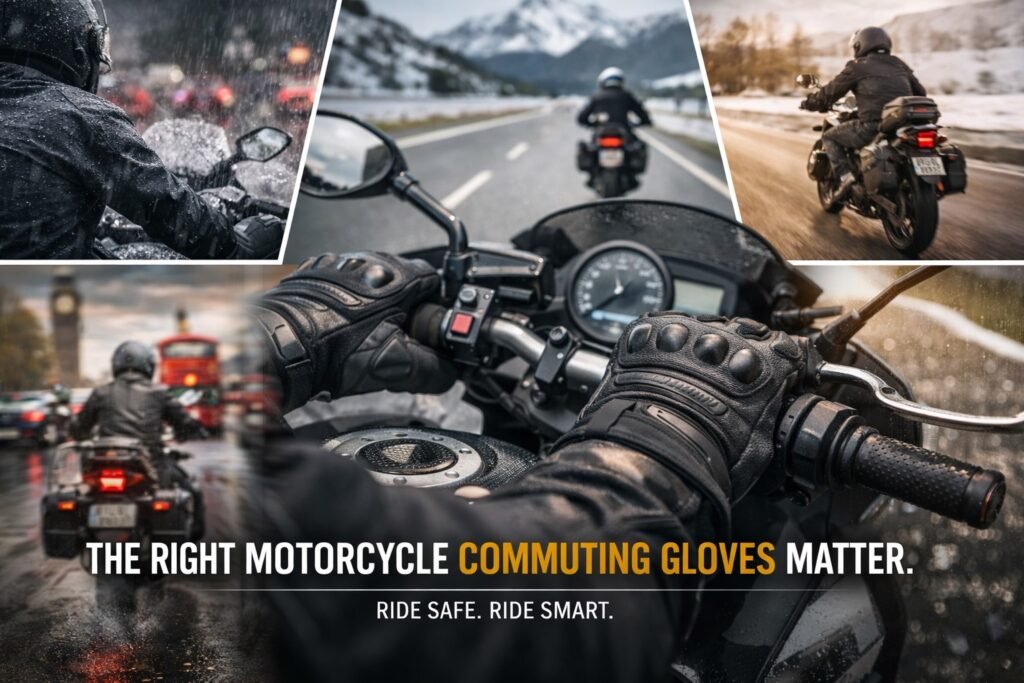
Why Your Motorcycle Commuting Gloves Are Non-Negotiable
Your hands are incredibly vulnerable. In any accident, instinct takes over and most riders reach out to break the fall. Without proper protection, that split-second reaction can result in serious injuries, from road rash and fractures to long-term nerve damage that affects everyday life off the bike as well. Quality motorcycle commuting gloves greatly reduce these risks, and many riders only realise their importance after seeing—or experiencing—what happens without them.
Beyond crash protection, there’s the reality of the daily grind. Clutch and brake levers, throttle input, indicator switches, mirror adjustments—your hands never really get a break. Poorly fitting or unsuitable motorcycle commuting gloves can quickly cause fatigue, blisters, numb fingers, and small distractions that add up in traffic. The right pair does the opposite, improving comfort and control while shielding your hands from wind chill, rain, harsh sun, and the constant spray of road debris that comes with everyday commuting.
Deciphering the Anatomy of Superior Gloves
To truly understand what makes a pair of motorcycle commuting gloves stand out, we need to dissect their core components.
1. Material Matters: The Foundation of Protection
- Leather: Full-grain leather (cowhide, goatskin, or kangaroo) offers unparalleled abrasion resistance, tear strength, and a sublime tactile feel. Goatskin is known for its suppleness.
- Pros: Superior feel, exceptional abrasion protection, moulds to hand.
- Cons: Poor ventilation (unless perforated), requires weather treatment.
- Advanced Textiles: Utilise high-performance synthetics like Cordura, Kevlar, and SuperFabric. They excel in waterproofing and breathability.
- Pros: Highly flexible, great waterproofing, lightweight.
- Cons: Can’t match premium leather’s abrasion protection without heavy reinforcement.
- Hybrid: Many premium motorcycle commuting gloves blend leather in high-impact zones (palms, knuckles) with textiles elsewhere for maximum versatility.
2. Crucial Safety Features (Protection)
| Feature | Function | Why It Matters for Commuting |
| Knuckle Armour | Hard or soft shields (Carbon Fibre, D3O) over the knuckles. | Absorbs and dissipates blunt impact energy. |
| Palm Sliders | Hard thermoplastic patches on the heel of the hand. | Crucial. Allows the hand to slide instead of catching, preventing scaphoid fractures. |
| Finger Bridges | Connects the pinky and ring finger. | Prevents finger separation/dislocation in a high-side or slide. |
| CE Certification | Look for EN 13594 rating (Level 1 or Level 2). | Guarantees the glove has met stringent European safety standards. |
3. Comfort & Ergonomics
- Pre-Curved Design: Reduces hand fatigue by matching your hand’s natural resting position on the bars.
- Seamless Interiors: High-quality gloves use external or flat seams to prevent pressure points and blisters.
- Touchscreen Compatibility: Essential for checking GPS or phones without removing your motorcycle commuting gloves.
- Visor Wiper: A small strip of soft material on the thumb for clearing rain from your helmet visor.
Weather Versatility: Adaptability is Key
The best motorcycle commuting gloves adapt to the elements:
| Glove Type | Primary Climate | Key Feature | Commuting Con |
| Summer/Mesh | Hot (20° to 35 °C +) | Maximum airflow, short cuff. | Useless in rain or cold. |
| All-Season/Touring | Mild (10°C to 25°C) | Waterproof Membrane (Gore-Tex). | slightly bulky, less airflow than mesh. |
| Winter/Heated | Cold (Below 10°C or freezing) | Heavy insulation + 12V electric heating. | Highest cost, reduced dexterity. |
Real-World Rider Commentary
Liam M. (London, UK): “I commute about 40 miles a day, no matter the weather. After one too many soaked rides, I finally invested in a pair of Gore-Tex gauntlets. They weren’t cheap, but being able to hold the bars confidently in heavy rain—and arrive without numb, pruney fingers—made the decision easy in hindsight. If there’s one thing I’ve learned, it’s never to compromise on waterproof motorcycle commuting gloves.”
Marc A. (Toronto, Canada): “Spring and fall here can be all over the place temperature-wise, sometimes on the same ride. I run hybrid leather and textile gloves with D3O armour, and that balance works well for commuting. I get solid abrasion protection on the palms, but the gloves still feel flexible and breathable enough for daily use. Around here, durable motorcycle commuting gloves aren’t a luxury—they’re a necessity.”
Top 3 Recommended Motorcycle Commuting Gloves
These models are highly respected across the US, Canada, and European markets, making them ideal suggestions for the article’s global audience.
1. Summer Commuter King: Alpinestars SMX-2 Air Carbon V2
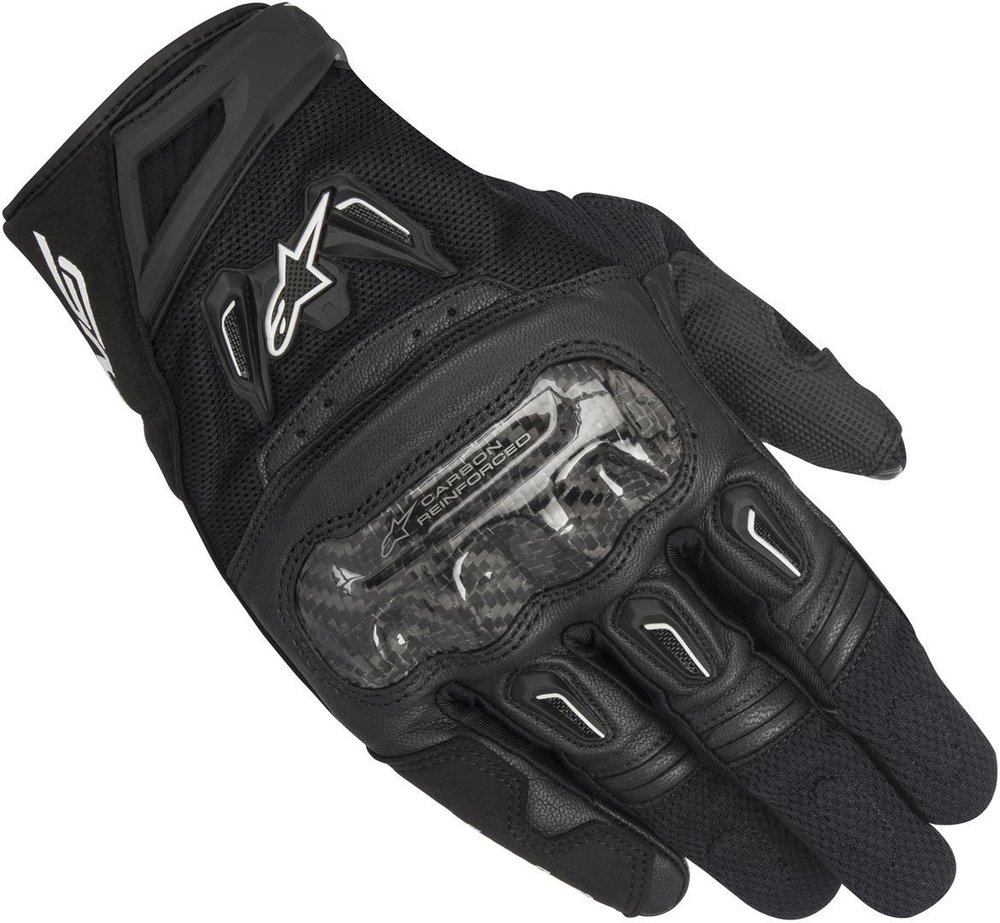
- Best For: Hot Weather, urban agility.
- Why it Excels: Offers maximum airflow via 3D mesh and perforated leather, combined with a carbon fibre knuckle protector. This glove perfectly balances light weight, high dexterity, and essential protection—ideal for navigating city traffic safely.
- Approximate Price: $109 USD / £70-99 GBP / €80-100 EUR
2. All-Season Workhorse: Held Air N Dry II GTX
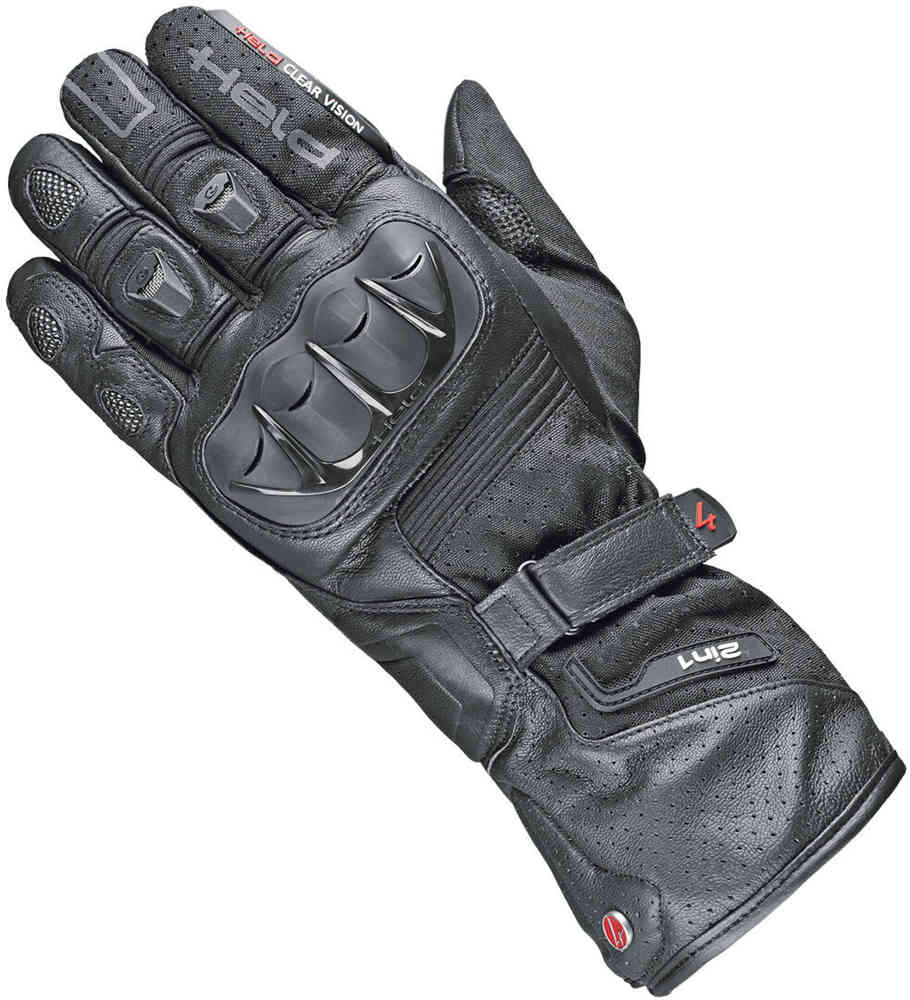
- Best For: All-Weather, year-round versatility (excluding extreme cold).
- Why it Excels: Features the Gore-Tex 2-in-1 technology. You have two chambers: one for full waterproofing and warmth, and a second unlined chamber for ventilation and superior feel. This allows a rider to instantly adapt their motorcycle commuting gloves to changing conditions without stopping.
- Approximate Price: $299 USD / £200-230 GBP / €250-280 EUR
3. Extreme Cold Conqueror: Gerbing 12V Heated GT/XR Series

- Best For: Winter Commuting (temperatures near or below freezing).
- Why it Excels: Provides 12V power (hard-wired to the bike), offering unlimited, consistent heat through the entire hand. This is critical for preventing numbness and maintaining full control—a non-negotiable safety feature for cold-weather motorcycle commuting gloves.
- Approximate Price: $160 – $200 USD / £130-180 GBP / €150-200 EUR (Note: controller/wiring may be separate).
The Final Word on Purchasing Your Motorcycle Commuting Gloves
Choosing the best motorcycle commuting gloves is a personal decision shaped by where you ride, how far you travel each day, and what conditions you regularly face. What works perfectly for one rider might be completely wrong for another, and that’s something most commuters only learn after a few trial runs.
A simple rule worth remembering is this: protection first, comfort second, style third—everything else comes after.
Fit is everything. A good glove should feel snug without restricting movement. If it’s too tight, circulation suffers and your hands get cold fast; too loose, and you lose the precise control you need in traffic. A quick test is to make a full fist—nothing should pinch, bunch up, or feel awkward.
Invest wisely. Your hands control the bike’s most critical functions, and cutting corners here is false economy. Many riders will tell you the same thing: the sting of paying for quality fades quickly, but the regret of cheap gear can last a lifetime.
When you prioritise quality materials, well-placed protection—especially palm sliders—and weather-appropriate features, you end up with motorcycle commuting gloves you can rely on day after day. The right pair doesn’t just improve comfort; it becomes a piece of safety gear you’re genuinely grateful for every time you pull away from the curb.