
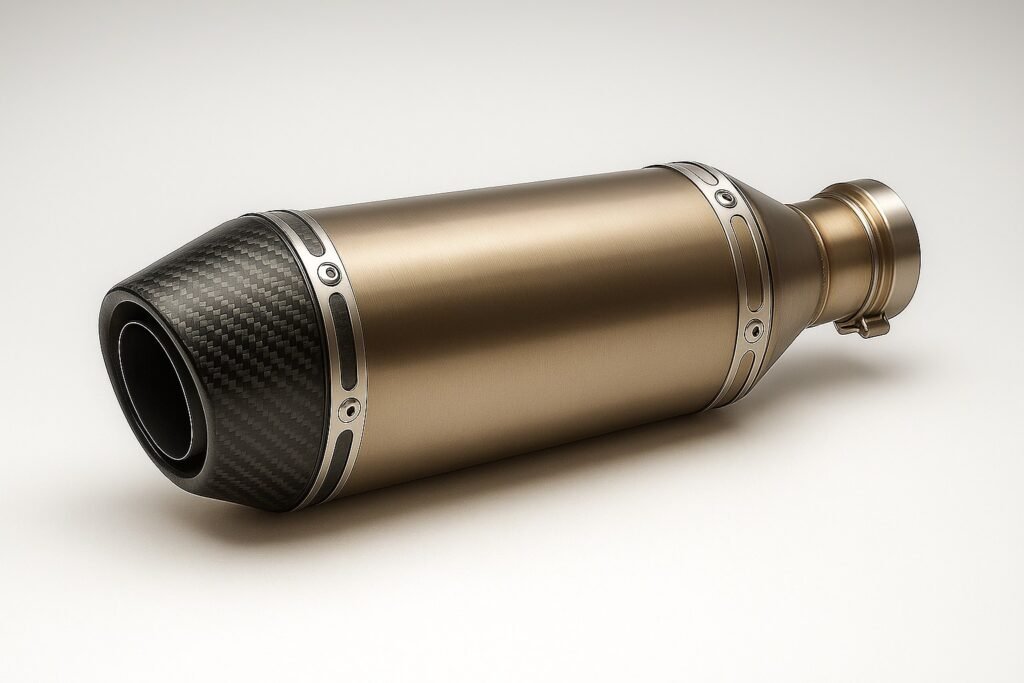
When you upgrade your motorcycle exhaust, the material is one of the most important things to consider. The type of material you select directly affects how your bike looks, sounds, and performs.
This guide will help you understand the three most common motorcycle exhaust materials: titanium, carbon fiber, and stainless steel. Knowing the differences will allow you to pick the one that fits your ride best.
1. Titanium Exhaust: Lightweight and Powerful Motorcycle Exhaust
The titanium exhaust is a top choice for riders who want high performance and low weight. Titanium makes your bike lighter, which helps it handle better on the road or track. It also resists heat and keeps its clean look even after long rides.
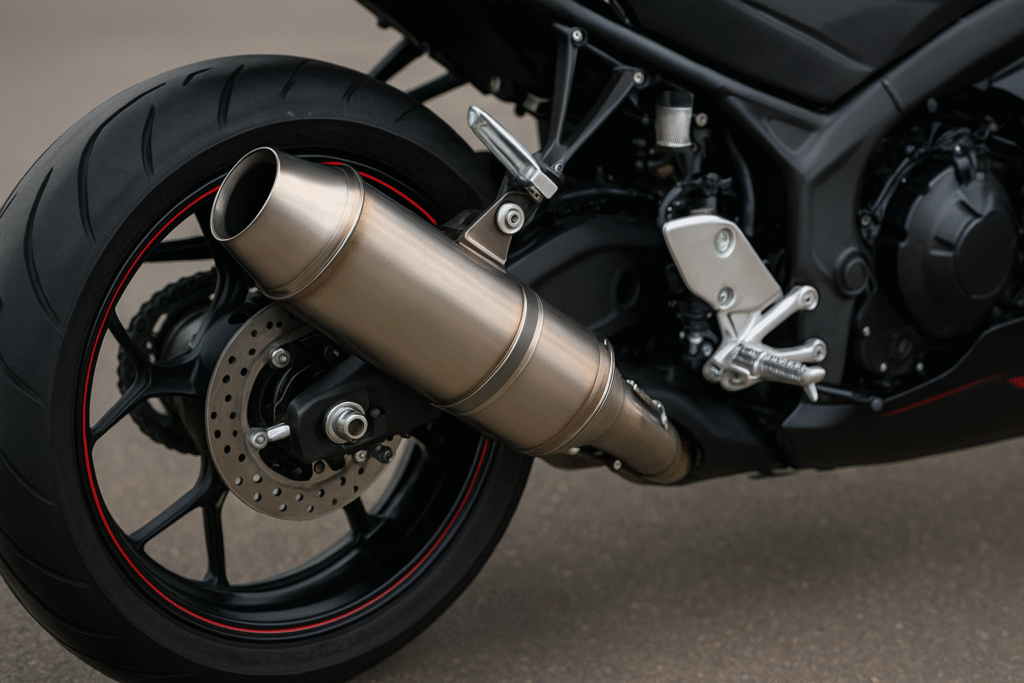
Benefits of titanium motorcycle exhaust material:
- Lighter than stainless steel
- Handles high heat without damage
- Strong and long-lasting
- Gives your bike a premium racing look
Drawbacks:
- Costs more than other materials
- Harder to repair if damaged
Best for: Riders who want maximum performance and race-level durability from their motorcycle exhaust material.
2. Carbon Fiber Exhaust: Stylish and Sporty
The carbon fiber exhaust stands out with its deep tone and eye-catching design. Many riders love this motorcycle exhaust material because it gives a sporty feel while keeping weight low. It’s perfect for riders who want performance and style together.
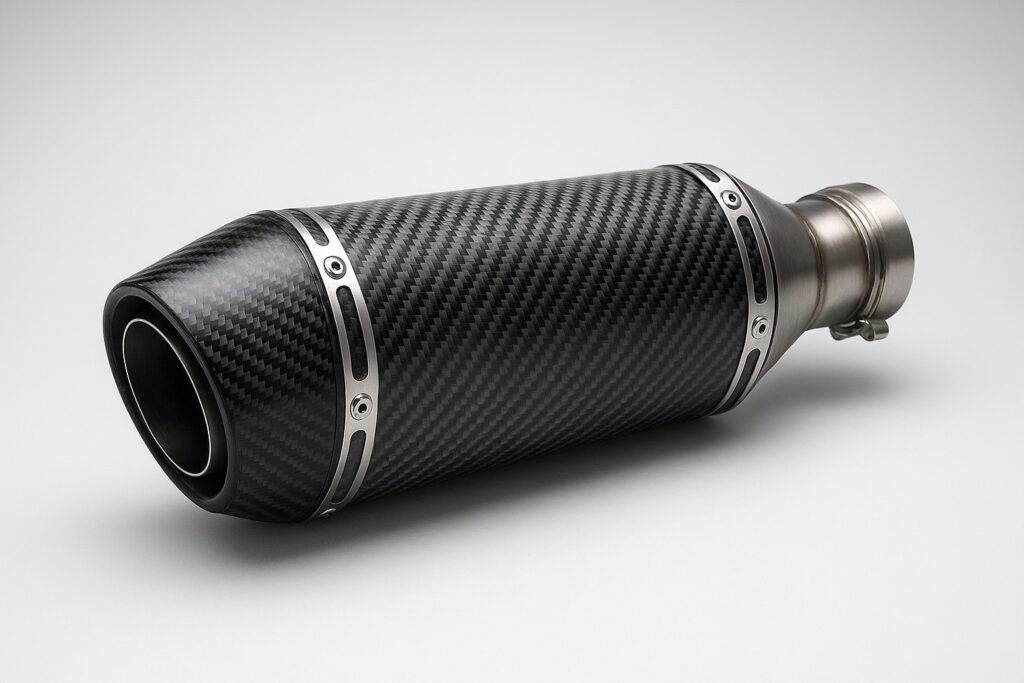
Benefits of carbon fiber motorcycle exhaust material:
- Very lightweight
- Looks great on sportbikes
- Produces a rich, deep sound
- Resistant to rust and corrosion
Drawbacks:
- Can crack if it gets too hot
- Not ideal for bikes that run at very high temperatures
Best for: Riders who value style, sound, and lightweight design.
3. Stainless Steel Exhaust: Durable and Affordable Motorcycle Exhaust Material
The stainless steel exhaust is a popular option because it’s strong, affordable, and easy to maintain. This exhaust material can handle daily use and different weather conditions without rusting.
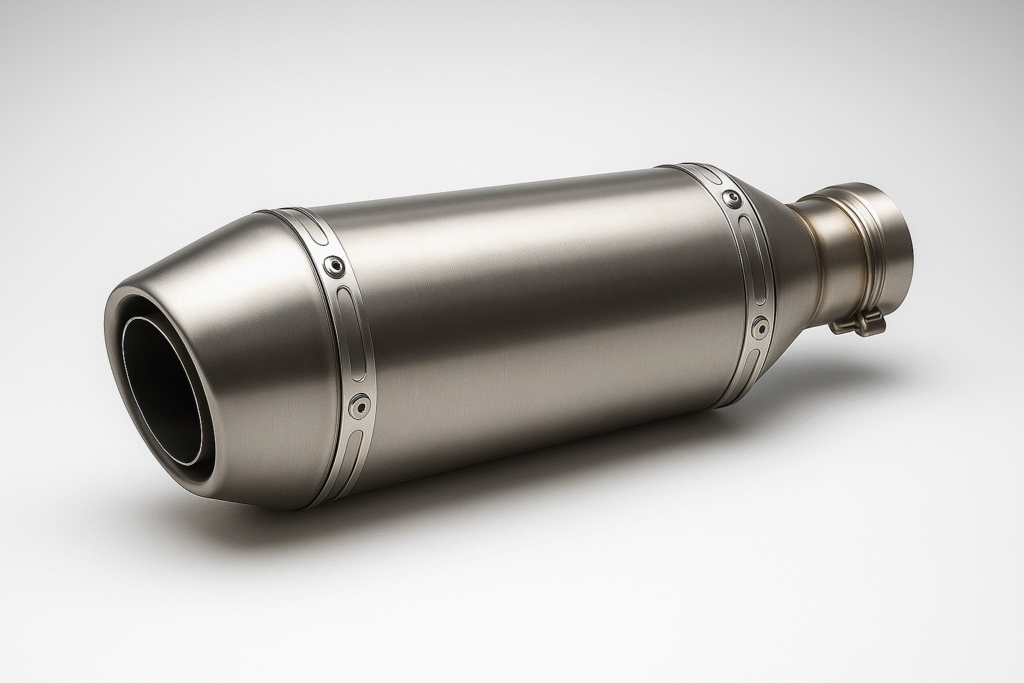
Benefits of stainless steel exhaust material:
- Strong and reliable
- Easy to repair or weld
- Budget-friendly
- Handles weather and corrosion well
Drawbacks:
- Heavier than titanium or carbon fiber
- Can change color with heat
Best for: Riders who need a durable, low-maintenance, and budget-friendly
Which Exhaust Material Should You Choose?
| Riding Style | Best Material | Reason |
|---|---|---|
| Racing or Track | Titanium | Light and powerful |
| Street or Show Bike | Carbon Fiber | Stylish and sporty |
| Daily Commuting | Stainless Steel | Strong and affordable |
The right motorcycle exhaust material depends on your priorities — performance, style, or budget.
Final Thoughts on Exhaust Materials
Choosing the right exhaust material changes how your bike performs, looks, and sounds. For top performance, choose titanium. Meanwhile, if you value sleek style and deep sound, carbon fiber is the way to go. On the other hand, for long-lasting strength and low maintenance, stainless steel is your best choice.
Your exhaust is more than a pipe — it’s your bike’s voice and power. Pick the motorcycle exhaust that matches your ride and enjoy every throttle twist.
Nice one
It is perfect website and very professionally
Pingback: Best Motorcycle Jackets 2025: Top Picks for Safety and Comfort