
Affiliate Disclosure: This guide features independent, hands-on reviews. If you buy a product through the Amazon links below, as an Amazon Associate I earn from qualifying purchases at no absolute extra cost to you. This helps support the workshop and keeps the site running. Thank you for your support!
Nothing tells you an oil change was worth doing like the first clean shift into second gear. The gearbox feels smoother, the engine sounds quieter, and the clutch hooks up exactly as it should. When looking for the best motorcycle engine oil, you want to avoid hard shifts, clutch slip, extra engine noise, and rough gear engagement.
I’ve rebuilt engines that should have lasted another 40,000 miles but didn’t because they spent years running poor-quality oil or the wrong specification. I’ve also replaced wet clutches ruined by automotive oils packed with friction modifiers. Finding the best motorcycle engine oil is the smartest way to avoid an expensive repair.
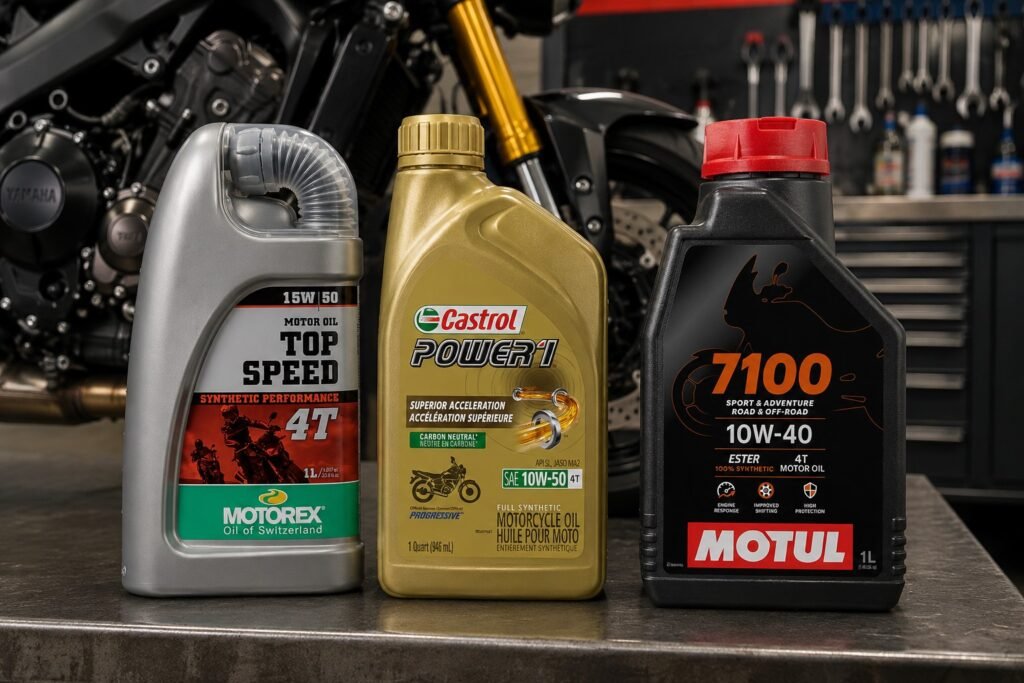
Quick Summary: Oil Types by Riding Style
| Riding Style | Focus Goal | Key Viscosity | Our Top Selection |
| Daily Commuting | Fights fuel dilution and moisture | 10W-40 | Quality Semi-Synthetic |
| Track & Sportbike | Resists extreme shear forces | 10W-40 / 10W-50 | Premium Full Synthetic |
| Cruiser & V-Twin | Heavy-duty protection for air-cooled heat | 20W-50 | Heavy-Weight Synthetic |
The Anatomy of Motorcycle Oil
Motorcycles place far greater demands on engine oil than most cars. In many bikes, the engine, gearbox, and wet clutch all share the same oil supply. Every time you accelerate, shift gears, or sit in traffic on a hot afternoon, that single fluid has to cool, lubricate, clean, and protect three different systems at once. That is why finding the best motorcycle engine oil every riding requires looking past clever marketing claims.
JASO Ratings Explained
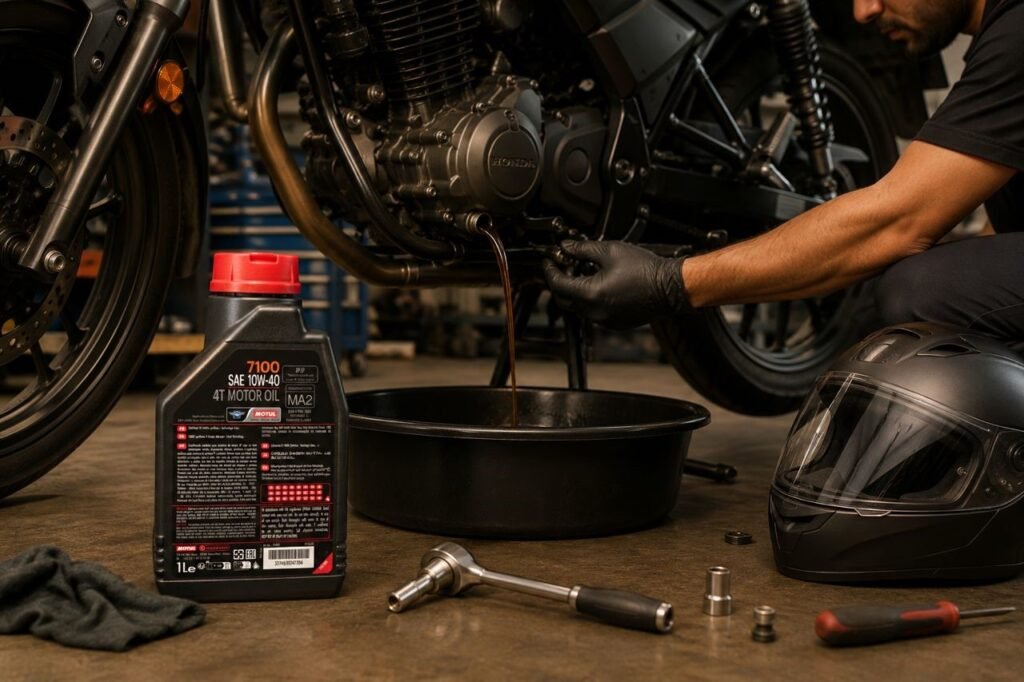
If you own a motorcycle with a manual transmission, you’ve probably seen JASO (Japanese Automotive Standards Organization) printed on the bottle. This rating is the most important factor when choosing the best motorcycle engine oil for a wet clutch:
- JASO MA / MA2: These provide the friction needed for proper clutch engagement. MA2 offers maximum grip under heavy loads. This is what you want for modern sportbikes, adventure bikes, and touring machines.
- JASO MB: These contain heavy friction modifiers designed to reduce drag. They are strictly for scooters and automatic motorcycles. Never use an MB oil in a manual wet-clutch bike, or your clutch will slip.
Workshop Warning: Avoid standard passenger car oils. Most automotive oils feature friction modifiers that will glaze your motorcycle’s clutch plates, leading to poor throttle response and an expensive replacement bill.
Understanding Viscosity
Oil viscosity tells you how easily the fluid flows at different temperatures. Take 10W-40 as the classic example:
- 10W (Cold Flow): The number before the “W” describes cold-weather performance. Lower means it reaches your camshafts and valve trains faster during morning cold starts.
- 40 (Hot Protection): The second number describes thickness at operating temperature. A higher number provides a tougher protective film when the engine is running hot.
Choosing the Best Motorcycle Engine Oil Based on Riding Style
1. The Commuter & Daily Rider
Daily commuting is incredibly abusive to engine lubricants. Short trips mean the engine rarely reaches its optimal operating temperature. This allows moisture and unburned fuel to stay trapped inside the crankcase instead of evaporating. Over time, this fuel dilution thins the fluid, while moisture creates internal acids.
- The Goal: Regular intervals over premium price.
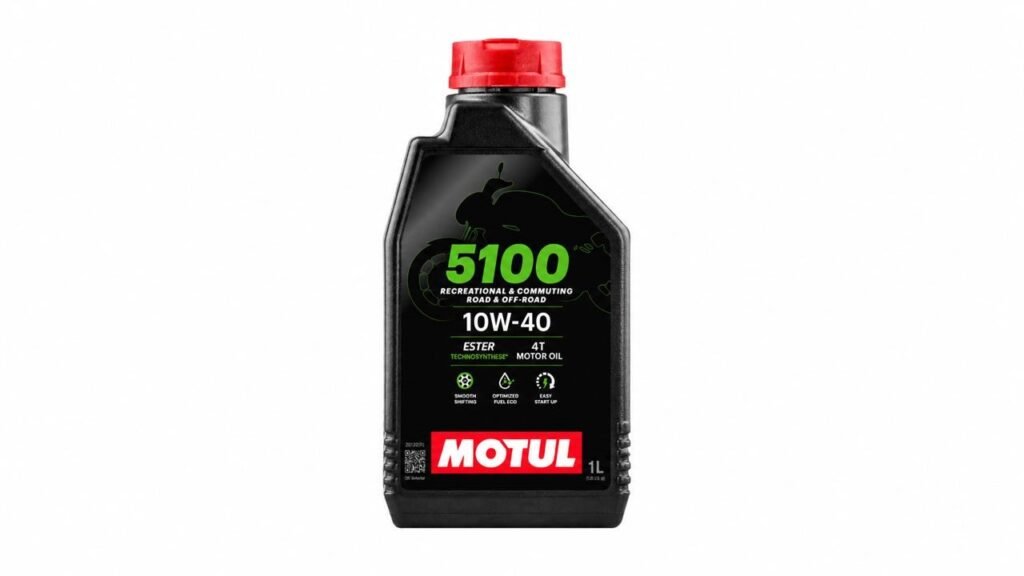
- The Recommendation: For everyday riding and commuting, a good-quality 10W-40 semi-synthetic motorcycle oil with a JASO MA2 rating is the best choice. Popular options include Motul 5100 4T 10W-40, Castrol Power1 4T 10W-40, and Shell Advance AX7 10W-40. These oils are made to handle daily use, stop-and-go traffic, and high engine temperatures while offering excellent protection at a reasonable price.
Ready to change your oil? Check the latest price and availability on Amazon: https://amzn.to/4vpXRQC
2. The Track Day & Sportbike Enthusiast
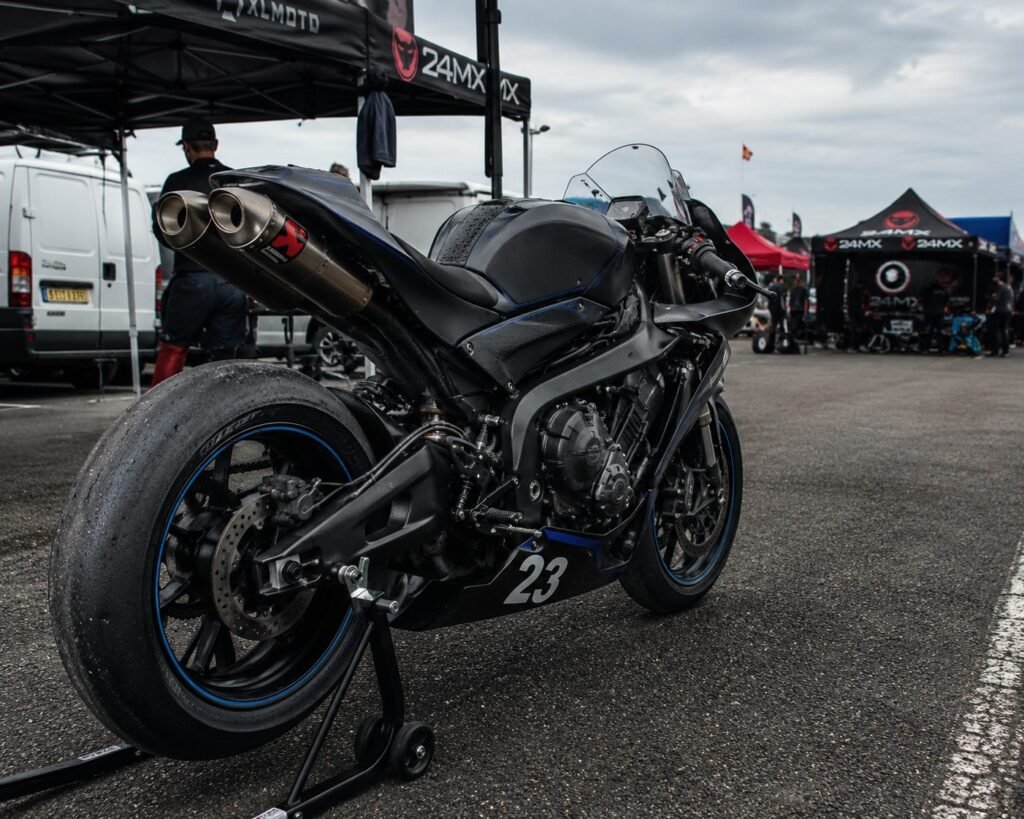
Track riding pushes lubricants to their absolute mechanical limits. Keeping a tachometer pinned above 10,000 RPM creates massive heat and intense gear-shearing forces that literally tear oil polymers apart.
- The Goal: Ultimate shear resistance and high-temp stability.
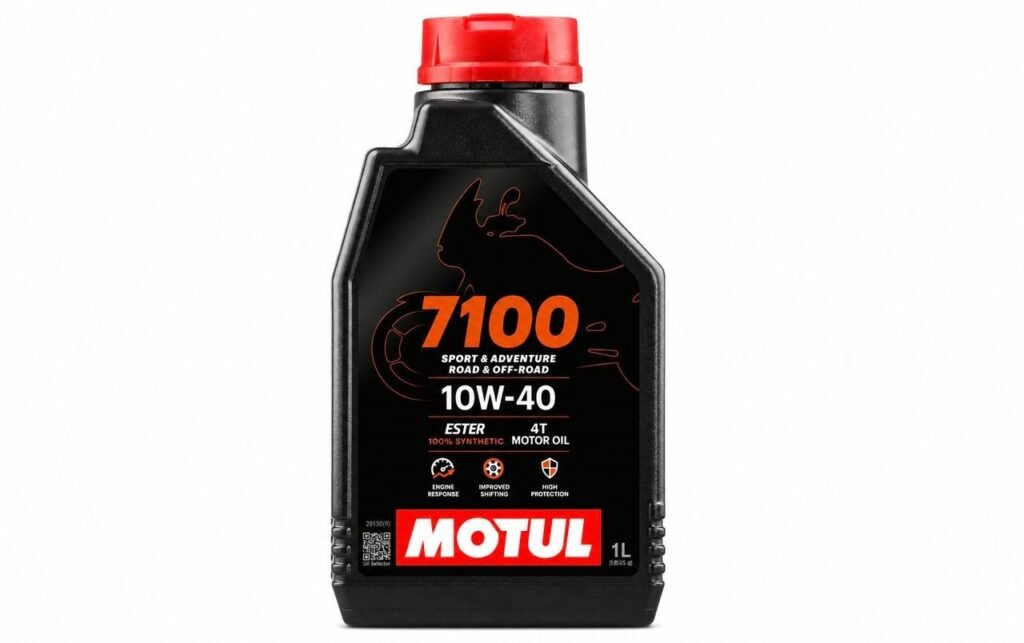
- The Recommendation: The best motorcycle engine oil for aggressive track riding or high-performance sportbikes is a premium full synthetic formula. My top recommendation here is Motul 7100 4T 10W-40. It features advanced Ester technology that forms a resilient molecular shield on metal surfaces, keeping your engine completely protected even when temperatures skyrocket under high-RPM use.
🛒 Check Price on Amazon: If your bike demands maximum wear protection and buttery-smooth shifting, you can find here https://amzn.to/4xBB5qw to give your transmission an immediate performance upgrade
3. The Long-Haul Cruiser & V-Twin Rider
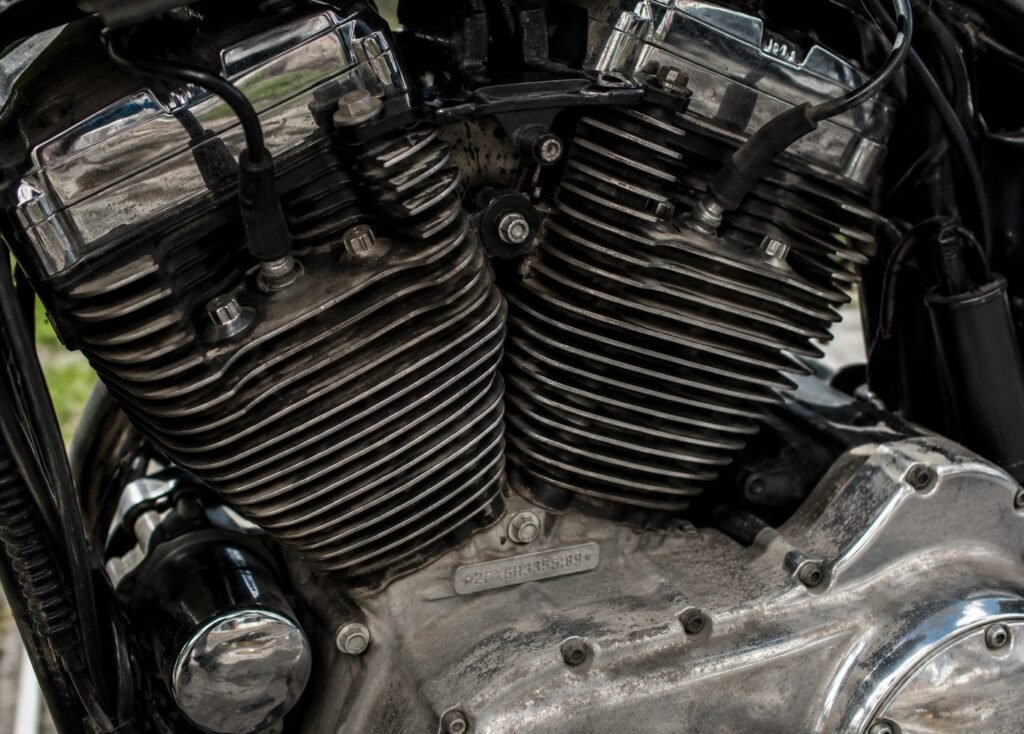
Big V-twins produce massive low-end torque with long piston strokes. Because many of these large cruisers are air-cooled, they run significantly hotter than liquid-cooled sportbikes, especially when idling through summer traffic.
- The Goal: High film strength to prevent metal-on-metal contact.
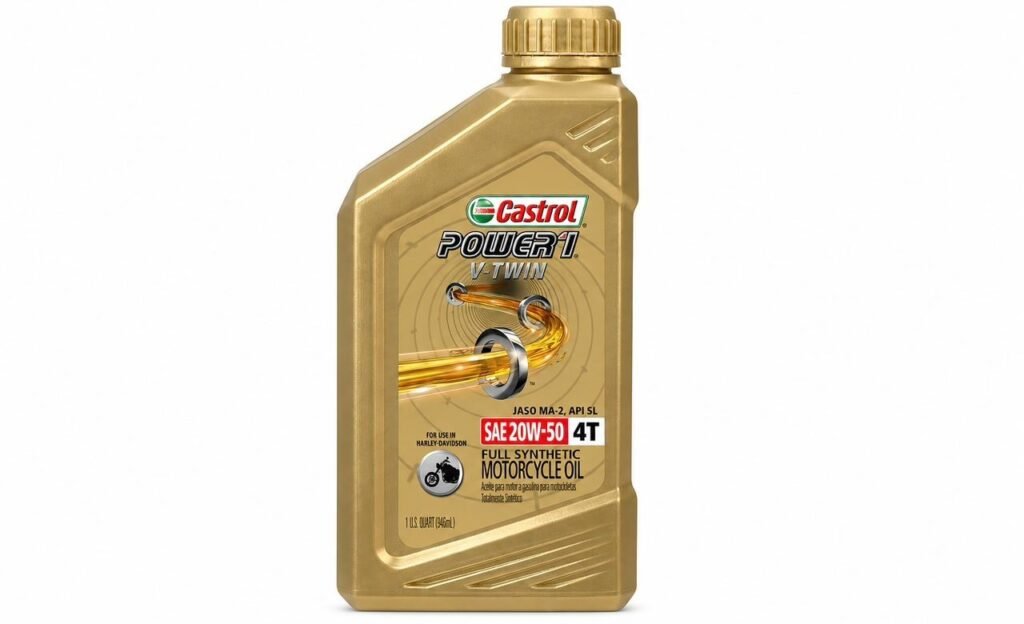
- The Recommendation: The best motorcycle engine oil for an air-cooled V-twin cruiser is a heavy-viscosity 20W-50 full synthetic. My top selection here is Castrol Power RS V-Twin 20W-50. It is specifically engineered to handle the extreme heat spikes of large displacement cruiser engines, maintaining an exceptionally tough oil film that shields critical engine components from wear even during hot summer idling.
🛒 Check Price on Amazon: To give your cruiser maximum protection against high-temperature breakdown, you can check the price for Castrol Power RS V-Twin 20W-50 on Amazon here:https://amzn.to/4w1pRtF
Quick FAQ
Is car oil bad for motorcycles?
Yes, if your bike uses a wet clutch. Car oils feature friction modifiers that cause motorcycle clutches to slip and fail. The best motorcycle engine oil will always have a dedicated motorcycle oil label with a JASO MA or MA2 certification.
How often should I change my motorcycle oil?
Always start with your owner’s manual. However, if you primarily ride track days, encounter heavy city traffic, or take frequent short trips, you should change it sooner to prevent fuel dilution and thermal breakdown.
Is full synthetic oil worth the extra money?
For high-revving sportbikes, air-cooled V-twins, and long-distance touring—absolutely. It resists heat and breakdown far better than mineral oils. For basic daily commuting, a quality semi-synthetic often serves as the best motorcycle engine oil for your budget.
Conclusion
At the end of the day, finding the best motorcycle engine oil for ever riding isn’t about buying the most expensive bottle or following internet debates. It’s about using the viscosity your manufacturer recommends, selecting a JASO MA or MA2 oil for motorcycles with wet clutches, and matching the oil to the way you actually ride. Stick to your service schedule, replace the filter with every oil change, and your motorcycle will reward you with smoother shifts, better clutch performance, and a longer engine life.