
Published: July , 2026
I still remember the first time a customer handed me his stock tire and asked what all those numbers meant. He’d been riding for six years and never once looked past the tread. That’s not unusual. Most riders don’t think about tire size until they’re standing in a shop, staring at a sidewall full of numbers and letters that look like a phone password gone wrong.
Here’s the thing — learning how to read motorcycle tire sizes isn’t some nerdy detail for track junkies. It’s the difference between a bike that turns in crisp and predictable, and one that feels vague or twitchy in a corner when you least expect it. Get the size wrong, even slightly, and you change how your bike handles, how it grips in the rain, and how much confidence you have leaning it into a curve. I’ve watched guys chase phantom “wobble” problems for months, convinced their frame was bent, when the real issue was sitting right there on the sidewall the whole time.
So let’s go through this the way I’d explain it to a friend at the shop, one section at a time, no fluff.
1. Decoding the Sidewall: The Metric System Broken Down
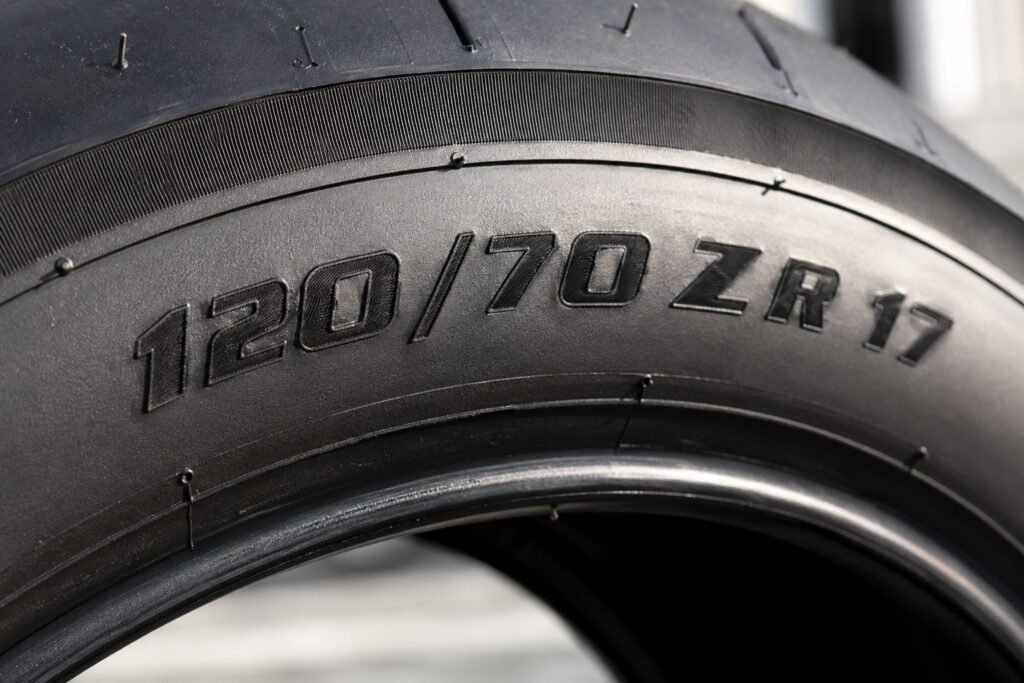
Most modern street bikes use metric tire sizing. You’ll see something like 120/70 ZR 17 on the front and 180/55 ZR 17 on the back of a typical sportbike. Three numbers, one letter code, and it all means something specific. Once you know how to read motorcycle tire sizes in this format, every other format starts making sense too.
Tire Width (First Number)
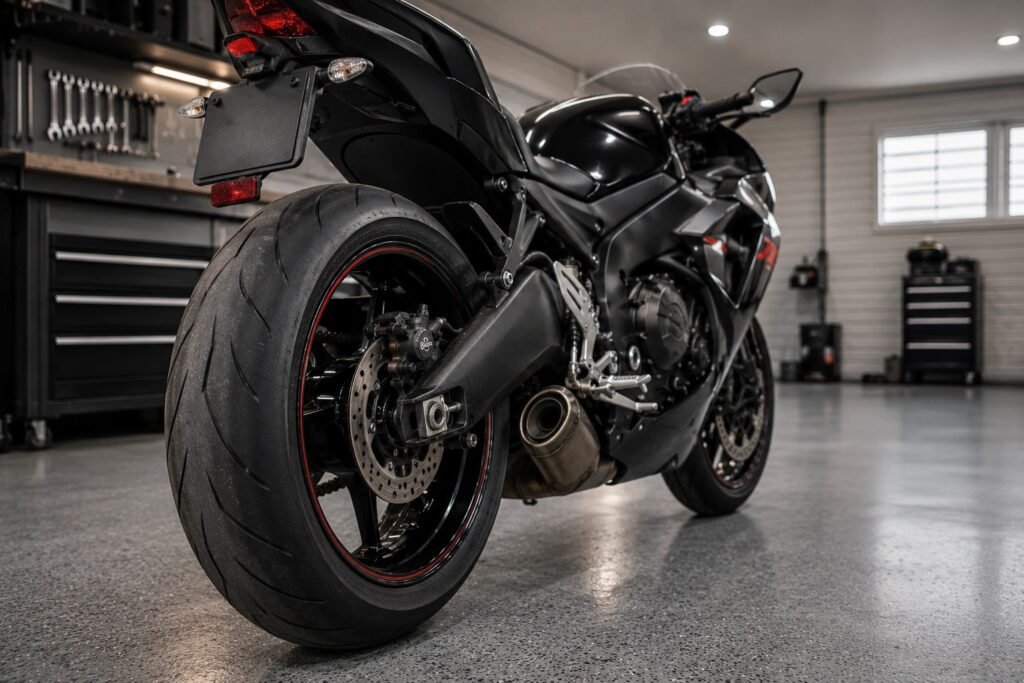
That first number — 120, 180, whatever it is — is the tire’s width in millimeters, taken from sidewall to sidewall at the widest point. Bigger number, wider tire. Simple enough on paper, but width changes more than looks. A wider rear tire can slow down your steering slightly because there’s more contact patch to roll through when you tip into a turn.
Aspect Ratio (Second Number)
The second number is the aspect ratio, and this one trips people up constantly. It’s the tire’s sidewall height as a percentage of the width. So on a 180/55, the sidewall height is 55% of 180mm. Lower aspect ratio means a shorter, stiffer sidewall — sharper steering, less cushion. Higher aspect ratio gives you a taller sidewall, more comfort, and a bit more forgiveness on rough pavement. We always tell customers this is the number that quietly changes ride quality the most, even though width gets all the attention.
Rim Diameter (Final Number)
The last number, usually 17, 19, or 21 inches (yes, we jump from millimeters to inches mid-spec — nobody said this system was elegant), tells you the wheel diameter the tire needs. This one’s non-negotiable. A 17-inch tire will not seat properly on a 19-inch rim, full stop.
Small shifts in any of these three numbers change tip-in speed and how the bike settles mid-corner. I’ve swapped a 190-width rear for a 180 on a customer’s bike before, just to test it, and the difference in how quickly it flicked side to side was obvious within one parking lot loop. That’s why learning how to read motorcycle tire sizes matters even if you never plan on changing your setup — it helps you understand why your bike behaves the way it does.
2. Metric vs. Alphanumeric vs. Inch Sizes
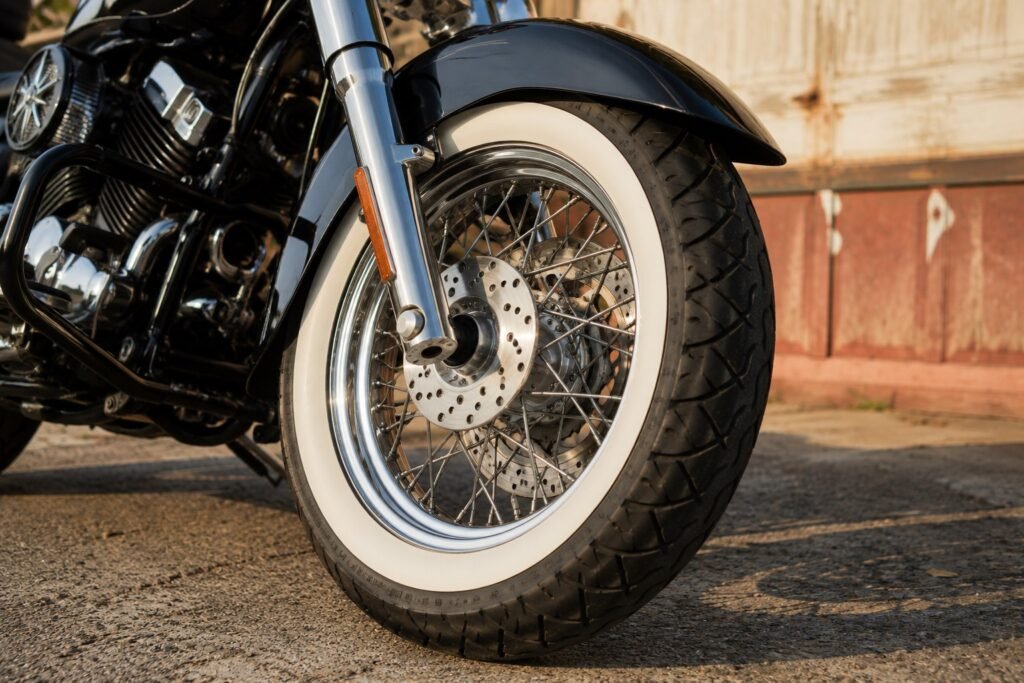
Here’s where things get messy. Cruisers, vintage bikes, and a lot of dirt bikes don’t use the clean metric format at all. Instead, you’ll run into alphanumeric sizing or straight inch measurements, and converting between the three is a genuine headache if you’re not used to it.
Alphanumeric sizing looks like MH90-21 or MT90-16. The letter at the front (M, MH, MJ, MN, MT, MU, MV) is a rough width-and-load code from an older sizing system that Harley and a lot of cruiser brands still use. Inch sizing, common on older bikes and some dirt applications, looks like 3.00-21 or 4.60-18 — just width in inches, dash, rim diameter.
| Metric | Alphanumeric | Inch Equivalent |
|---|---|---|
| 90/90-21 | MH90-21 | 3.00-21 |
| 130/90-16 | MT90-16 | 5.00-16 |
| 150/80-16 | MU85-16 | 5.10-16 |
| 100/90-19 | MJ90-19 | 3.25-19 |
None of these conversions are perfectly exact — they’re close approximations, not identical twins. I’ve had customers bring in a tire they bought online because “it’s the same size,” only to find it’s a slightly different actual width or profile once they mount it. That’s the real headache with older bikes: the sizing systems don’t talk to each other cleanly. Knowing how to read motorcycle tire sizes across all three formats saves you from ordering the wrong rubber and eating a restocking fee.
3. Speed Ratings and Load Index
After the size numbers, you’ll spot something like 58W on the sidewall. That’s the load index and speed rating, and riders skip past it constantly — which is a mistake.
The load index (58, in this example) tells you the maximum weight that tire can carry when properly inflated. The letter after it is the speed rating, and it caps the maximum sustained speed the tire can handle.
| Speed Rating | Max Speed (MPH) | Common Use |
|---|---|---|
| S | 112 mph | Commuter, small displacement |
| H | 130 mph | Standard street, touring |
| V | 149 mph | Sport-touring, larger cruisers |
| W | 168 mph | Sportbikes, high-performance |
| Z | 149+ mph | Sportbikes (often paired with W or higher) |
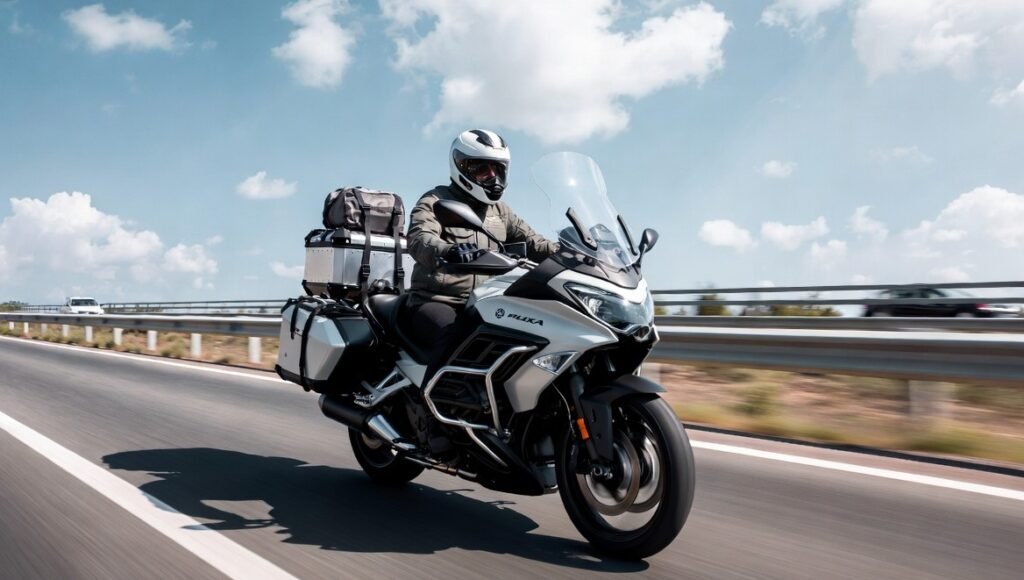
This part of how to read motorcycle tire sizes gets skipped constantly, but it isn’t just a theoretical number for bragging rights. If you’re loaded down two-up with luggage on a long trip, you’re pushing the load index closer to its limit, and heat builds up faster than most riders expect. I’ve seen a rear tire on an overloaded touring bike run visibly hotter to the touch after a hundred miles compared to the same bike ridden solo — that’s the load rating doing real work in real time. Riders who ignore this and drop down to a cheaper tire with a lower rating, just to save some cash, are gambling with sidewall integrity at highway speed. Part of really understanding how to read motorcycle tire sizes is treating that little letter-number combo as seriously as the size itself.
4. Radial vs. Bias-Ply Construction
This is the one riders forget to even look at, and it matters just as much as the size. Radial tires have plies (the internal fabric layers) running at roughly 90 degrees to the direction of travel, with a stiff belt underneath the tread. Bias-ply tires have plies running diagonally, criss-crossing each other at an angle.
Radials flex more in the sidewall while keeping the tread flat and stable, which spreads heat more evenly and generally handles higher speeds better. Bias-ply construction is stiffer and tends to handle heavy loads — think loaded cruisers and touring rigs — without the sidewall flexing as much, though it usually runs hotter at sustained highway speeds.
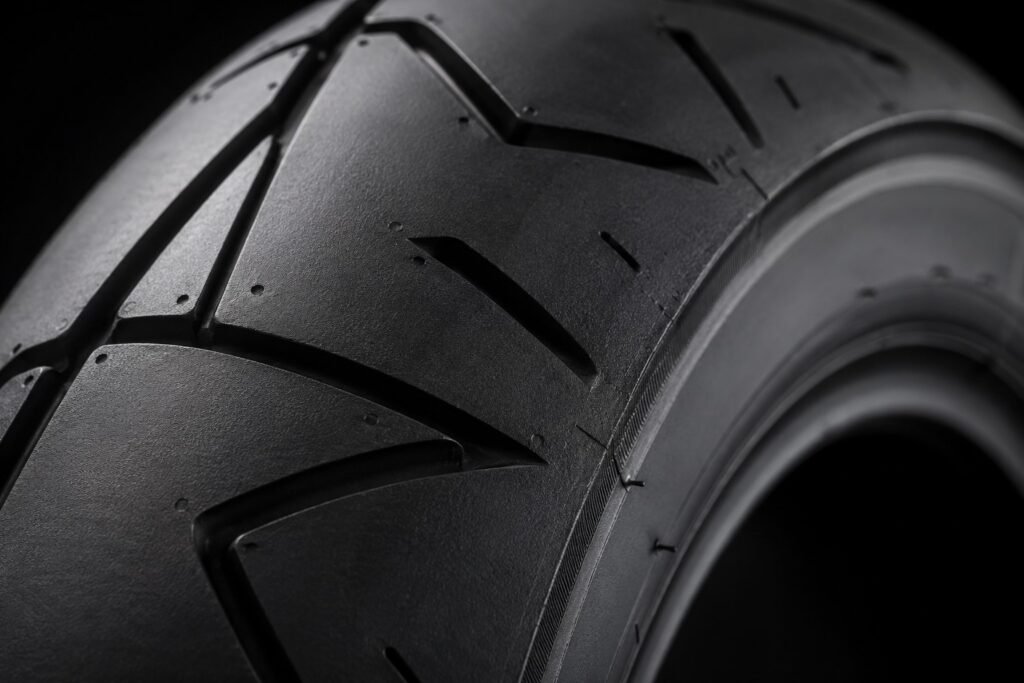
Construction type doesn’t show up when you’re learning how to read motorcycle tire sizes off the sidewall numbers alone, which is exactly why so many riders overlook it. Here’s the part that actually matters for your safety: never mix radial and bias-ply tires on the same bike unless the manufacturer specifically says it’s fine, and most don’t. The two constructions flex differently mid-corner, which throws off the bike’s balance and stability in ways that are hard to predict. I had a guy come in once who’d put a cheap bias-ply rear on because it was the only thing in stock, paired with his stock radial front. The bike felt “off” to him within the first mile, and he was right — it was a genuine mismatch, not just in his head.
5. Don’t Get Screwed by Old Rubber: The DOT Age Code
Even a tire with a perfect size match and full tread can still be dangerous if it’s old. Every tire carries a DOT date code on the sidewall, usually the last four digits after “DOT” and a string of letters and numbers. Something like 3224 means the factory built that tire in week 32 of 2024.
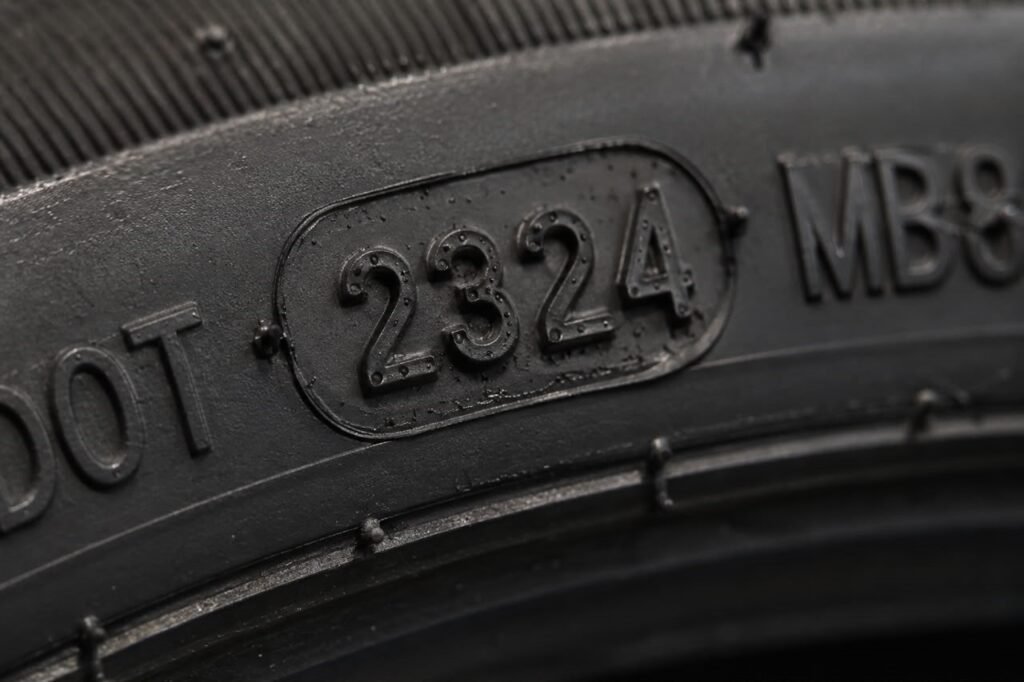
Rubber compounds harden and crack over time, even sitting unused in a warehouse. A tire that’s five or six years old can look fine and still have compromised grip, especially in the rain. Here’s the part that catches people off guard: a shop can list a tire as “new” online when it’s really old shelf stock that’s been sitting in a warehouse since before you ever placed the order. I always tell people to check that DOT code before mounting anything, new purchase or not — it takes ten seconds and it can save you from riding on rubber that’s already past its prime. It’s a small habit, but it belongs right alongside knowing how to read motorcycle tire sizes in the first place.
6. The Smart Rider’s Buying Guide
Once you’ve got the size sorted out, the real decision is matching the tire to how you actually ride. This is where a lot of riders overthink it or, honestly, underthink it. Knowing how to read motorcycle tire sizes gets you in the right ballpark, but riding style is what actually narrows down the right tire.
Sport and Track Riders
If you’re chasing lean angle and grip above everything else, you want a sticky compound built for maximum traction, full stop. The tradeoff is tread life — a proper sport tire might only give you 3,000 to 5,000 miles if you’re riding it hard, sometimes less on a track day tire. Brands like Michelin (Power series) and Pirelli (Diablo line) are the usual go-tos here, and for good reason — that grip is real.
Commuter and Touring Riders
For daily riding and longer trips, you want a dual-compound tire — harder in the center for mileage, softer on the shoulders for cornering grip when you need it. Wet-weather performance matters a lot more here too, since you’re out in all conditions, not just picking sunny track days. Dunlop and Michelin both build solid touring-focused lines that balance mileage against grip pretty well.
Cruiser and Bagger Riders
Cruisers need reinforced sidewalls and a higher load index, especially if you’re running a bagger two-up with saddlebags full of gear. Tread life tends to be longer here since cruisers usually see less aggressive cornering, but the sidewall needs to handle real weight without flexing dangerously. Shinko has built a strong reputation in this space for offering solid performance at a lower price point than the big three.
Budget vs. Premium: The Real Talk
I’m not going to tell you premium tires are always worth the extra money, because that’s not universally true. A budget-friendly Shinko can be a genuinely smart choice for a commuter bike that sees mild riding and modest miles. But if you’re riding aggressively, riding two-up often, or covering serious highway miles, spending more on a Michelin, Pirelli, or Dunlop usually pays for itself in better wet grip, more predictable wear, and a longer useful life before the tread hits the wear bars. Cheap tires aren’t automatically bad — they just handle a narrower set of conditions, so know what you’re buying before you save that twenty bucks.

Wrapping It Up
At the end of the day, mastering how to read motorcycle tire sizes isn’t about impressing anyone at the shop counter. It’s about making sure the rubber under you matches your bike, your riding style, and how you actually use it. Get the width, aspect ratio, rim size, load rating, and construction type all lined up correctly, and your bike will reward you with predictable, confident handling. Get it wrong, and you’re fighting your own tires without even realizing it.
Frequently Asked Questions (FAQ)
Can I put a wider tire on my stock rim?
Sometimes—but only if the wider tire falls within the width range specified by your rim manufacturer. Every rim is designed for a specific tire width range, and fitting a tire that’s too wide can distort its profile, reducing stability, cornering performance, and overall handling. Always check your rim’s specifications before upgrading to a wider tire.
When should I replace my motorcycle tires if they still have tread?
Replace your tires once they reach the DOT age limit recommended by most manufacturers—typically five to six years from the date of manufacture—even if there is usable tread remaining. You should also replace them immediately if you notice:
- Sidewall cracks
- Dry rot
- Flat spots
- Bulges or other visible damage
Age-related rubber deterioration can reduce grip and safety long before the tread wears out.
How do I find my motorcycle’s exact OEM tire size?
The easiest way is to check your owner’s manual. You can also look for the factory tire-size sticker, which is often located on the swingarm, frame, or inside the fairing. If those aren’t available, check the size printed on your current tire’s sidewall—but keep in mind that a previous owner may have fitted non-standard tire sizes, so verify the specifications against your motorcycle’s OEM recommendations.