
Updated: August 4, 2026 | By: Chris Mchenga
Disclosure: This article contains Amazon affiliate links. If you make a purchase through these links, we may earn a small commission at no extra cost to you. This helps support the site and allows us to continue creating detailed motorcycle guides. Thank you for your support!
I’ve been riding adventure and touring bikes for over two decades, and if there’s one accessory that’s saved my sanity more times than I can count, it’s my motorcycle tank bag. Whether I’m hunting for toll money with thick winter gloves on or need my phone within arm’s reach for GPS directions, that bag sitting on my tank has become an extension of my riding gear. In this guide, I’ll walk you through everything I’ve learned — the good, the bad, and the “wish I’d known that before I bought one” moments.
Let’s start with the basics.
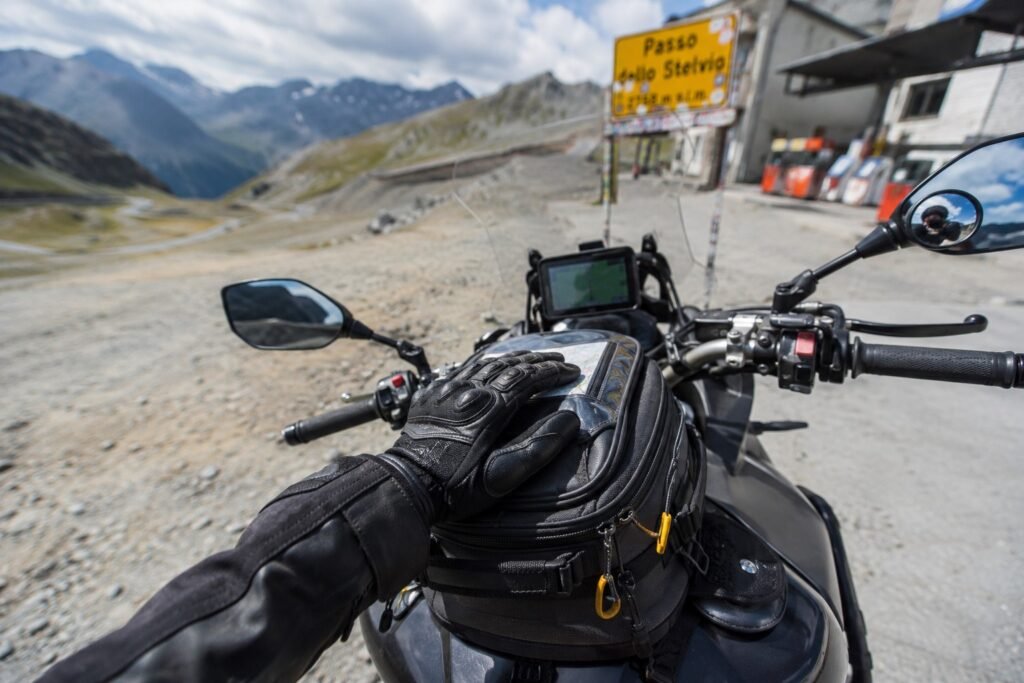
Recommended Beginner Pick: Looking for your first tank bag? The Nelson-Rigg Trails End Lite is easy to install, weather-resistant, and the perfect size for everyday rides.
What Exactly Is a Tank Bag?
A tank bag is a soft-sided or semi-rigid storage pouch that mounts directly on top of your fuel tank, sitting between your torso and the handlebars. Unlike saddlebags or panniers, it puts your essentials — wallet, phone, sunglasses, snacks — within easy reach while you’re moving. You don’t have to pull over and dig through a pannier just to grab your sunglasses at a stoplight.
Most tank bags have a few common features: a main compartment, a clear map or phone pocket on top, and some kind of mounting system underneath. That mounting system is where things get interesting, because it determines how secure your bag is, whether it’ll damage your paint, and how quickly you can take it on and off. I learned this the hard way on a rainy commute when a poorly seated bag shifted just enough to restrict my handlebars’ lock-to-lock movement during a tight U-turn. Not fun.
Recommended for beginners: If you’re buying your first tank bag, look for a compact waterproof model with a clear phone pocket. It gives you enough room for your everyday essentials without feeling bulky on the bike.
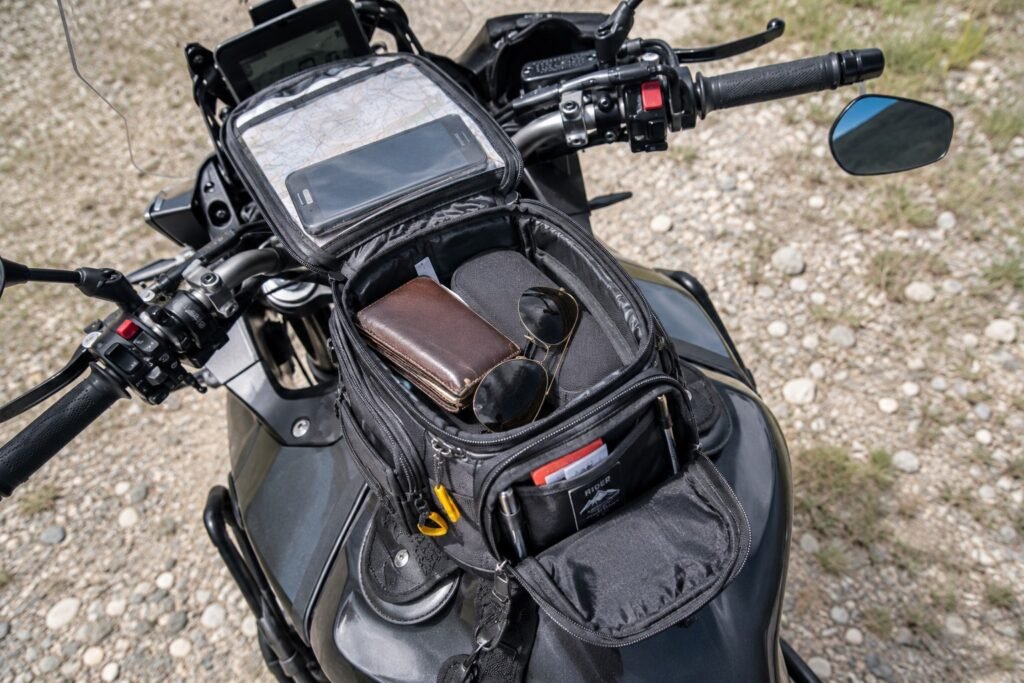
The Anatomy of a Tank Bag
Beyond the mounting hardware, construction materials matter more than most beginners realize. Cheaper bags use 600D polyester, which is fine for light use but wears thin — literally — after a season or two of abrasion against riding jackets and zippers. Higher-end bags use 1680D Ballistic Nylon, a denser weave that resists tears and abrasion significantly better. If you’re commuting daily or touring long distances, that difference adds up fast.
Water resistance is another spec worth checking. Look for an IPX4 rating at minimum for splash resistance; if you ride in serious weather, an IPX6-rated bag or one with a separate rain cover will keep your electronics dry during a genuine downpour rather than just a light drizzle.
The Three Mounting Systems Explained
There are three main ways a motorcycle tank bag attaches to your bike, and each comes with real trade-offs. I’ve used all three, and none is universally “best” — it depends on your bike and riding style.
Strap-mount bags use adjustable straps around the tank or seat mounting points. They fit nearly any bike, but straps can shift over long rides and rub a thin line into your paint if you’re not careful.
Magnetic-mount bags use strong internal magnets — often 20 to 30 lbs of pull force — to grip a steel tank. They’re fast to install, but useless on aluminum or carbon fiber tanks, and some riders worry about long-term clear-coat wear.
Tank ring systems use a plastic ring around your fuel filler cap that the bag clicks into. It’s the most secure option, though installation takes more effort and often requires a bike-specific ring.
Here’s how the three stack up side by side:
| Mounting System | Security | Paint Safety | Ease of Install | Best Use Case |
|---|---|---|---|---|
| Strap Mount | Moderate | Moderate risk of rubbing | Easy, no tools needed | Renters, occasional riders, multiple bikes |
| Magnetic Mount | Moderate-High | Debated long-term risk | Fastest, tool-free | Steel-tank bikes, quick daily use |
| Tank Ring | Highest | Safest once installed | Moderate, one-time setup | Frequent riders, touring, single dedicated bike |
Because of these differences, I always tell new riders to think about how often they’ll be swapping the bag on and off before choosing a mounting style. A commuter who tosses their bag on daily has very different needs than a tourer who mounts it once and rides for a week straight.
If you like the convenience of removing your tank bag in seconds at fuel stops, the GIVI ST605B Tanklock system is one of the best options available. Check GIVI ST605B on Amazon

Will a Motorcycle Tank Bag Scratch My Paint?
This is the question I get asked more than any other, and honestly, it’s a fair worry. Your tank is one of the most visible panels on the bike, and nobody wants to spend a season building up swirl marks under a bag they thought was harmless. The short answer is: it depends entirely on the mounting system and how well you maintain it.
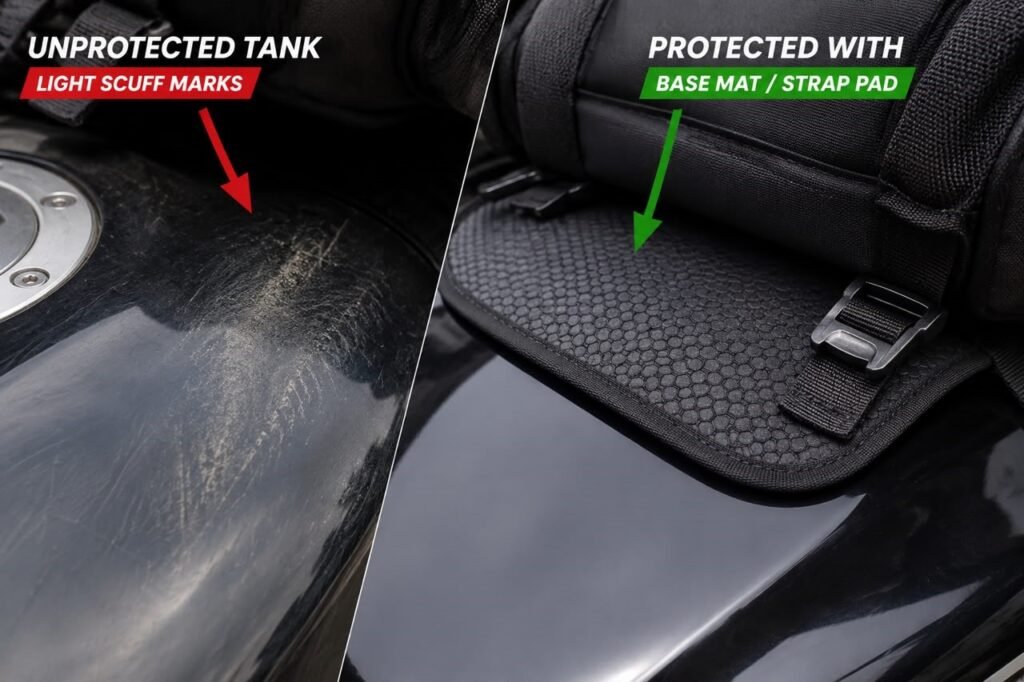
Strap-mount bags are the biggest culprit here, mainly because grit and road dust get trapped between the strap and the paint. Over hundreds of miles, that grit acts like sandpaper every time the bag shifts even slightly. I always recommend a rubberized or fleece-backed strap pad, and wiping down the tank before mounting on dusty days.
Magnetic bags are gentler in theory, since there’s no strap dragging across the surface. However, if sand or debris gets caught underneath the magnetic base, that same abrasion problem can happen — just in a smaller, concentrated spot. A simple protective mat under the bag solves this almost entirely, and most quality motorcycle tank bag models now include one.
Tank rings are the safest long-term option because the bag never actually touches the paint once it’s clicked into place. The trade-off, as I mentioned earlier, is a slightly more involved install. Still, if paint protection is your top priority, this is the route I’d point a nervous beginner toward.
Storage Capacity & What Actually Goes Inside
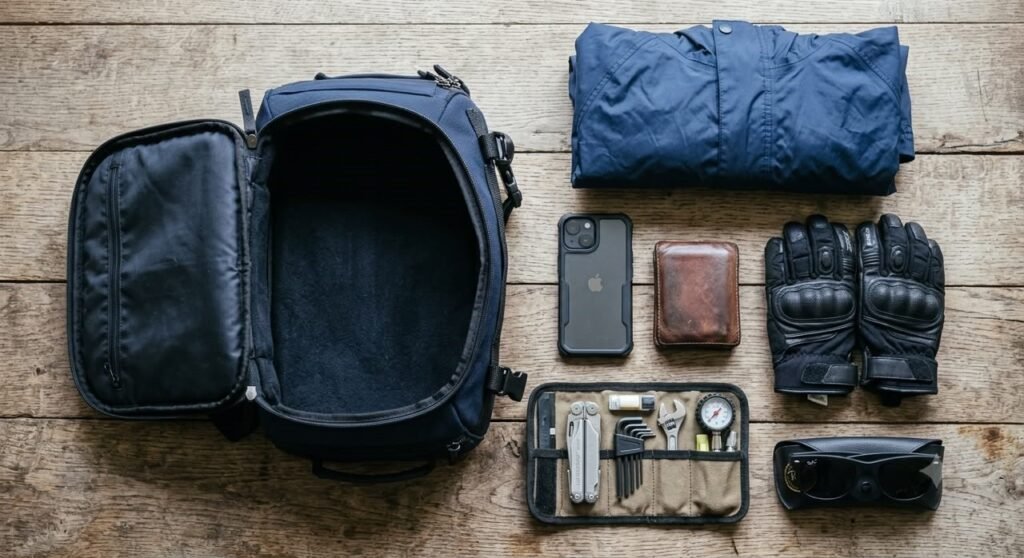
Tank bags range from small 3-liter “just my phone and wallet” pouches all the way up to 30-liter expandable touring bags that can practically replace a small backpack. Most riders land somewhere in the middle, around 12 to 18 liters, which is enough for a wallet, phone, snacks, a light rain jacket, and small tools without looking like you’re smuggling a watermelon.
Expandable bags deserve a special mention here. Many use a zippered gusset that lets you add several extra liters of capacity for a grocery run or an overnight trip, then zip back down for your daily commute. Meanwhile, the clear top pocket — originally designed for paper maps — has become prime real estate for phones running GPS apps, since you can glance down without taking your eyes far off the road.
From personal experience, I keep my most-needed items in the outer pockets: toll money, chapstick, and my sunglasses. Everything else goes in the main compartment. Trust me, digging through a single stuffed pocket at a toll booth with winter gloves on, while cars queue up behind you, is a lesson you only need to learn once.
The Ultimate Buying Guide: Key Features to Look For
Shopping for your first motorcycle tank bag can feel overwhelming because the market is genuinely flooded with options. Therefore, I’ve broken this down into the factors that actually matter, based on years of trial and error — and a few regretted purchases along the way.
Material and build quality should be your starting point. As covered earlier, 1680D Ballistic Nylon outlasts 600D polyester by a wide margin, especially on the underside where the bag contacts the tank. Reinforced stitching at stress points, like strap attachment loops, is another sign of a bag built to last rather than one built to look good in a product photo.
Mounting compatibility comes next, and it’s non-negotiable. Check your tank’s material before buying a magnetic bag, and measure your filler cap area before committing to a tank ring system, since not every ring fits every bike.
Weather resistance matters more than most beginners expect. A bag rated IPX4 will survive a surprise shower, but if you tour in genuinely wet climates, look for taped seams or a included rain cover rated closer to IPX6.
Ergonomics and rider comfort round out the list. A bag that’s too tall can block your view of the instrument cluster, and one that’s too wide can interfere with your knees or the handlebars at full lock. I always sit on the bike with the bag mounted before buying, if a shop allows it.
How to Choose the Best Motorcycle Tank Bag for Your Riding Style
If you’re commuting daily through city traffic, prioritize quick-release mounting and a slim profile — a magnetic or tank ring bag in the 10–15 liter range works well. If you’re budget-conscious and just starting out, a strap-mount bag under $50 with a strap pad is a smart, low-risk entry point. For serious touring, look for an expandable 20L+ bag with taped seams, a tank ring mount, and a padded laptop or hydration sleeve.
Protect Your Paint: Before mounting any magnetic or strap tank bag, add a tank protector to help prevent scratches from dirt and vibration. 👉 See it on Amazon.

Care, Maintenance, and Longevity
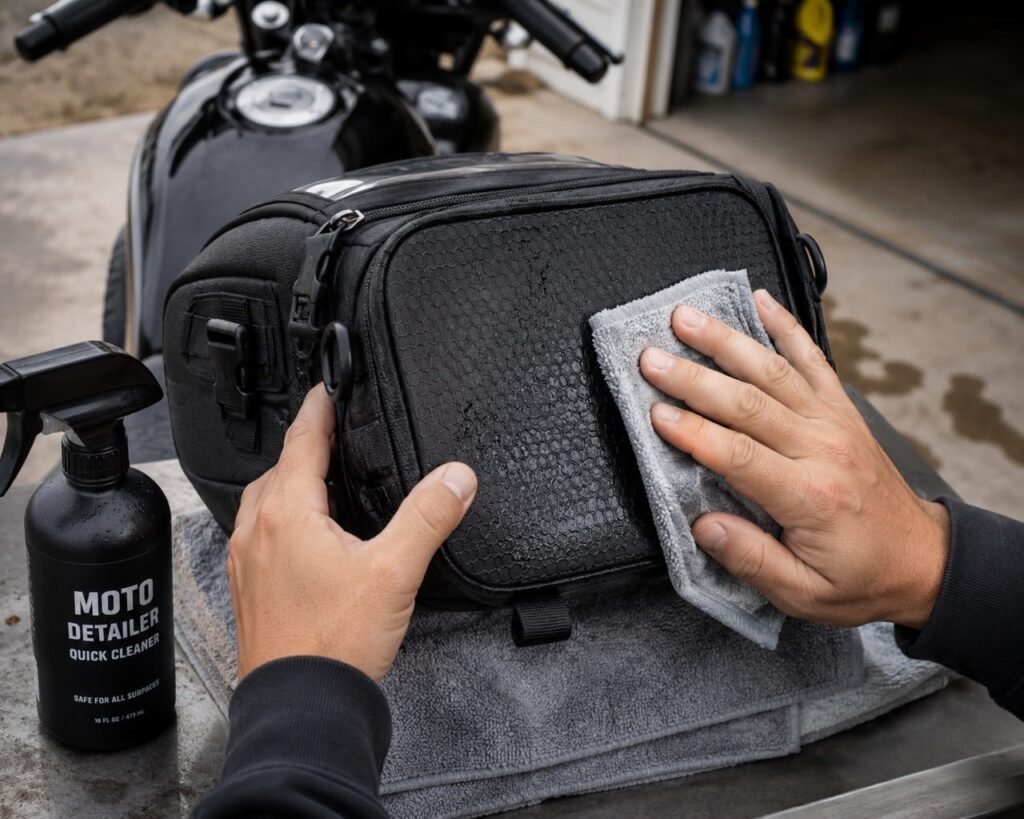
Keeping a tank bag in good shape isn’t complicated, but it does take a bit of consistency. Wipe down the base after dusty or muddy rides, since trapped grit is the number one cause of premature wear on both the bag and your paint. I clean mine with a damp microfiber cloth every few rides, and it’s added years to the fabric’s life.
Check zippers and strap stitching every month or so, especially if you ride often. A motorcycle tank bag that sees daily use will show wear at the zipper pulls first, and catching a loose thread early is far easier than replacing the whole bag later. Store it somewhere dry between rides rather than leaving it strapped to the bike in direct sun, since UV exposure breaks down both nylon and polyester over time.
Frequently Asked Questions
Do tank bags scratch paint?
They can, particularly strap-mount styles that trap grit against the tank surface. Using a strap pad or protective base mat, and keeping the tank clean before mounting, significantly reduces this risk.
How much can a tank bag hold?
Capacity ranges from around 3 liters for minimalist bags up to 30+ liters for expandable touring models. Most commuters find 12 to 18 liters comfortable for daily essentials.
Are magnetic tank bags safe for all motorcycles?
No, magnetic bags only work on steel tanks. Aluminum, carbon fiber, and plastic-paneled tanks require a strap or tank ring mounting system instead.
Can I use a motorcycle tank bag on a sport bike?
Yes, though you’ll want a slimmer, low-profile bag so it doesn’t interfere with an aggressive riding position or block your view of the gauges.
Is a tank ring worth the extra installation effort?
If you ride the same bike frequently and want the most secure, paint-safe mounting option, yes. The one-time install pays off in security and peace of mind over the life of the bag.
How do I clean a tank bag?
Wipe the exterior with a damp microfiber cloth and mild soap, then air dry fully before storing. Avoid machine washing, since it can damage waterproof coatings and stiffen the fabric.
Our Budget Pick
If you’re still deciding on your first motorcycle tank bag, the TUSK Olympus Small Tank Bag offers excellent value for commuters and weekend riders. It provides enough storage for daily essentials while remaining compact and affordable.
👉 Check today’s price on Amazon
