

Published July 10, 2026 By Chris Mchenga
Disclosure: This article contains Amazon affiliate links. If you make a purchase through these links, we may earn a small commission at no extra cost to you. This helps support the site and allows us to continue creating detailed motorcycle guides. Thank you for your support.
I once tried to dig my phone out from under a bungee-strapped duffel at a red light. Traffic was heavy, and I missed the green. I got an earful from the guy behind me on a Gold Wing. That was the day I swore off “good enough” luggage. If you’ve ever fumbled for your wallet at a toll booth, you already know why this motorcycle tank bag guide exists. Or maybe you’ve watched your sunglasses slide off the seat while you dig for a granola bar. One size does not fit all. The bag that’s perfect for your buddy’s cruiser might scratch your paint. It could block your bars, or simply fall off the first time you hit a pothole.
This isn’t a listicle of ten bags with stock photos. It’s a working rider’s motorcycle tank bag guide, built from years of actually mounting, filling, and soaking these things on real roads. So let’s talk about how mounting systems, bike geometry, tech features, and capacity actually interact. Getting even one of those wrong can turn a useful accessory into dead weight.
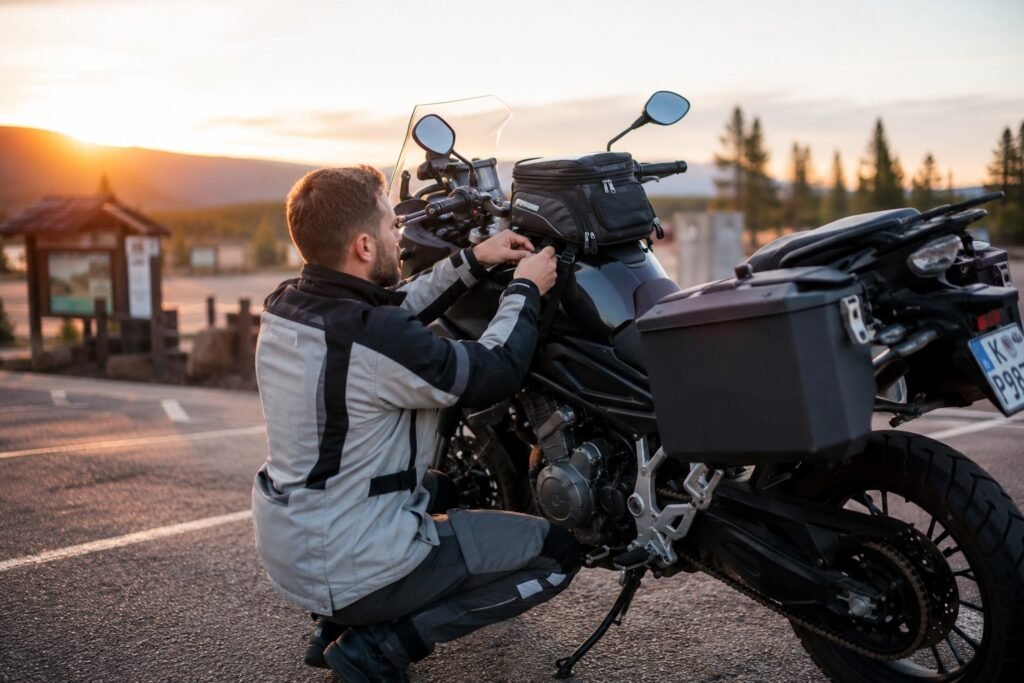
The Great Mounting Debate: Magnetic vs Strap Tank Bag
Every tank bag lives or dies by how it stays attached. This is where most riders get burned. Magnetic tank bags are the most popular option because they’re fast — slap it down, ride off. But magnets only work if your tank is actual steel, and a lot of modern machines simply don’t cooperate.
Take a look at any BMW GS or KTM Adventure model built in the last decade. Their tanks are often wrapped in plastic shrouds. On higher trims, the tank itself might be aluminum or even carbon fiber composite. Magnets have nothing to grab onto there. So a magnetic bag on one of these bikes is basically a decoration, and it will slide off at the first speed bump. If you own one of these bikes, skip the magnetic aisle entirely.
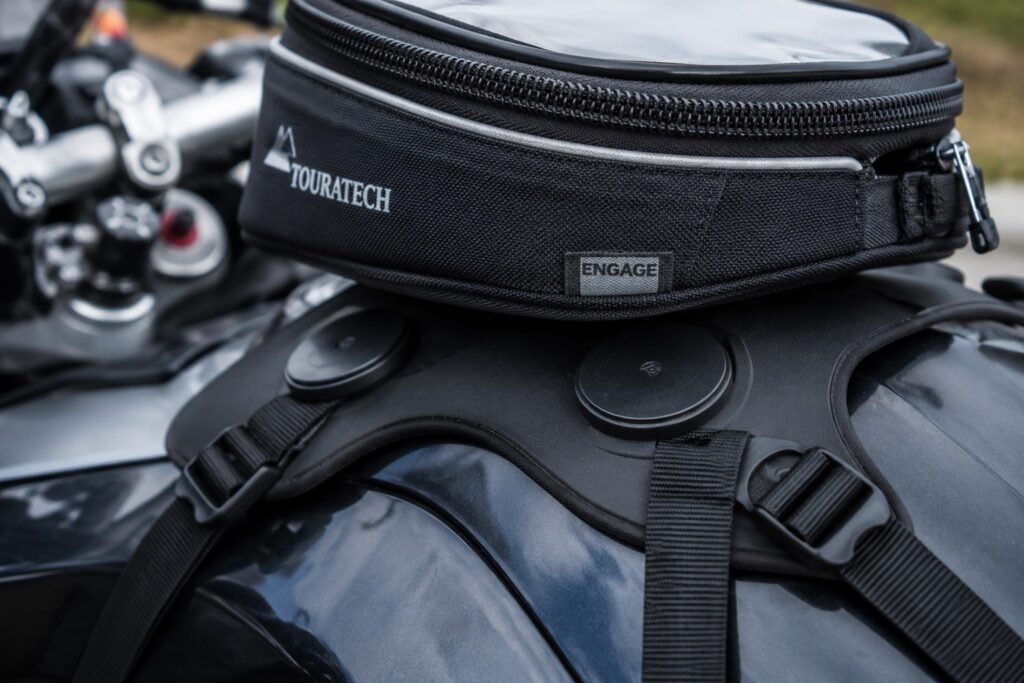
Here’s a detail that rarely makes it into other reviews: even on steel tanks, magnets create a micro-grit trap. Dust and tiny grit particles get pulled up against the paint by the magnetic field. Every time you shift the bag slightly, that grit acts like sandpaper. This is the real story behind motorcycle tank bags that won’t scratch paint. It’s not really about the magnet strength. It’s about what’s trapped underneath it, grinding away every time you brake or accelerate.
Straps and Rings: The Paint-Safe Alternatives
Strap-on tank bags solve the scratching problem, because the base usually rides on a soft, non-abrasive pad. But they trade that safety for setup hassle. You’re threading straps around the frame and adjusting tension. If you tighten unevenly, the bag will slide forward under braking.
This is the exact tradeoff at the heart of every motorcycle tank bag guide worth reading: speed versus security versus paint safety. No single mounting style wins on all three. The honest answer is that your bike’s tank material should decide the category, before you even start comparing brands or price tags.
Tank ring, or quick-release, systems split the difference nicely. A ring gets permanently bolted or adhered to the tank, and the bag itself clicks into place in about two seconds. The SW-Motech PRO Quick-Lock system is a good example of this category done right. It gives you solid lock-in, no paint contact, and a one-handed release at a gas station. Compared to fiddling with straps every morning, a ring system is the low-effort, high-security answer for daily riders.
See the SW-Motech PRO Quick-Lock system on Amazon → One-handed release, zero paint contact — check current price and compatibility for your bike.

Matching the Bag to Your Machine: Adventure, Sport, and Dual-Sport
Mounting system aside, the shape of your tank matters just as much. So does the way you actually ride the bike. A bag built for one riding style can be genuinely dangerous, or just annoying, on another.
Adventure Motorcycle Tank Bags Waterproof
Adventure bikes have sloped, often oddly contoured tanks. Riders on these machines frequently stand on the pegs over rough terrain. That means your bag needs to sit low, so it doesn’t interfere when you shift your weight forward. It also needs to survive mud, rain, and the occasional river crossing without soaking your gear.
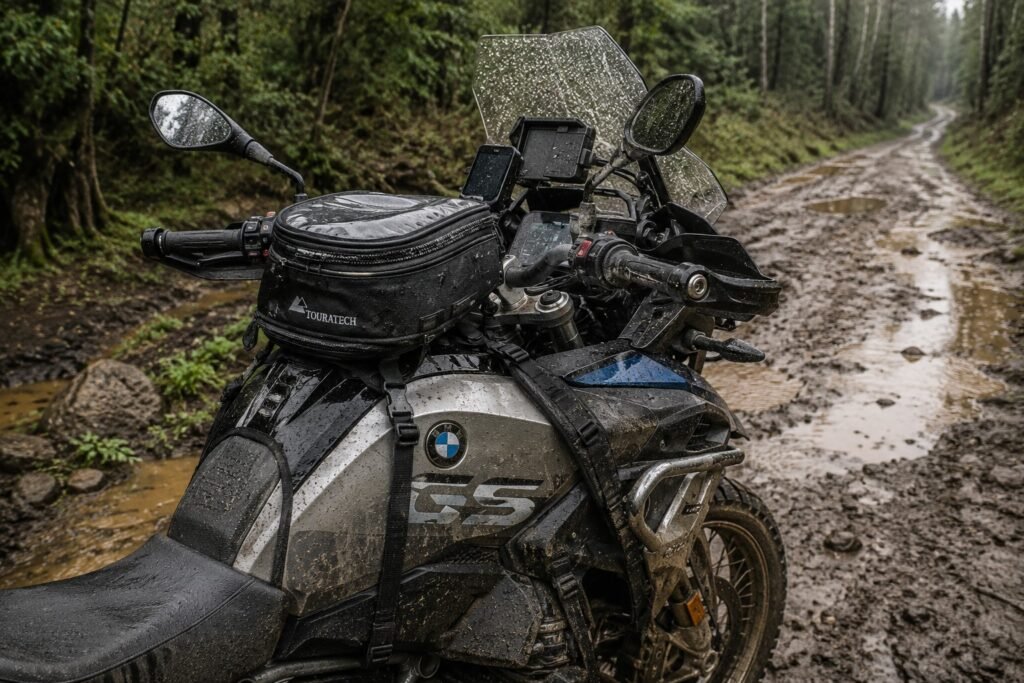
Look at something like the Giant Loop Diablo or the Enduristan Sandstorm. Both are built from genuinely waterproof roll-top materials, not “water resistant” nylon with a zipper that lets everything in during a downpour. If you’re touring off-road, this is the category to shop. Honestly, it’s the segment where a good motorcycle tank bag guide earns its keep. The wrong choice here can mean a ruined phone thirty miles from the nearest town.
Check the Giant Loop Diablo on Amazon → Roll-top waterproofing built for river crossings, not just drizzle — see sizes and current pricing.

Low Profile Sport Bike Tank Bag
Sport bikes flip the problem. Your tank is short, and your bars are clip-ons. At full steering lock, a tall or wide bag can literally jam your handlebars mid-turn. That’s not a minor inconvenience — it’s a bag that can cause a low-speed drop in a parking lot.
You want something low profile, like the Cortech Super 2.0 or a Givi Tanklock unit built for sport geometry. These sit flatter and narrower, which matters at highway speed too. Anything tall enough to catch wind will buffet your chest and drag on your fuel economy. If you commute on a sportbike, prioritize height and width specs over sheer capacity every time.
View the Cortech Super 2.0 on Amazon → Slim enough to clear clip-ons at full lock — check dimensions before you buy.

Any motorcycle tank bag guide that skips handlebar clearance testing isn’t doing its job. This is the one mistake that can actually put you on the ground. Swing your bars lock to lock in your driveway, with the bag mounted and loaded, before you ever take it out in traffic.
Small Dual Sport Tank Bag
Dual-sport riders usually want the opposite of bulk. A small dual sport tank bag needs to be light and tuck in close to the tank. It also needs to stay stable when you’re standing and bouncing over washboard gravel or single-track. Bulkier bags shift weight around exactly when you need the bike most predictable underneath you, so less really is more here.
Tech and Utility: Motorcycle Tank Bag Waterproof with Phone Holder
Almost every mid-range bag now advertises a clear touchscreen window for your phone. I want to be straight with you about how well that actually works. In bright sunlight, most clear plastic windows create enough glare that you’re squinting at your GPS instead of glancing at it. Touch sensitivity also drops noticeably through thicker vinyl. Tapping to zoom on a map can take two or three tries when you’re wearing gloves.
There’s a bigger issue that doesn’t get talked about enough: phone overheating. Picture a phone sitting in a clear pouch on a black tank bag, in direct sun, on a stopped bike in traffic. It can climb into thermal shutdown territory faster than you’d expect. I’ve had a phone shut itself off mid-navigation on a 95-degree day, because the pouch turned into a tiny greenhouse. If you ride somewhere hot, look for a bag with a shaded or ventilated phone compartment, not just a clear window.
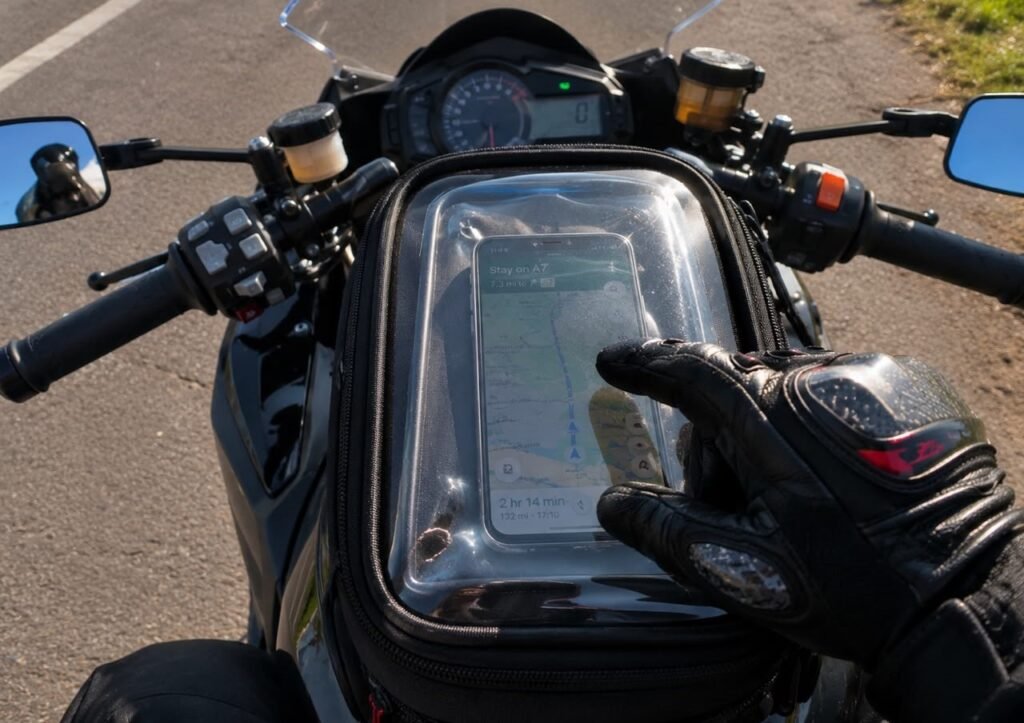
Charging is the other piece of the tech puzzle. Some bags let you run a cable through a sealed port, like the Givi Power Hub setup. That keeps your phone charging while it navigates. Without a pass-through port, you’re stuck choosing between charging and weatherproofing. That’s a bad trade on any real trip. See current deals on Amazon.
I’d argue this tech section is the most-skipped part of any motorcycle tank bag guide. Riders just assume a phone window is a phone window. It isn’t. Test the touch response with your actual gloves on before you commit. Some vinyl blends simply won’t register a tap through thick leather or winter liners.
See the Givi Power Hub tank bag on Amazon → Charge your phone through a sealed port — no more choosing between navigation and dry gear.

Ultimate Buyer’s Blueprint: Capacity, Fueling, and Daily Usability
Capacity numbers on a spec sheet don’t tell the whole story. You need to think about how you’ll actually use the bag day to day. A 4-liter commuter bag is enough for a wallet, phone, and a light rain jacket. It won’t swallow a laptop or a change of clothes, though. On the other end, a 15-liter expandable touring bag can carry a weekend’s worth of gear. That extra bulk affects your reach to the bars and your view of the dash, though, so it’s not a free upgrade.
The Gas Pump Hassle Factor
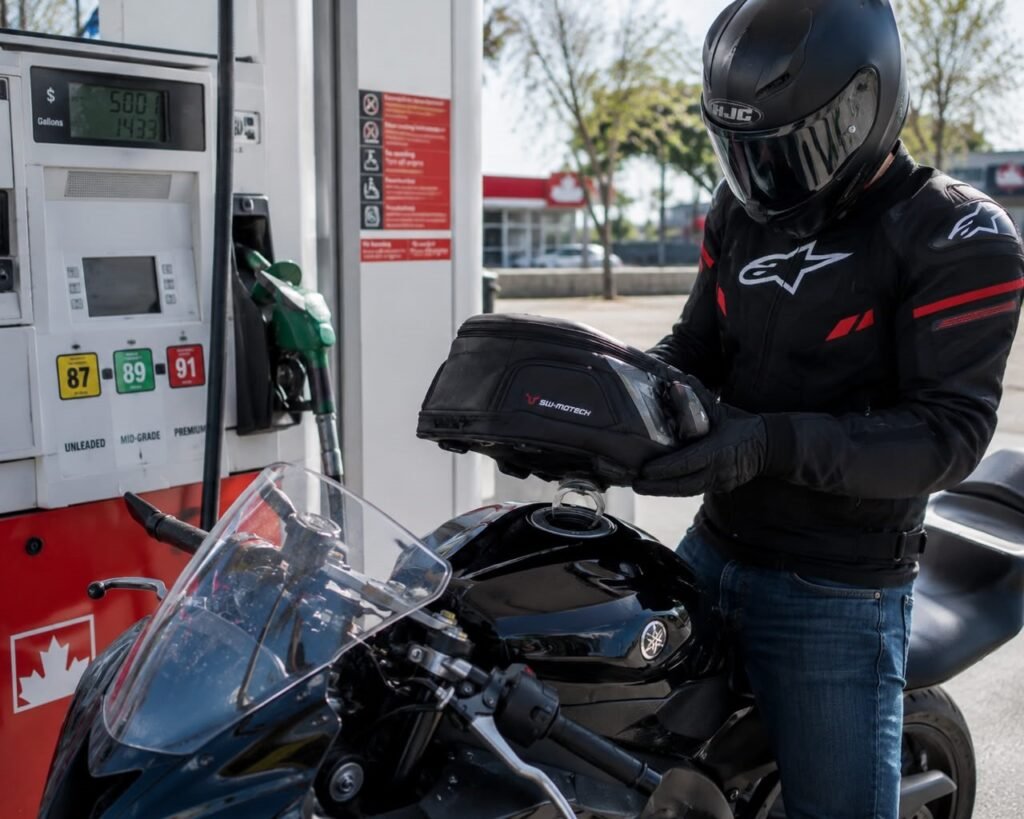
Here’s where things get tricky: the bigger the bag, the more it fights you at the pump. I call this the gas pump hassle factor. It’s the single most underrated spec in any motorcycle tank bag guide. If your bag takes thirty seconds and both hands to remove before you can open your fuel cap, that’s friction at every single fill-up. Multiply that by every ride you’ll ever take, and it adds up fast.
A magnetic bag scores worst here, because you’re peeling it off carefully to avoid gouging paint. A strap bag is a close second, since you’re loosening buckles. A ring-mounted bag wins outright — one motion, off, done.
| Mount Type | Security | Paint Safety | Removal Speed | Weather Resistance | Best Use Case |
|---|---|---|---|---|---|
| Magnetic | Moderate | Poor (grit risk) | Slow | Depends on cover | Steel-tank cruisers, short commutes |
| Strap | Good | Excellent | Slow | Good if sealed | Any bike, budget setups |
| Tank Ring | Excellent | Excellent | Fastest | Best when integrated | Daily riders, ADV and sport bikes |
Once you line the options up like this, the decision usually makes itself. If you fuel up daily or ride in changing weather, the ring system earns back its higher upfront cost within a few months. That table alone is the shortcut version of this entire motorcycle tank bag guide, for anyone who just wants the bottom line.
Frequently Asked Questions
Fit, Safety, and Weather Questions
Do magnetic tank bags damage motorcycle paint? Not from the magnet itself, but from the grit it traps against the surface. Wipe your tank down before mounting, and consider a protective pad if you’re set on going magnetic.
What’s the best tank bag for a BMW GS with a plastic tank shroud? Skip magnetic entirely. Go with a strap, or better, a bolt-on ring system designed for ADV bikes, since the plastic shroud won’t hold a magnet at all.
How much can a tank bag hold before it affects handling? Anything past roughly 8-10 liters of dense gear starts to shift your bike’s front-end feel. This is especially true at low speed, or when standing on the pegs.
Are tank bags waterproof, or do they need a rain cover? Most mid-range bags are water resistant, not waterproof. A quick shower is fine, but a sustained downpour will find a seam. Roll-top designs are the exception, and they genuinely keep water out.
Can I use a tank bag with a tank pad or tank protector installed? Yes, and it’s actually a smart combo. A tank pad protects the paint under a magnetic or strap bag. It also adds a bit of grip, so the bag shifts less under braking.
Buying and Maintenance Questions
Does a tank bag interfere with fuel filler access on every bike? On most modern bikes with a rear-hinged filler cap, no. But if your bike has a center-mounted or forward filler, check that the bag’s mounting position doesn’t sit directly over it.
Is a more expensive tank bag actually worth it? Usually, yes. This is a question every motorcycle tank bag guide gets asked constantly. The extra cost typically buys better waterproofing, a proper ring mount, and reinforced stitching at the stress points. All of that matters more the more miles you ride.
Conclusion & Final Verdict
If you’re a daily commuter, a small strap or ring-mounted bag under 6 liters will serve you well. It keeps your phone, wallet, and keys within reach without ever getting in your way. Adventure riders should prioritize genuine waterproofing and low seated height above all else, since mud and rain don’t negotiate. Sport bike riders need to measure handlebar clearance at full lock before anything else, full stop. Touring riders should lean into expandable capacity, and accept the small tradeoff in aerodynamics.
There’s no single best bag. There is a right one for how you actually ride. That’s the whole point of working through a motorcycle tank bag guide, instead of just buying whatever’s cheapest online. Figure out your mounting priorities first, then match the bag to your bike’s geometry. Don’t skip the boring stuff, like phone heat and gas station speed. Those are the details that decide whether you love or hate the bag six months from now.
Ride safe, pack smart, and I’ll see you at the next fuel stop.