
Finding the best motorcycle gloves isn’t just about style; it’s about finding the perfect balance of grip, comfort, and protection. Whether you’re riding through city traffic every day, touring across long highways, or pushing hard on a weekend twisty road, your gloves are doing far more work than most riders realize. The best motorcycle gloves reduce hand fatigue, improve throttle control, and provide life-saving abrasion resistance in case of a fall. And the truth is simple—most riders only understand their importance after experiencing the wrong pair.
In this guide, we’re going deeper than marketing claims. We’re breaking down materials, protection systems, real-world riding comfort, brand differences, and what actually matters when choosing gear that could one day protect your hands in a crash.
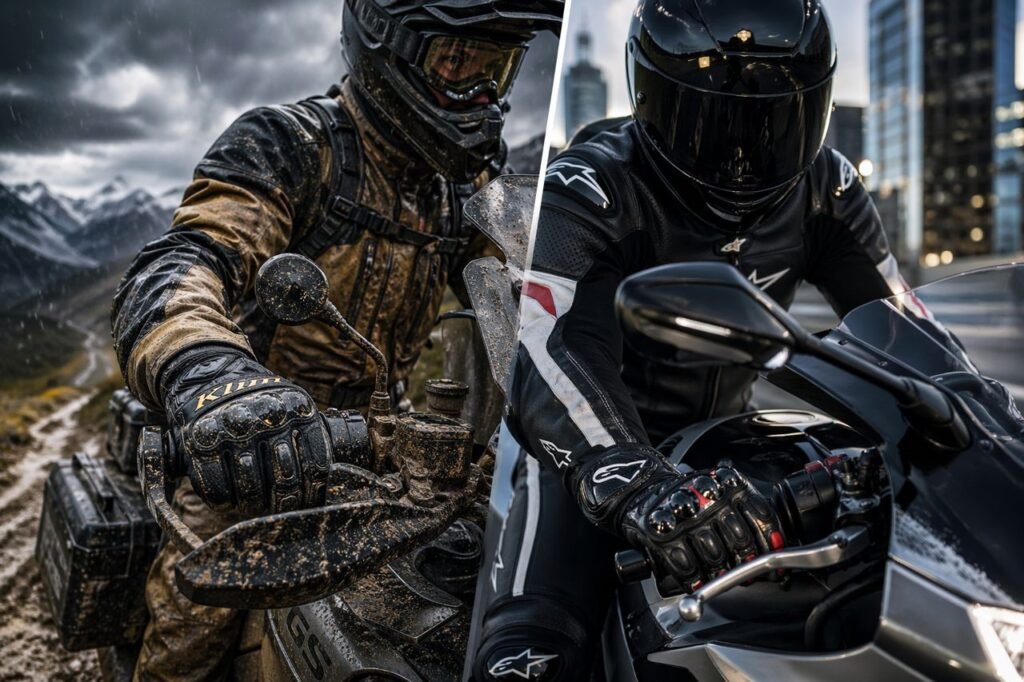
Why Motorcycle Gloves Matter More Than You Think
The best motorcycle gloves are not optional gear—they are essential safety equipment. Your hands are the first instinctive point of contact during a fall. Even at low speeds, asphalt can cause severe skin abrasion in under a second.
A good pair of gloves protects you in three major ways:
- Impact absorption (knuckles and fingers)
- Abrasion resistance (palms and outer layers)
- Control and grip stability in all conditions
Without these, even a minor slip can turn into a serious injury. On top of safety, there’s also control—cheap gloves often reduce throttle precision and make long rides uncomfortable.
This is exactly why riders consistently invest in the best motorcycle gloves, not just for protection but for confidence on every ride.
Top Brands That Dominate Motorcycle Gear
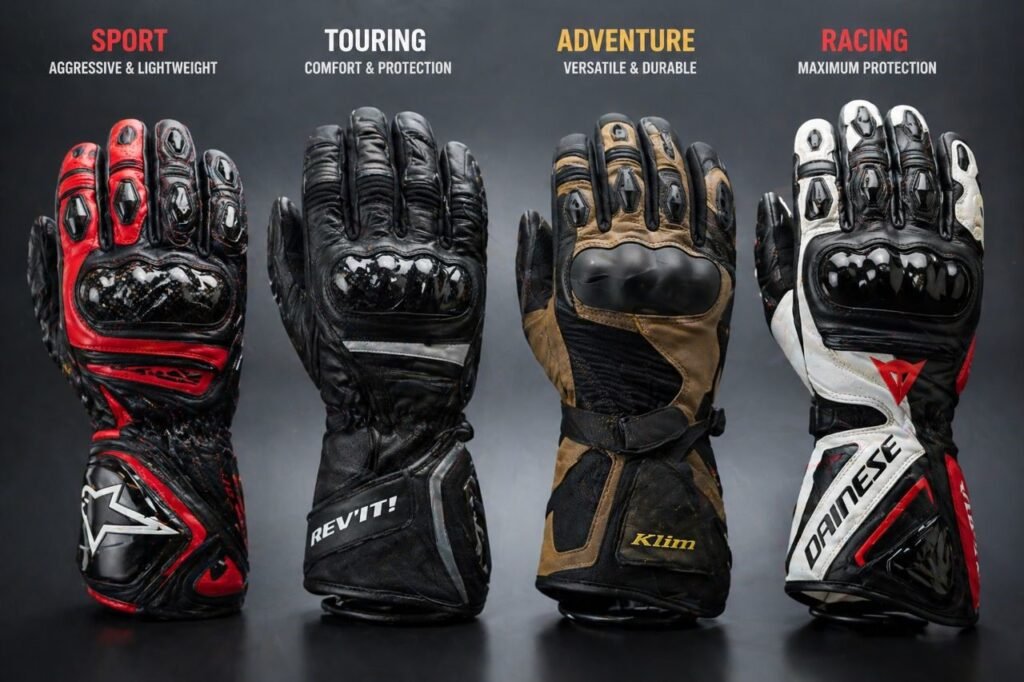
When discussing the best motorcycle gloves, brand reputation matters because it reflects years of testing, rider feedback, and crash research.
Alpinestars
-Known for race-level engineering. Their gloves often feature carbon knuckle protection, advanced stitching, and aggressive sport design.
Rev’It
-Focused on versatility. Perfect for riders who want comfort, urban styling, and touring durability in one package.
Klim
-Adventure-focused gear built for harsh environments, weather resistance, and long-distance endurance.
Dainese
-Premium Italian craftsmanship with high-end safety technology used in racing and sport riding.
Each of these brands consistently produces some of the best motorcycle gloves because they prioritize real-world crash performance, not just aesthetics.
CE Safety Ratings and Protection Systems Explained
One of the biggest differences between average gloves and the best motorcycle gloves is certification.
CE Level 1 vs CE Level 2
- CE Level 1: Basic protection for casual riding
- CE Level 2: Higher impact and abrasion resistance, preferred for serious riders
CE Level 2 gloves are heavily tested under impact and sliding conditions. If safety is your priority, this rating should be non-negotiable.
Scaphoid Protection System (SPS)
The scaphoid bone in your wrist is extremely vulnerable during crashes. SPS technology adds a hard slider on the palm that helps:
- Reduce twisting force during impact
- Prevent wrist hyperextension
- Improve sliding behavior on asphalt
Most high-end best motorcycle gloves now include some form of SPS or palm slider system.
Materials That Define Grip and Control
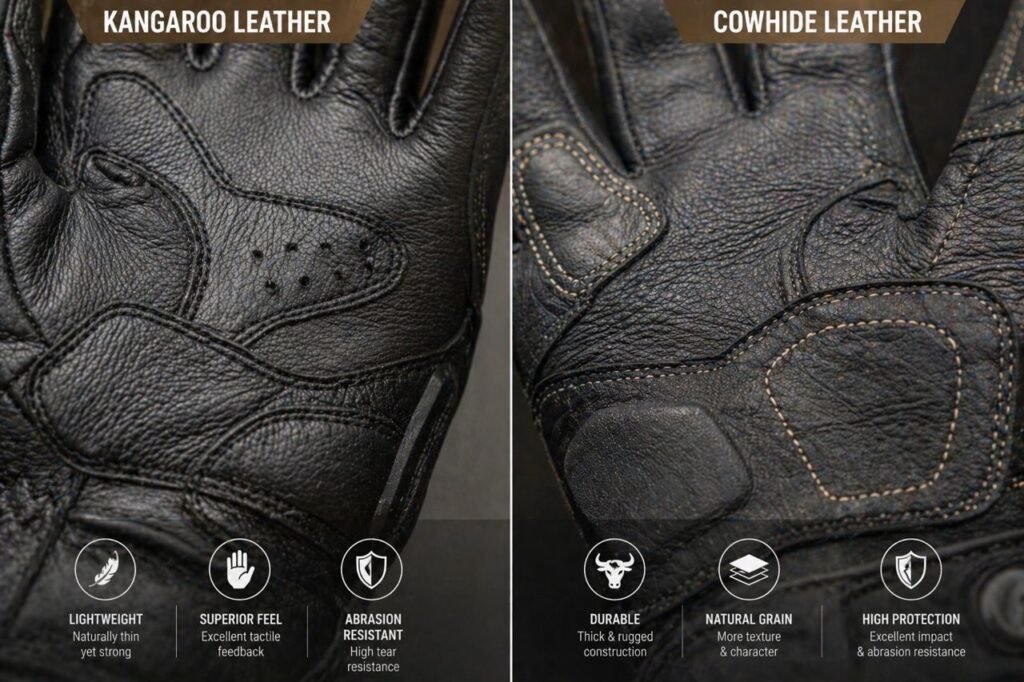
Grip is everything in motorcycle control. The best motorcycle gloves are built using materials that balance feel, strength, and durability.
Kangaroo Leather
- Lightweight but extremely strong
- Excellent tactile feedback
- Often used in racing gloves
Cowhide Leather
- Durable and affordable
- Slightly heavier
- Great for everyday riding
Textile and Mesh
- Maximum airflow
- Ideal for hot climates
- Lower abrasion resistance than leather
The best motorcycle gloves often combine these materials—for example, leather in high-impact zones and textile for ventilation.
Comparison Table: Popular Motorcycle Gloves (2026)
| Brand | Model | Protection Level | Best For | Key Strength |
|---|---|---|---|---|
| Alpinestars | SPX Air Carbon v2 | CE Level 2 | Sport riding | Carbon knuckles + airflow |
| Rev’It | Sand 4 | CE Level 2 | Adventure touring | Comfort + flexibility |
| Klim | Dakar | CE Level 1–2 | Off-road | Durability + weather resistance |
| Dainese | Full Metal 6 | CE Level 2 | Racing | Titanium protection |
| Held | Air n Dry | CE Level 2 | Touring | Dual-chamber weather system |
This comparison shows that the best motorcycle gloves depend heavily on riding style—not just brand name or price.
Grip, Comfort, and Real Riding Experience
The best motorcycle gloves are designed around one key idea: control without effort.
Pre-Curved Fingers
Reduces strain and matches natural hand position on handlebars, especially important for long rides.
Palm Padding and Grip Zones
Gel padding and silicone grip zones:
- Reduce vibration
- Improve throttle stability
- Prevent numbness on long rides
Ventilation
Good airflow prevents sweat buildup, which directly improves grip and safety in hot conditions.
Product Highlights That Riders Actually Use
Some gloves consistently stand out in real-world riding:
- Alpinestars SPX Air Carbon v2
- Excellent airflow
- Carbon knuckle protection
- Sport-focused performance
- Rev’It Sand 4
- Strong touring comfort
- Flexible and durable
- Balanced protection
- Klim Dakar Gloves
- Built for harsh environments
- Reinforced palm grip
- Adventure durability
- Dainese Full Metal 6
- Racing-level protection
- Titanium knuckles
- Premium construction
All of these qualify as best motorcycle gloves in their category, depending on riding needs.
Comfort vs Protection: The Real Trade-Off
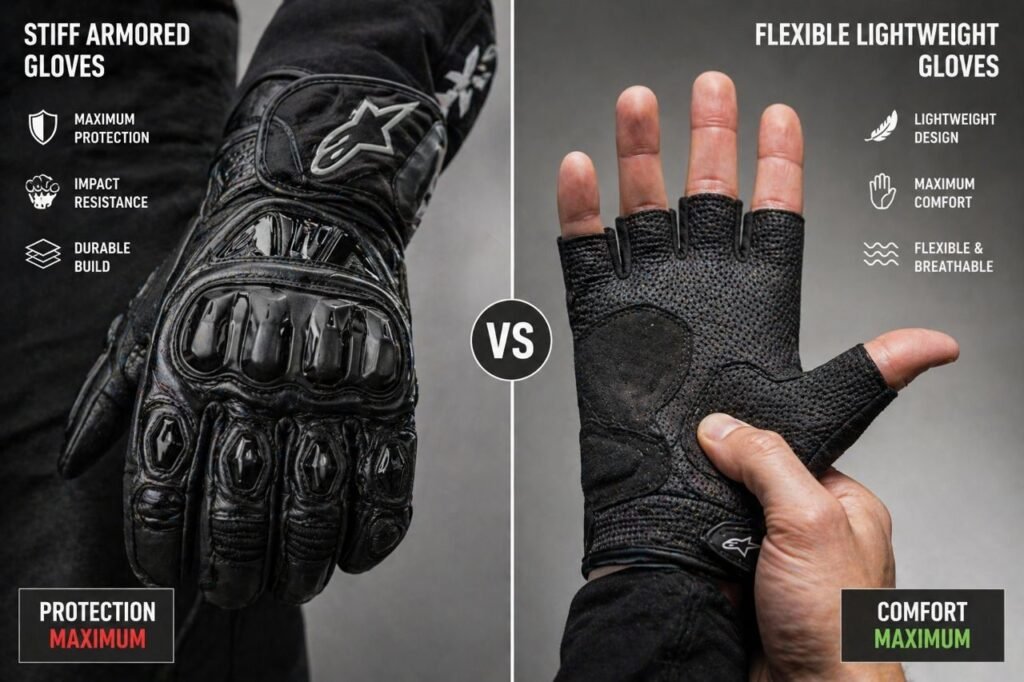
The best motorcycle gloves always balance safety with comfort.
Key considerations:
- Armor placement should not restrict movement
- Flexibility is essential for throttle control
- Breathability affects long-ride comfort
A glove that is too stiff reduces control. A glove that is too soft reduces protection. The ideal balance depends on your riding style and environment.
How to Choose the Right Pair
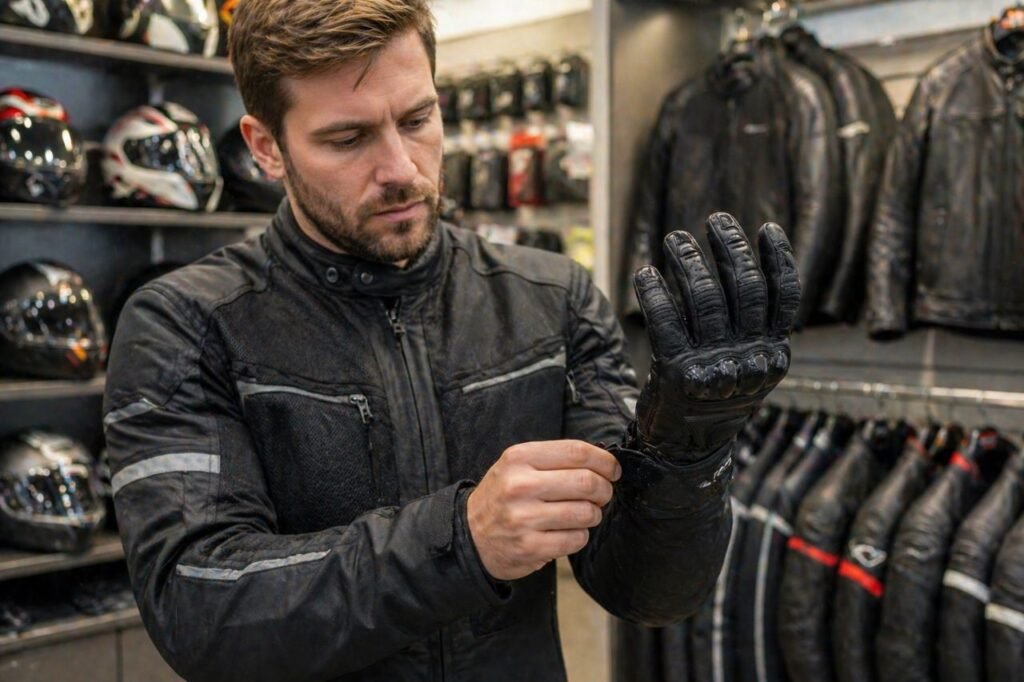
Before buying, focus on:
- Riding type (commute, touring, sport, off-road)
- Climate conditions (hot, cold, wet)
- Distance and frequency of riding
- Required protection level
The best motorcycle gloves are the ones that match your real-world usage—not just online popularity.
Maintenance Tips to Extend Glove Life
Even premium gloves need care:
- Clean leather regularly with mild soap
- Air dry after wet rides
- Avoid direct heat
- Store in dry, ventilated space
Good maintenance keeps even the best motorcycle gloves performing well for years.
FAQ: What Riders Really Ask
What are the best motorcycle gloves for long-distance touring?
-Look for padded palms, ventilation, and pre-curved fingers to reduce fatigue.
Are racing gloves good for daily riding?
-Yes, but they can feel stiff and less comfortable for commuting.
How tight should motorcycle gloves fit?
-Snug but not restrictive. Fingers should reach the tips without pressure.
Can one pair of gloves work for all seasons?
-Not effectively. Summer and winter conditions require different glove designs.
Final Thoughts
The best motorcycle gloves are not about hype or branding—they’re about fit, function, and protection. Every rider has different needs, and the right glove should match your riding style, climate, and safety expectations.
When chosen correctly, the best motorcycle gloves feel almost invisible while riding—but still give you confidence that your hands are protected no matter what happens on the road.