
I still remember the exact mile marker. Somewhere past Show Low, Arizona, on a July afternoon hot enough to warp asphalt, I watched a thin nylon saddlebag melt itself onto my exhaust header like a marshmallow forgotten over a campfire. The zipper fused shut. Inside was a rain jacket I needed about four hours later, when a monsoon cell dropped out of nowhere and turned the highway into a river. I rode the last hundred miles soaked, furious, and newly obsessed with luggage that could actually survive a real trip — which is what eventually led me to Viking Bags’ saddlebags, built for exactly this kind of abuse.
That failure — and a dozen others since, including a pannier that popped its latch on a gravel switchback outside Ouray and dumped my tools across the road — is why I don’t trust marketing copy anymore. I trust what’s strapped to a bike after ten thousand miles. Over fifteen years of cross-country riding, on everything from a KLR650 to a Road King to my current Africa Twin, I’ve cycled through more luggage systems than I can count. This guide is my attempt to save you from the mistakes that taught me the most.
So let’s talk honestly about the best motorcycle saddlebags for touring (2026), because the market has changed a lot since my melted-zipper days, and not all of that change is hype.

The Real Story Behind Best Motorcycle Saddlebags for Touring (2026)
Touring luggage has quietly gone through a materials revolution. Five years ago, most riders chose between stiff fiberglass hard cases or leather slant bags that looked great and soaked up water like a sponge. Consequently, a lot of us just accepted wet gear as the cost of doing business. That’s no longer true. The rise of welded TPU (thermoplastic polyurethane) construction, borrowed from whitewater dry-bag technology, has pushed soft luggage into territory that used to belong exclusively to expensive hard cases.
Specifically, adventure touring has driven most of this shift. Riders doing gravel, forest roads, and multi-day loops needed bags that wouldn’t crack, dent, or trap water the way old-school hard panniers did. In contrast, the cruiser and bagger crowd has stayed more loyal to leather and weatherproof canvas, partly for aesthetics and partly because those bikes rarely see the kind of abuse an adventure bike takes on a rutted forest service road.
That said, the line between the two camps is blurring. When I set out this year to evaluate the best motorcycle saddlebags for touring (2026), I found premium touring brands borrowing construction techniques from both worlds — welded seams from the dry-bag industry, structured frames from the hard-case world, and mounting hardware that finally treats vibration and fatigue as a real engineering problem instead of an afterthought.
Materials That Matter — What Actually Makes the Best Motorcycle Saddlebags for Touring (2026)
Here’s where I get specific, because “durable” is a word that means nothing on a spec sheet.
Fabric and Denier: What the Numbers Actually Tell You
Ballistic nylon rated at 1680 denier is still the benchmark for abrasion resistance in stitched-and-sewn soft luggage. Denier measures the thickness of the fiber, not the weave tightness, so a 1680D fabric with a poor coating can still fail faster than a well-treated 1000D fabric. I learned this the hard way on a set of budget bags that shredded against my crash bars within two seasons, despite a denier rating that looked impressive on paper.
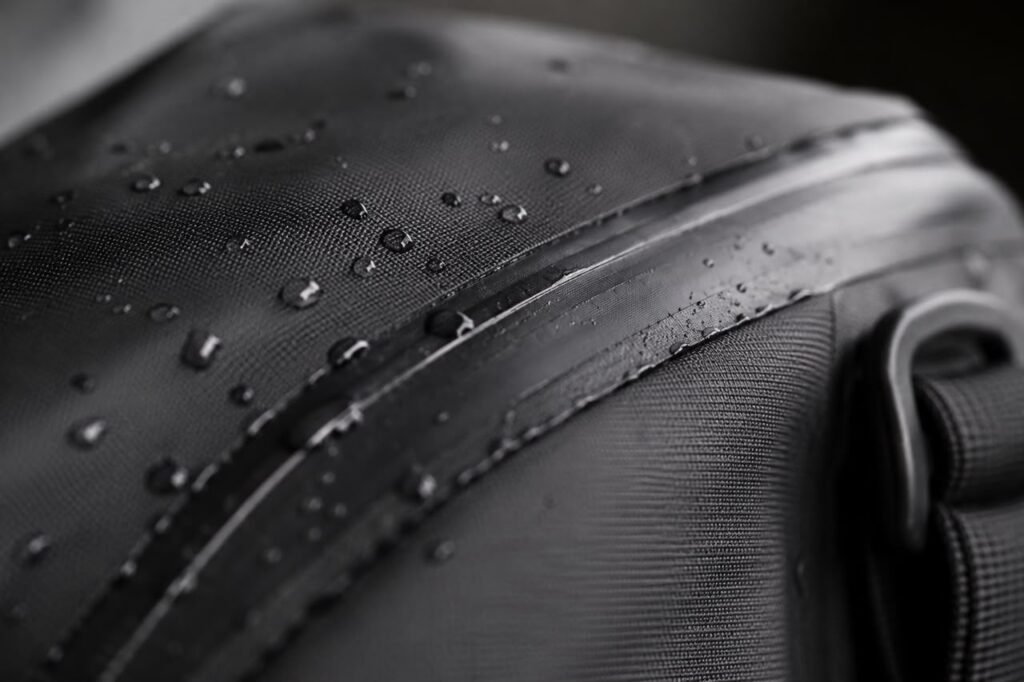
Welded TPU, on the other hand, skips stitching almost entirely. Furthermore, it eliminates needle holes, which are the single most common failure point for water intrusion in sewn bags. I’ve run TPU roll-top bags through creek crossings in Colorado and come out with bone-dry gear every time. The tradeoff is weight and rigidity — TPU is heavier per square inch than coated nylon and doesn’t hold a shape as well, so most manufacturers reinforce it with an internal frame or a semi-rigid backing panel.
Full-grain leather remains the standout for cruiser and bagger touring, largely because it ages into a broken-in shape that molds to the bike. However, raw leather offers essentially no water resistance until it’s treated, and even treated leather needs regular conditioning or it cracks along stress points near the mounting hardware.
Waterproof Ratings, Explained Without the Marketing Fog
IP ratings get thrown around constantly, and most riders have no idea what they actually promise. An IPX6 rating means the bag can handle powerful water jets from any direction — think heavy highway spray off a semi-truck. IPX7 means the bag can survive full submersion up to a meter deep for around thirty minutes. For manufacturer-published testing standards on this, IEC 60529 is the document worth referencing if you want the technical definitions straight from the source.
In practice, IPX6 is enough for the overwhelming majority of touring conditions, including sustained highway rain. I only reach for IPX7-rated gear when I know a route includes water crossings, because that’s the scenario where submersion actually happens rather than just heavy spray.
Heat Resistance and Exhaust Clearance
This is the section I wish someone had handed me before Show Low. Standard nylon webbing and coated fabrics typically start deforming somewhere in the 150 to 200 degree Celsius range, and a high-mounted exhaust can radiate heat well past that during a long highway pull in summer temperatures. Consequently, any bag mounted within a few inches of a header needs either a heat shield, a reflective barrier layer, or physical clearance of at least two to three inches, depending on your exhaust’s specific heat signature. Manufacturers rarely publish exact melting points for their fabric blends, so if you’re mounting near a high exhaust, ask directly or check third-party rider forums for real-world clearance reports before you trust a stock mounting bracket.
Hard vs. Soft: Choosing the Best Motorcycle Saddlebags for Touring (2026) for Your Ride
I’ve low-sided twice in fifteen years — once on gravel, once on black ice I never saw coming. Both times, the luggage mattered more than I expected going in.
Soft bags absorb impact. They deform, slide, and generally protect both the bike and the pavement from each other. My gravel low-side shredded the outer fabric of a soft pannier but left the subframe and my leg untouched. Aluminum hard cases behave very differently. While they resist punctures and offer genuine lockable security, a hard case can act as a lever in a low-side, transferring impact force directly into the mounting rack or subframe. I’ve seen riding buddies bend an entire rack system because the aluminum case refused to give.
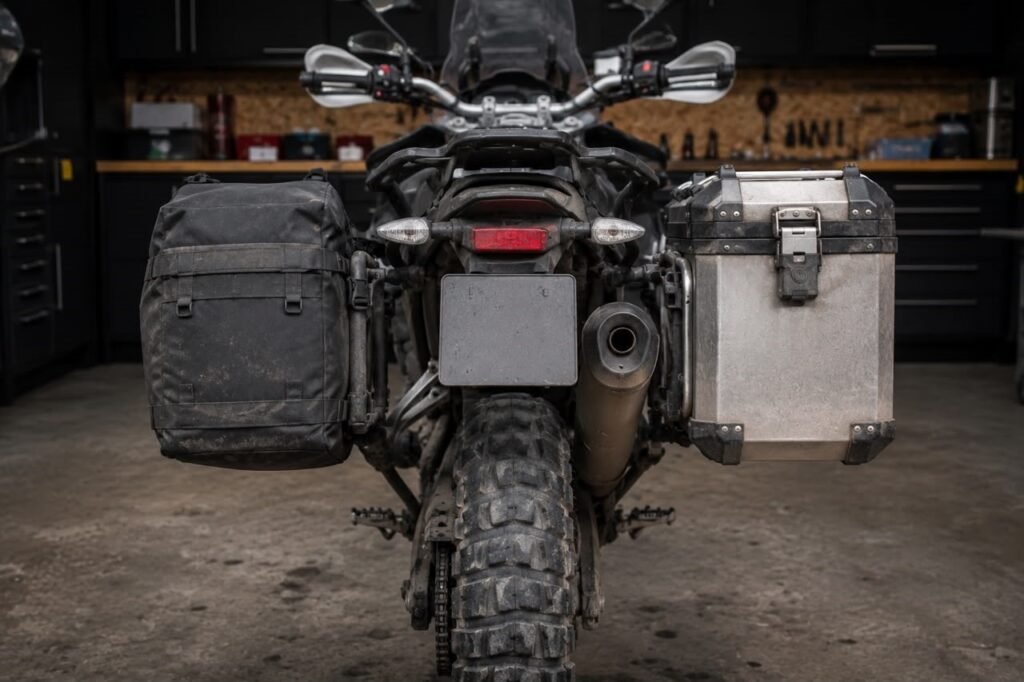
Security is the flip side of that same coin. Soft bags, even the good ones, are vulnerable to a determined thief with a box cutter — slash resistance exists on paper, but a sharp blade defeats most fabrics in seconds. Hard cases with actual locking latches are a real deterrent, especially for riders who park in unfamiliar cities overnight. If you’re touring through areas where you can’t watch the bike, that security tradeoff deserves serious weight in your decision.
Weight distribution is the third factor riders underestimate. Hard cases sit further from the bike’s centerline due to their rigid frames, which raises the polar moment of inertia and can make the bike feel more reluctant to change direction at speed. Soft bags typically hug the bike’s profile more closely, which I personally prefer on twisty mountain routes, though the difference becomes less noticeable once you’re loaded down and cruising at highway speed.
My 2026 Buying Guide: Best Motorcycle Saddlebags for Touring (2026) by Category
Premium Adventure Touring
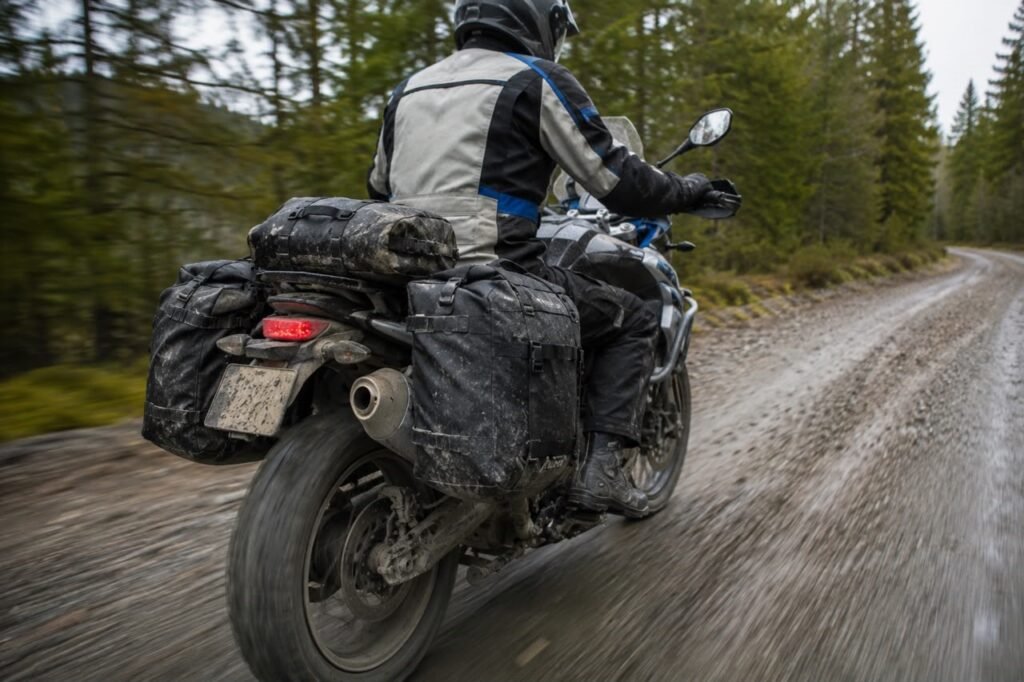
For riders doing serious mixed-surface touring, systems like the Mosko Moto Backcountry series and Kriega’s OS platform represent where the adventure segment has landed. Both use rackless or semi-rackless mounting architecture, which distributes weight lower and closer to the bike than traditional pannier frames. Capacity in this tier typically runs from 30L to 50L depending on how the system is configured, and that modularity is the real selling point — you can run a slimmer setup for a weekend and expand it for a three-week loop without buying an entirely new system. I’ve run a Kriega-style setup through some genuinely miserable weather in the Pacific Northwest and never once dealt with the zipper failures that plagued my early touring years.
Long-Haul Cruiser and V-Twin Slant Bags
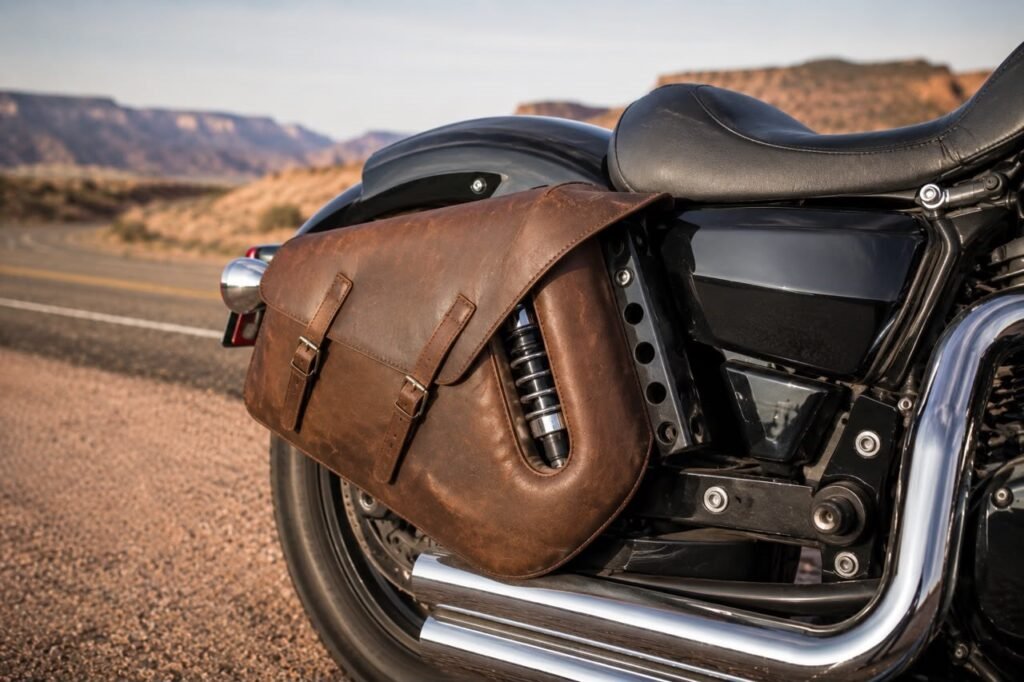
Cruiser and bagger riders have different priorities — aesthetics, ease of mounting and dismounting, and compatibility with shock cutouts on bikes with rear suspension in an awkward spot. Premium leather and weatherproof canvas options, including Viking Bags’ Darkin series, sit in this tier. These bags typically favor a traditional slant-bag silhouette with reinforced mounting straps and, in the better options, a removable rain cover for the leather itself. If you’re running a V-twin cruiser on long interstate hauls, this category prioritizes comfort and classic styling without abandoning modern weatherproofing entirely.
Budget-Conscious Long-Tail Options
Not everyone needs a premium system for a weekend loop or an occasional cross-state ride. Budget-tier soft luggage has genuinely improved over the last few years, and several accessible brands now offer respectable 900D to 1200D construction with taped seams that hold up fine for fair-weather touring. That said, I’d still recommend treating any budget bag as a two-to-three season investment rather than a lifetime purchase — the coatings and hardware simply don’t hold up the way premium materials do under constant sun and vibration exposure.
I get asked constantly whether a budget bag can honestly compete with the pricier entries in this roundup of the best motorcycle saddlebags for touring (2026), and my answer is a qualified yes. A budget system won’t survive a multi-year, cross-continent expedition the way a premium TPU setup will, but for a rider doing a handful of weekend trips a season, the value math often works out in their favor. Just inspect the seams and hardware every few months, and retire the bag the moment you see coating flake off or stitching pull loose, because that’s usually the first sign of a waterproofing failure waiting to happen on the next rainy leg of your trip.
Mounting Hardware Deserves Its Own Line Item
I used to treat mounting hardware as an afterthought, until a cheap strap buckle sheared off at 70 miles an hour on I-40 and left a bag swinging by a single tie-down. Since then, I check every clip, buckle, and quick-release before a trip, not just at the start of the season. Stainless steel hardware resists corrosion far better than the coated steel found on budget systems, and it’s worth the upcharge if you’re riding through coastal humidity or winter road salt. Quick-release buckles save time at gas stops, but they also introduce a failure point if the mechanism wears down, so I inspect mine regularly rather than assuming they’ll hold forever.
Critical Fitment and Safety Considerations
Fitment is where good gear turns into a bad trip if you skip the details. Shock cutouts matter enormously on cruisers, since rear shocks sit close to where a standard slant bag wants to hang, and a poorly fitted bag can rub through fabric within a few hundred miles. Similarly, bikes with single-sided or asymmetric exhaust routing — increasingly common on modern ADV bikes — often need asymmetric rack spacing so one side isn’t crowding a hot pipe while the other side has room to spare.
Weight distribution deserves its own conversation too. Overloading the rear of a touring bike compresses rear suspension sag, which changes your bike’s geometry and can introduce a wallowing feeling at highway speed, particularly on bikes not originally designed for heavy touring loads. I always aim to keep heavier items low and centered, and I check sag manually after loading rather than trusting a gut estimate. It’s a five-minute check that has saved me from at least one genuinely scary high-speed weave on a loaded bike.
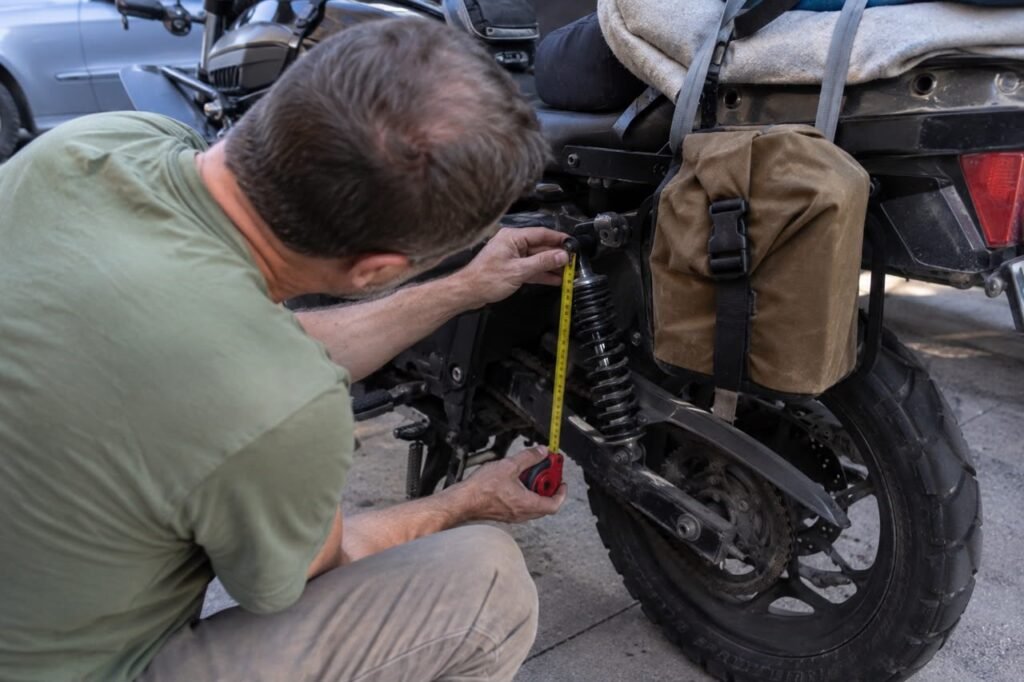
None of this is theoretical for me. Every fitment lesson in this section came from a trip where I got it wrong first and figured out the fix afterward, usually somewhere without cell service. That’s ultimately why I wrote this guide to the best motorcycle saddlebags for touring (2026) the way I did — not as a spec sheet comparison, but as a record of what actually breaks, rubs, melts, or shifts when you put real miles on a loaded bike. Take the specs seriously, but take your own test ride even more seriously, because no denier rating tells you how a bag will sit against your specific subframe, exhaust routing, and riding style.
Frequently Asked Questions
Are soft saddlebags safer than hard panniers in a crash? In most low-side scenarios, soft bags absorb impact and slide rather than transferring force into the subframe, which is generally gentler on both the bike and rider. Hard cases offer better security and puncture resistance but can act as a lever point during a crash, occasionally bending mounting racks.
What waterproof rating do I actually need for touring? For the overwhelming majority of touring conditions, including sustained highway rain, an IPX6 rating is sufficient. IPX7 becomes relevant specifically when your route includes water crossings or genuine submersion risk.
How close can a saddlebag safely sit to my exhaust? As a rule of thumb, I keep soft luggage at least two to three inches from any high-mounted exhaust, and I look for a heat shield or reflective barrier layer if clearance is tight. Fabric deformation can begin well before you’d expect, especially on long summer highway pulls.
Should I choose rack-mounted or rackless soft luggage? Rackless systems generally sit lower and closer to the bike, which helps handling, but they typically require more careful strap tensioning to avoid shifting. Rack-mounted systems are more forgiving for riders who want a quick on-and-off setup at each stop.
Final Thoughts
Fifteen years and a lot of ruined gear later, my take on the best motorcycle saddlebags for touring (2026) comes down to matching the bag to the terrain you actually ride, not the terrain you imagine riding. If you’re crossing water and gravel, welded TPU and a rackless soft system will serve you better than anything with a zipper. If you’re logging interstate miles on a cruiser, a well-treated leather slant bag with real weatherproofing still earns its keep. Whatever you choose, check your exhaust clearance, check your sag after loading, and don’t trust a denier number without knowing what coating sits behind it. That’s the difference between a good trip and a melted zipper outside Show Low.