
Picture this. You’re loading up for a weekend ride. Your rain jacket, phone charger, snacks, and spare gloves won’t fit in your pockets. So you bungee everything to the seat and hope it survives the first pothole. We’ve all been there. Riding without proper storage turns a simple trip into a hassle, and it’s often the thing that makes new riders question the whole hobby.
That’s where a motorcycle tail bag comes in. In simple terms, a motorcycle tail bag is a soft or semi-rigid bag that straps onto your rear seat, passenger pegs, or luggage rack. It sits behind you, out of the way. It gives you a dedicated spot for gear instead of a pile of bungee cords.
This guide is for beginners. We wrote it for new riders, commuters, and weekend adventurers who want to know what a tail bag actually is and which one fits their bike. We’ll cover how a tail bag differs from other motorcycle luggage. We’ll also cover how to pick one, how to mount it safely, and which features actually matter.
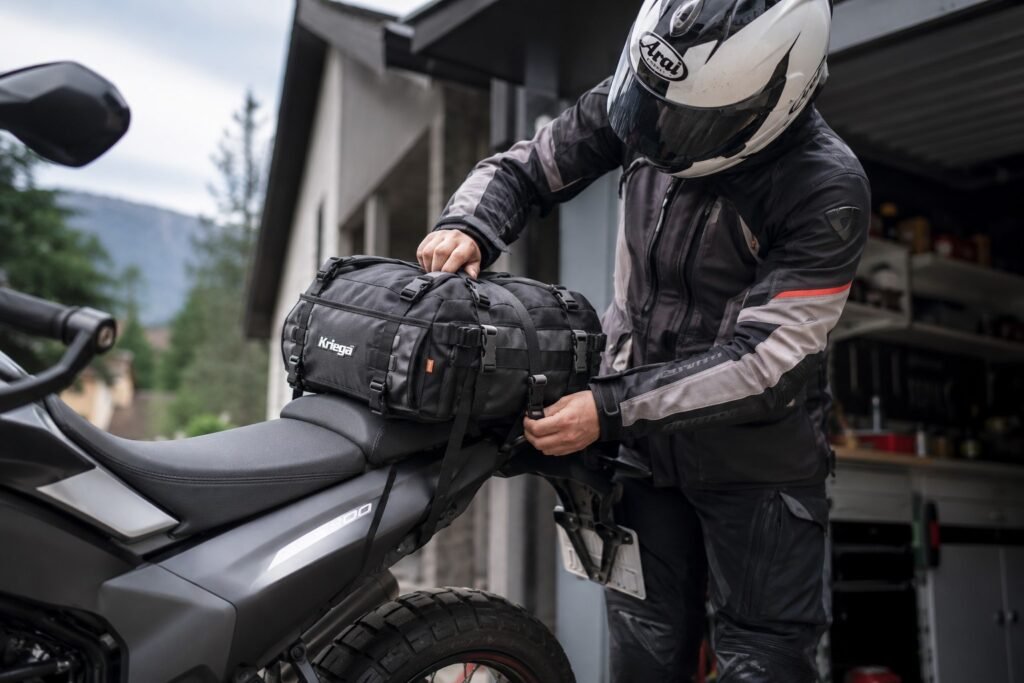
Motorcycle Tail Bag vs Tank Bag
New riders often ask us whether to get a tail bag or a tank bag first. Honestly, it depends on how you ride. Both solve the same basic problem — you need somewhere to put your stuff — but they solve it in different ways.
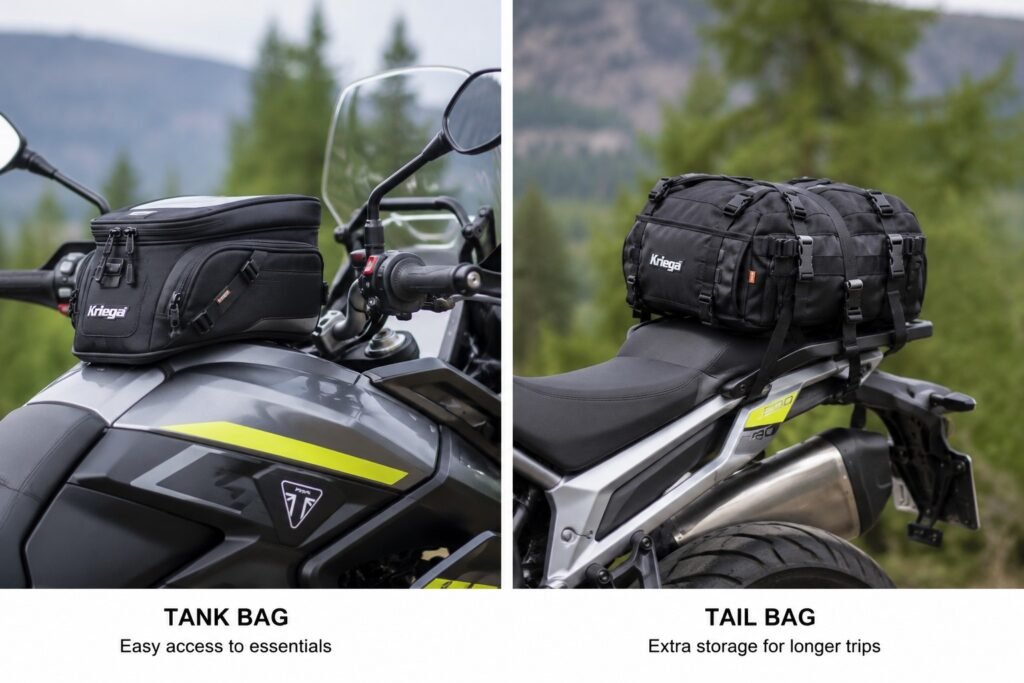
A tank bag sits on top of your fuel tank. Magnets or straps hold it in place, and it puts your phone, wallet, or snacks right in front of you. A motorcycle tail bag rides behind the seat instead. It tends to offer more usable space for longer trips. Neither option beats the other outright. It comes down to what you’re hauling and how your bike is set up.
| Feature | Motorcycle Tail Bag | Tank Bag |
|---|---|---|
| Stability | Very stable when strapped to a rack or subframe | Can shift slightly on hard braking |
| Capacity | Generally larger, expandable on many models | Smaller, limited by tank shape |
| Fuel access | No interference with the tank cap | You must move or unclip the bag to refuel |
| Aerodynamics | Sits low and out of the wind blast | Adds bulk directly in your line of sight and airflow |
Commuting daily and want quick access to your phone or wallet? A tank bag might win. Carrying a change of clothes, tools, or rain gear? A motorcycle tail bag is usually the smarter pick.
How to Choose a Motorcycle Tail Bag
Once a tail bag fits your riding style, the next question is how to choose a motorcycle tail bag that won’t let you down. A few things are worth thinking through before you buy.
Hardshell vs Soft-Sided
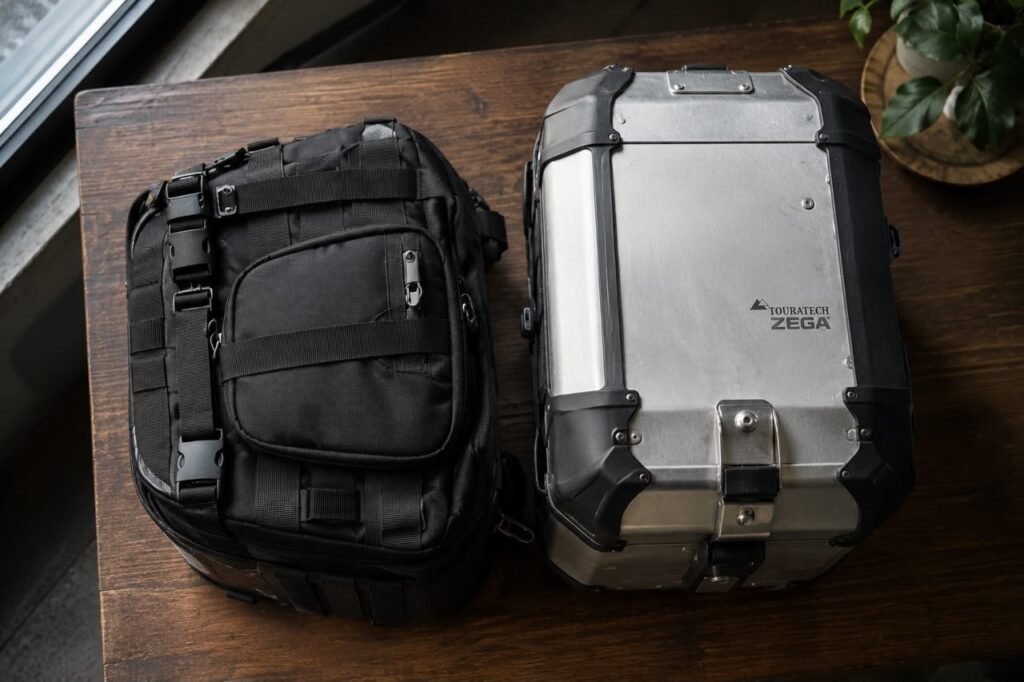
Hardshell tail bags use a rigid outer shell, often built around an ABS plastic frame. This shell protects your gear and holds its shape even when empty. Touring riders love hardshell bags for that fixed, secure, weatherproof space. Soft-sided bags flex and compress instead. That flexibility makes them easier to squeeze onto smaller bikes and easier to store when you’re not using them.
Material Matters
Quality soft-sided bags use 1680D ballistic nylon. This heavy-duty woven fabric resists abrasion, tearing, and wear far better than the thin nylon on budget bags. Hardshell versions typically rely on molded ABS plastic. That plastic trades some flexibility for serious impact resistance. Neither material wins outright — it depends on whether you value structure or packability more.
Waterproof vs Water Resistant Motorcycle Tail Bag
This trips up a lot of beginners, and honestly, it trips up experienced riders too. “Water resistant” means a bag handles light rain or splashes for a short time before moisture works its way in. “Waterproof” means the bag keeps water out entirely. Manufacturers achieve this with welded seams, roll-top closures, or a separate rain cover.
Manufacturers sometimes list an IPX rating to make this clearer. In plain English:
- IPX4 — splash resistant from any direction, fine for light drizzle
- IPX6 — handles heavy rain and powerful water jets
- IPX7 — survives brief submersion, the gold standard for touring bags
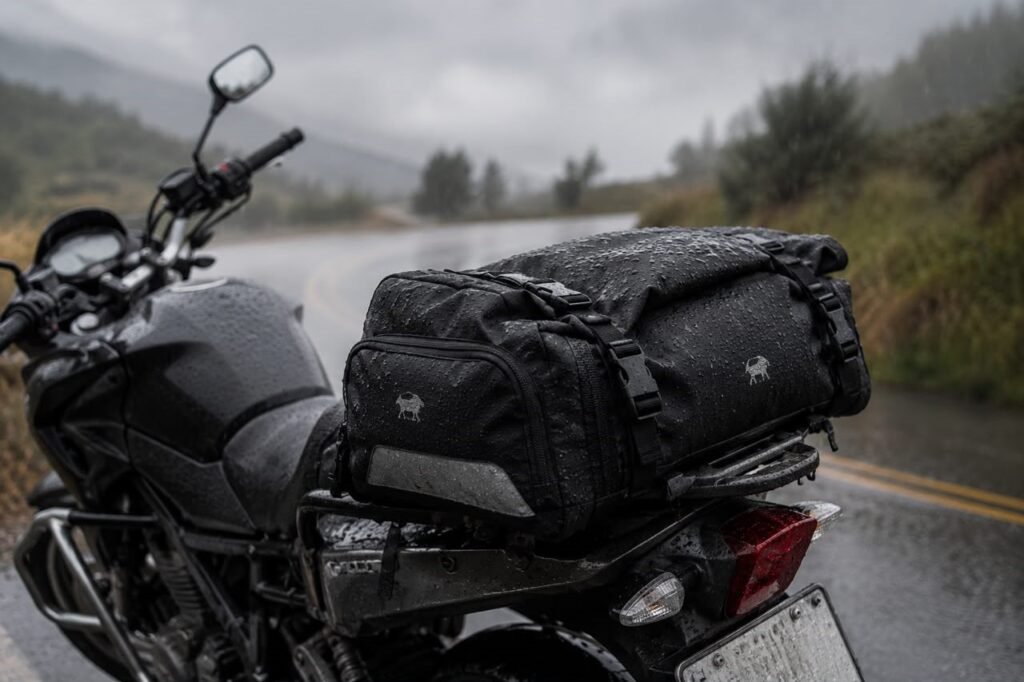
Do you ride in unpredictable weather? Do you forget to check the forecast? Then spend the extra money on a genuinely waterproof motorcycle tail bag instead of one that’s merely resistant.
Universal Tail Bag Mounting & Safety
Knowing how to attach a tail bag to a motorcycle matters just as much as picking the right one. A poorly mounted bag can shift at speed. It can block your brake light, or worse, work its way into the rear wheel.
Most beginner-friendly options come as a universal tail bag with straps. Manufacturers design these to fit a wide range of bikes without bike-specific hardware. Here’s the general process:
- Locate your anchor points. Passenger foot pegs, the rear subframe, and the luggage rack (if your bike has one) offer the strongest mounting spots.
- Loop the straps through solid structure, not plastic body panels, since those can crack or snap under tension.
- Cinch straps evenly on both sides. An unevenly mounted bag leans and rubs against your exhaust or rear tire.
- Test for wobble before riding. Grab the bag and shake it firmly. It shouldn’t shift more than an inch or two.
- Recheck after the first few miles. Straps settle and loosen slightly once the bag has some road vibration behind it.
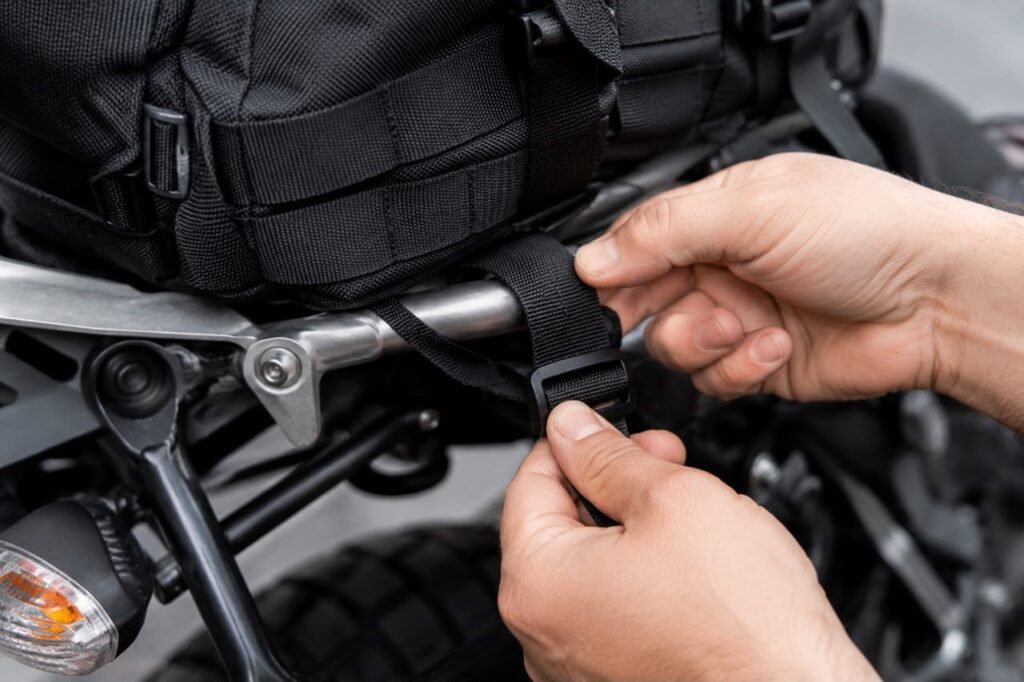
Safety warning: Keep straps and bag material well clear of the exhaust pipe and rear wheel. Hot exhaust can melt straps or fabric in minutes. A loose strap near the rear wheel is a genuine crash risk, so take an extra thirty seconds to tuck in loose ends before you pull away.
Premium Features to Look for Before You Buy
Not all tail bags are equal. Once you start shopping, you’ll notice a wide gap between basic commuter bags and full touring setups.
Expandable Capacity
Many mid-range and premium bags include a zippered expansion panel. This panel adds several liters of space exactly when you need it. It’s handy if you occasionally pack for a weekend trip but don’t want a bulky bag riding around empty during your daily commute.
Lockable Zippers
Parking in public or leaving your bike unattended? Lockable zipper pulls add a real layer of theft deterrence. They won’t stop a determined thief, but they do stop the casual opportunist.
Quick-Release Buckles
Quick-release buckles let you pull the bag off in seconds. You skip the hassle of wrestling with knots or clip systems. If you take your gear inside at every stop, this feature saves real time and frustration.
Backpack Conversion Straps
Some bags include hidden backpack straps. These straps tuck away when mounted and pull out when you need to carry the bag on foot. It’s a small feature, but a genuinely useful one once you’re off the bike and walking through a gas station or hotel lobby.
Commuter vs Touring: Know Your Use Case
A lightweight motorcycle tail bag for commuting should prioritize quick mounting, a compact footprint, and enough room for a laptop, lunch, and rain layer. A touring bag should prioritize something different: capacity, structural support, and full waterproofing for longer, less predictable rides. Buying a massive touring bag for a short daily commute just means hauling extra bulk you don’t need.
Frequently Asked Questions
What is a motorcycle tail bag actually used for? It carries everyday riding essentials — rain gear, tools, snacks, a change of clothes — in a spot that stays clear of your controls and fuel access. Think of it as the motorcycle equivalent of a trunk.
Can I use a motorcycle tail bag on any bike? Most universal tail bags with straps fit a wide range of bikes, from cruisers to sport bikes to adventure models. Always check the strap length and mounting points against your specific bike before buying, since seat shapes and subframes vary quite a bit.
How much weight can a tail bag hold? It depends on the bag and your bike’s load rating. Most soft-sided tail bags carry somewhere between five and twenty pounds comfortably. Overloading the bag strains the straps and can affect your bike’s handling, so check the manufacturer’s weight limit rather than guessing.
Will a tail bag affect my motorcycle’s handling? A properly mounted, reasonably packed tail bag barely affects handling since it sits low and centered over the rear wheel. Problems usually come from overpacking or uneven strapping, not the bag itself.
Is a tail bag better than saddlebags? Not necessarily better, just different. Saddlebags offer more total capacity and better weight distribution for long tours. A tail bag mounts, removes, and stores faster, which makes it a great option for riders who don’t want a permanent luggage setup.
Do I need a rain cover if my bag is already water resistant? If your riding regularly includes heavy rain, yes. A rain cover adds a second layer of protection over a water-resistant bag and closes the gap between “resistant” and truly waterproof performance.
Final Thoughts
A good motorcycle tail bag solves a problem every rider eventually runs into: where do you actually put your stuff? Learn the difference between hardshell and soft-sided builds. Understand what waterproof ratings actually mean. Know how to mount a bag safely. Do those three things, and you’ll shop with confidence instead of guessing.
From here, it’s really about matching the bag to how you ride — commuter-light or touring-ready. That’s exactly where a solid product comparison comes in handy. Up next, we’ll break down some of the best options on the market. You’ll find the one that fits your bike, your budget, and the way you actually ride.