
Published July 18, 2026 by Chris Mchenga
Disclosure: This article contains Amazon affiliate links. If you make a purchase through these links, we may earn a small commission at no extra cost to you. This helps support the site and allows us to continue creating detailed motorcycle guides. Thank you for your support!
I still remember the first time a top box nearly put me in a ditch. I’d loaded it with camping gear for a weekend trip, cinched the straps, and pulled onto the highway feeling pretty proud of myself. Then a semi passed me at seventy miles an hour, and the back of my bike started wagging like a dog’s tail. That was my crash course in motorcycle top box safety, and it’s the reason I’ve spent the last several years testing cases, racks, and packing methods on everything from adventure bikes to cruisers.
This guide covers what I’ve learned the hard way, plus what we tested more deliberately once I started taking this seriously. Motorcycle top box safety isn’t just about picking a case that looks good in photos. It’s about physics, mounting hardware, and packing discipline working together so your bike still handles the way it’s supposed to.

How a Top Box Changes the Way Your Bike Behaves
Every motorcycle is tuned around a center of gravity that the manufacturer calculated for a rider, maybe a passenger, and not much else. Bolt a loaded case onto the tail, and you shift that balance point up and backward. This single change explains most of what goes wrong with poorly set up luggage.
Weight sitting high above the rear axle raises your bike’s center of gravity. Because of this, the bike leans and recovers more slowly in corners, and it takes more effort to hold a line through a sweeping turn. I noticed this immediately on my own bike when we tested a fully loaded 40-liter case against the same bike unloaded on a twisty backroad. The loaded version pushed wide on turn-in every single time.
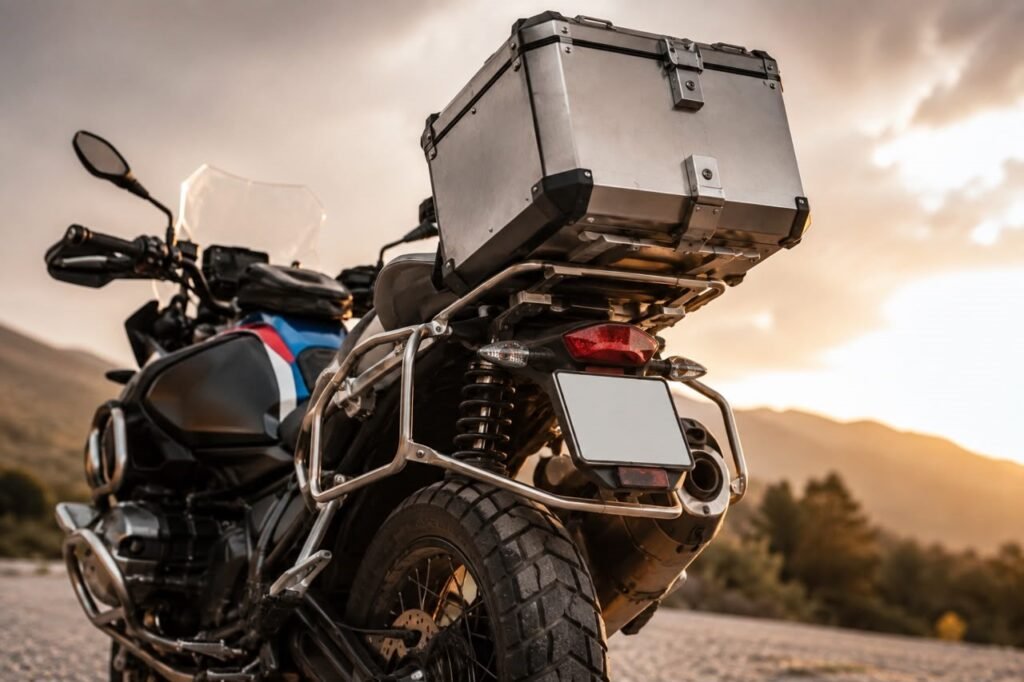
Weight sitting behind the rear axle does something different. It reduces the load pressing down on your front wheel, especially under acceleration. Less weight on the front tire means less traction available for steering input. This is exactly how top box affects motorcycle handling at low speeds, in parking lots, and during tight U-turns, where a suddenly light front end feels vague and disconnected.
Why High-Speed Instability Happens
At highway speed, this same rear-heavy, top-heavy setup becomes dangerous in a different way. Any small input, a bump, a gust, a twitch of the handlebars, gets amplified because the bike’s mass is no longer centered where the engineers designed it to be. The result is a wallow that can build into a full tank slapper if you don’t manage it correctly.
Preventing tank slappers with heavy luggage starts with understanding that speed and weight distribution multiply each other’s effects. A case that feels stable at 50 mph can feel genuinely unsafe at 80 mph. I’ve felt this transition happen in real time, and it’s not subtle once it starts.
The Buying Guide: What Actually Matters in a Top Box
Before we get into packing and mounting specifics, it’s worth talking about what separates a safe top box from a liability. I’ve swapped through enough cases over the years to know which features are genuinely worth paying for, and I’m sharing this as one rider to another, not as a sales pitch.
Look for a quick-release mounting system first. In an emergency, or just at the end of a long day, being able to pop the case off in seconds matters more than people expect. Cheap quick-release latches wear out and start rattling within a season, so check for a metal locking core rather than plastic-on-plastic contact.
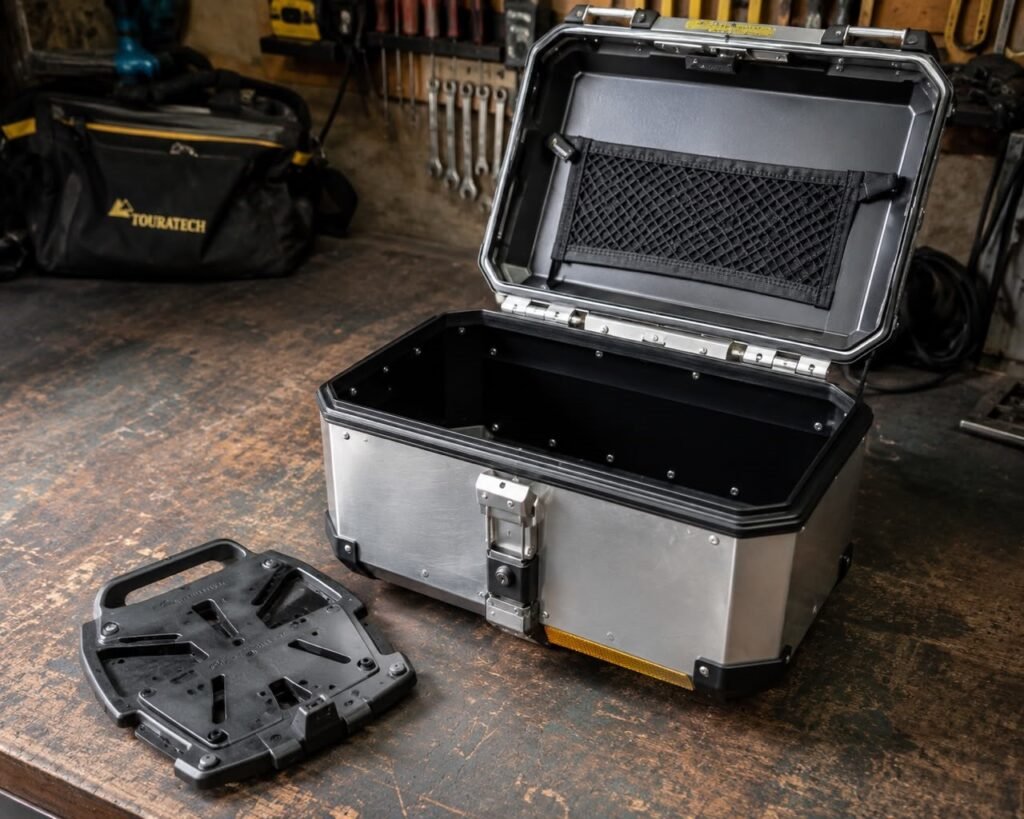
A proper locking mechanism is non-negotiable. Anti theft tips for motorcycle hard cases always start with the lock itself, because a case that pops open with a screwdriver isn’t protecting anything. Look for a case with a separate key cylinder from your ignition, or better yet, one that integrates with your bike’s existing key system so you’re not carrying an extra fob.
Aerodynamic profiling isn’t just about fuel economy or noise. A case with a rounded, tapered shape sheds crosswind pressure more predictably than a boxy one, which directly affects stability at speed. Reflector strips or built-in LED brake lights add a real margin of visibility, especially if you ride at dusk or in traffic where drivers are scanning for smaller shapes than a car.
Aluminum vs. ABS Plastic, and Plate vs. Rack Mounting
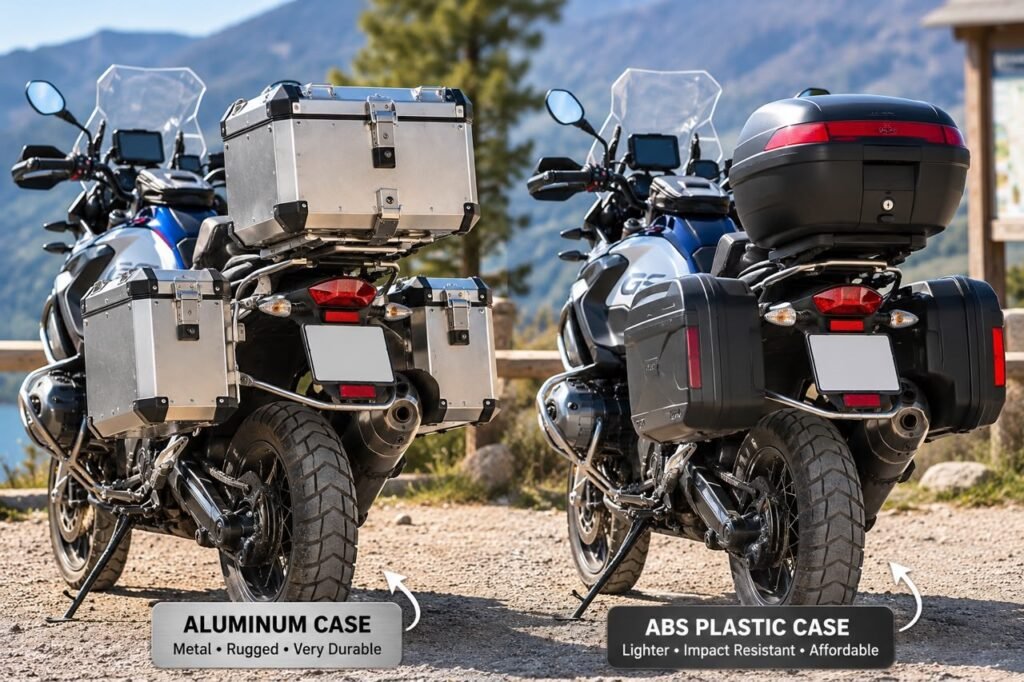
Material and mounting choice affect motorcycle top box safety more than most riders realize. I’ve run both aluminum and ABS cases, and both mounting styles, long enough to have real opinions backed by actual mileage.
| Feature | Heavy-Duty Aluminum | Reinforced ABS Plastic |
|---|---|---|
| Aerodynamics | Boxier shape, more drag at highway speed | Molded curves reduce crosswind resistance |
| Durability | Dents but rarely cracks; survives drops | Flexes on impact but can crack in cold weather |
| Safety limit under load | Handles higher weight before deforming | Lower weight ceiling before mounting stress shows |
| Typical weight (empty) | Heavier, adds to overall top-heaviness | Lighter, less impact on center of gravity |
| Feature | Plate Mounting System | Rack Mounting System |
|---|---|---|
| Aerodynamics | Sits closer to the bike, slightly cleaner airflow | Sits higher, more surface area exposed |
| Durability | Fewer moving parts to fatigue over time | More welds and joints, more failure points if cheap |
| Safety limit under load | Lower maximum rated weight | Generally rated for higher loads |
| Installation | Simpler, often tool-free swaps | Requires drilling or subframe attachment |
Neither option is universally “better.” A plate system on a lightweight ABS case suits commuters who want easy on-and-off convenience. A rack-mounted aluminum case suits touring riders who carry more gear and need the higher weight rating. Match the setup to how you actually ride, not to what looks the most rugged in a catalog photo.
Checking Rack Torque Specs Before You Trust Your Life to Them
This is the step most riders skip, and it’s the one that scares me the most when I see it skipped. Every rack has torque specifications for its mounting bolts, published by the manufacturer, and those numbers exist because under-tightened bolts back out from vibration over time.
I check my rack bolts with a torque wrench every time I reinstall a case after cleaning the bike or swapping luggage. It takes five minutes. Skipping it once cost a friend of mine a rack bolt that sheared off on the interstate, and his case swung sideways into his exhaust before he could pull over.
Use the torque spec from your rack’s manual, not a generic guess. If you’ve lost the manual, most manufacturers post specs on their support pages, and a quick search by model number will get you the right number in under a minute.
A basic torque wrench costs less than one tank of gas and takes the guesswork out of every rack bolt you’ll ever tighten. See top-rated torque wrenches on Amazon

Crosswind Aerodynamics and Safe Maximum Speed
Wind is the variable most riders underestimate. A top box adds surface area behind the rider, and that surface area catches crosswind gusts the same way a sail catches wind on a boat. The taller and boxier the case, the more it pushes your bike sideways when a gust hits.
This is why safe maximum speed with motorcycle top box setups isn’t a single number you can memorize. It depends on the case shape, the load weight, and the wind conditions on that specific day. As a rough guideline from my own testing, I drop my highway speed by at least 10 mph when crosswinds exceed 20 mph, and more if I’m carrying a heavier load than usual.
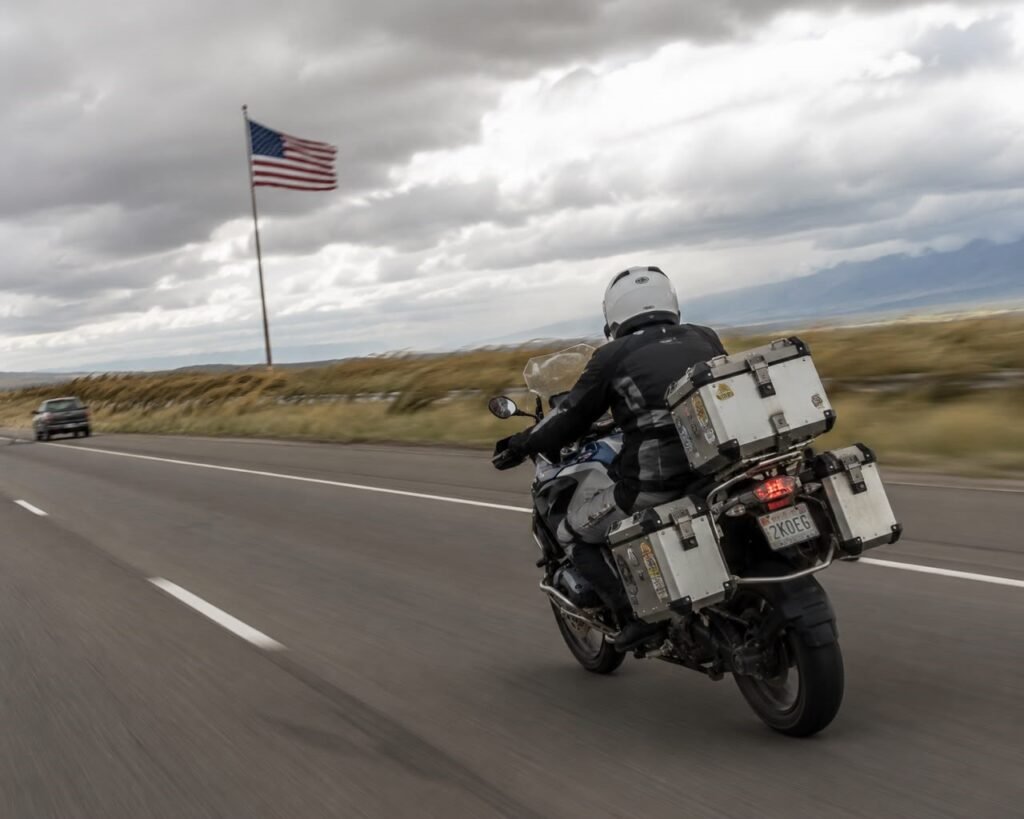
Pay attention to how your bike feels when passing trucks or crossing overpasses, since both create sudden wind shifts. If the back end steps out even slightly, that’s your bike telling you to slow down before the next gust arrives.
Motorcycle Top Case Weight Distribution Tips
Getting the weight right isn’t complicated, but it does take discipline. The goal is to keep your top box as light as reasonably possible and to never treat it as your primary luggage. Panniers sit lower and closer to the bike’s centerline, so they barely affect handling compared to a top box.
Follow these motorcycle top case weight distribution tips every time you pack. First, respect your case’s rated weight limit exactly, not as a suggestion. Second, put your heaviest single item, like a tool roll or chain lock, at the very bottom of the case. Third, keep your lightest items, like a jacket or rain gear, up near the lid.
Because of this layering approach, the case’s own center of mass stays as low as possible even though the box itself sits high on the bike. It’s a small trick, but it makes a measurable difference in how the bike responds to lean input.
Respecting Your Motorcycle Luggage Weight Limit
Every top box has a stated motorcycle luggage weight limit, and every motorcycle has a separate limit for how much weight its subframe and rack combination can handle. These two numbers aren’t always the same, and the lower one wins.
I keep a small luggage scale in my garage specifically for this. It sounds excessive until you realize how easy it is to misjudge the weight of camping gear, tools, and rain layers once they’re all stuffed into one case. Weigh your loaded case before your first ride with it, and you’ll never have to guess again.
Skip the guesswork — a $15 digital luggage scale takes 10 seconds to tell you if you’re over your rack’s limit.

How to Pack a Motorcycle Top Case: A Step-by-Step Sequence
Here’s the exact sequence I use every time I load up for a trip. It’s simple, but skipping steps is how people end up with rattling gear or a case that’s heavier than they realized.
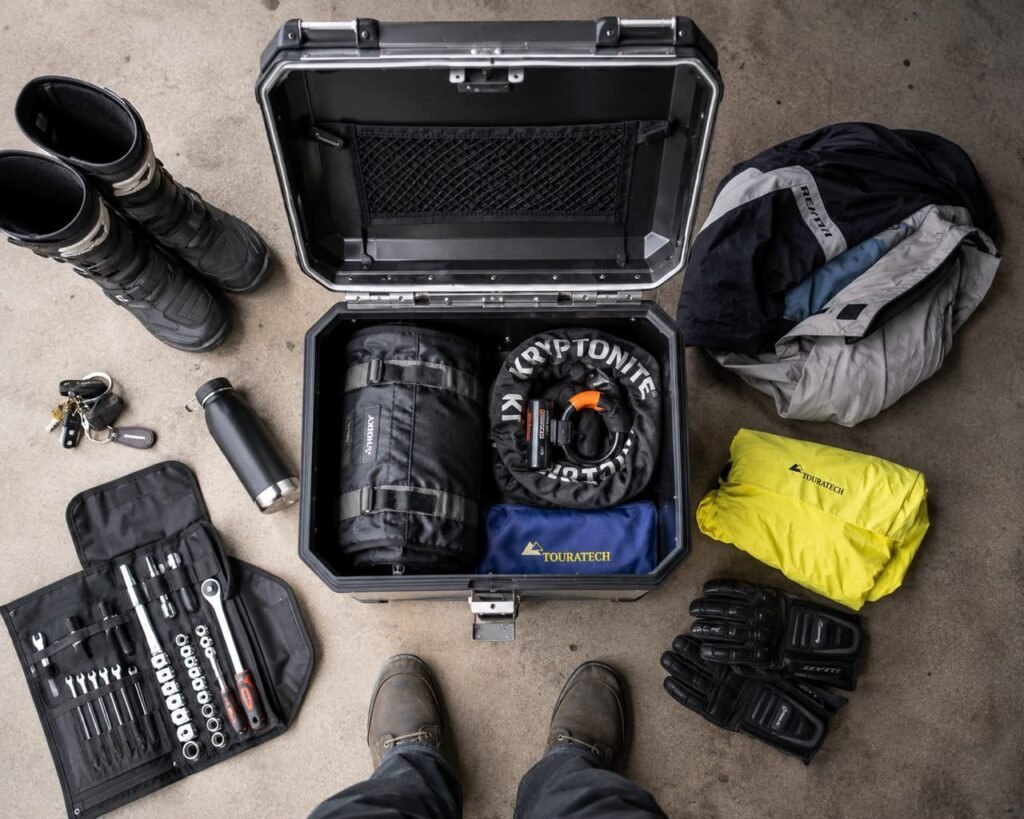
- Check your case’s rated weight limit and your rack’s rated weight limit, then use whichever number is lower as your hard ceiling.
- Lay out everything you plan to pack and weigh it as a full set before it goes anywhere near the case.
- Place your heaviest, densest items at the bottom of the case, directly over where the case mounts to the rack.
- Fill gaps with soft items like clothing to stop hard items from shifting during acceleration and braking.
- Keep your lightest gear near the top and lid, since this keeps the case’s own internal center of mass low.
- Close the lid and gently shake the case side to side to check for movement or rattling before you ride.
- Confirm the case latches and locks fully engaged, and give the mounting plate or rack bolts a visual check.
- Do a short test ride around the block before committing to highway speed, especially with a new load configuration.
That last step matters more than people give it credit for. A quiet parking lot or side street will tell you almost everything about how the bike is going to feel once you’re actually moving.
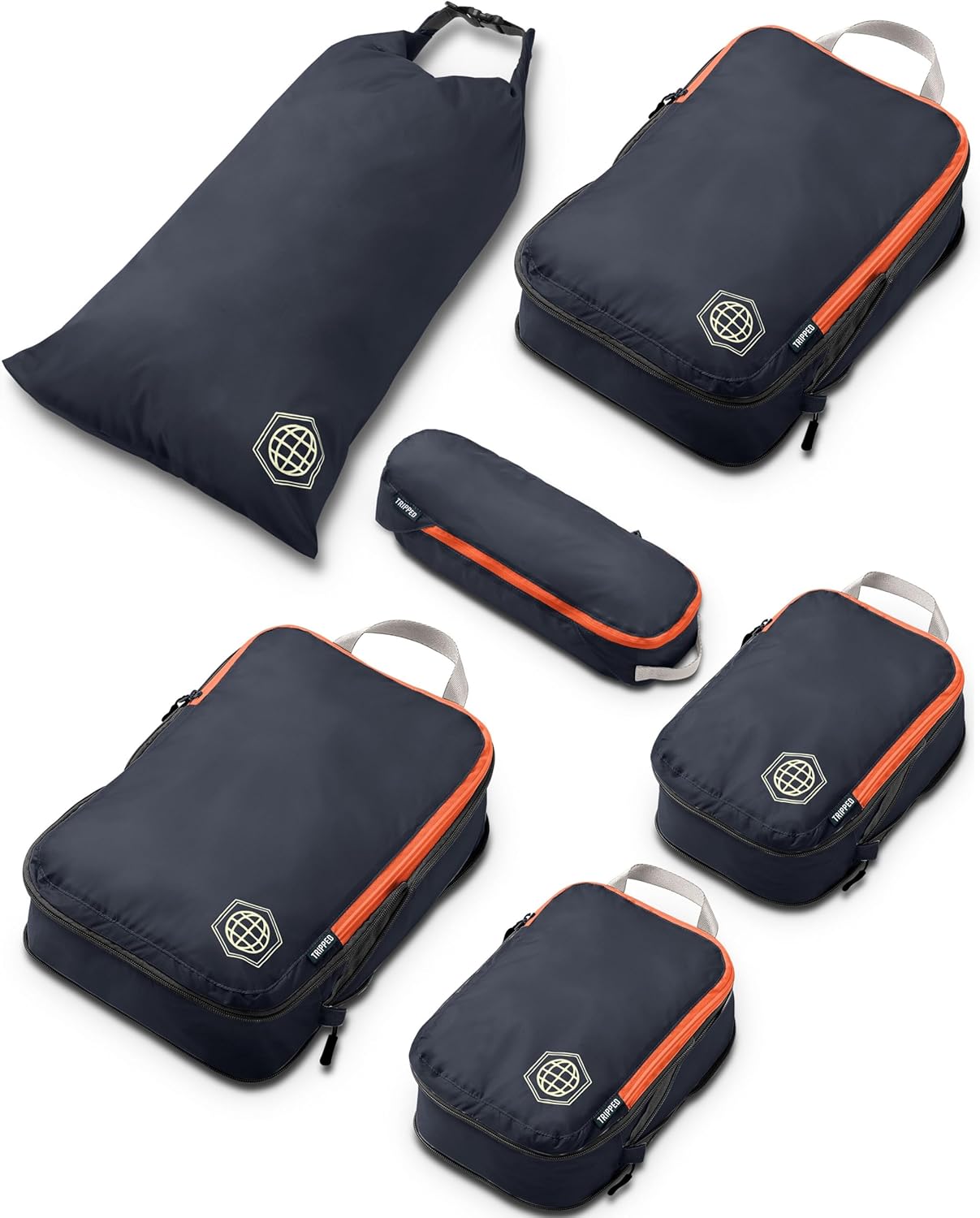
Compression packing cubes keep gear from sliding around mid-ride — cinch them down and forget about rattling. Browse packing cubes on Amazon
Bringing It All Together on the Road
Motorcycle top box safety comes down to a handful of habits repeated every time you ride: respecting weight limits, checking your hardware, packing with the center of gravity in mind, and adjusting your speed for wind and load. None of this requires expensive gear, just consistency.
I still use a top box on almost every trip I take, loaded gear and all, because the convenience is worth it once you understand the tradeoffs. But I never load one without thinking through the physics first, and I never skip the torque check or the test ride. Those habits are what keep motorcycle top box safety from being a theory and turn it into something you actually feel confident about every time you swing a leg over the bike.
If you’re shopping for your first case or upgrading an old one, revisit the buying guide section above before you commit. The right combination of material, mounting system, and locking hardware will do more for your safety than any packing trick ever could.
Very good site