
A Practical Breakdown of Hardside vs Softside Motorcycle Luggage
July 17, 2026 | By Chris Mchenga
Highway vibration, gravel spray, and the occasional low-speed tip-over all put motorcycle luggage through a different kind of stress than anything a suitcase ever faces. That’s exactly why the hardside vs softside motorcycle luggage debate splits riders into two camps, and both sides have real evidence behind their choice. Neither style wins across the board, and picking the wrong one for your riding style is a mistake you’ll feel every single mile. If you’re currently leaning hardside, it’s worth seeing how a well-built option like Viking Bags’ adventure-touring side cases actually performs before you commit.
This guide breaks the decision down by material, weight, weatherproofing, and use case, so you can match your luggage to the way you actually ride rather than to what looked good in a dealership showroom. We’ll look at how aluminum panniers hold up against a highway-speed tip-over, why roll-top soft bags dominate the adventure-touring scene, and where each style genuinely falls short. By the end, you’ll know exactly which side of the hardside vs softside motorcycle luggage argument fits your next trip.
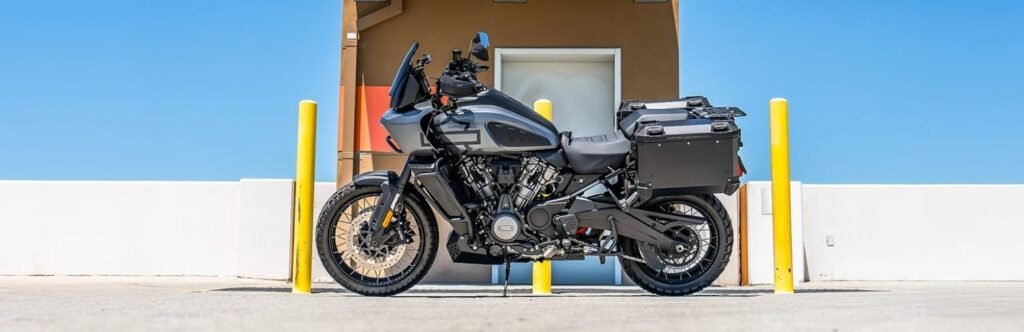
The Material Science: Durability & Crash Resistance
Hard motorcycle cases are not all built the same, and material determines how a case performs in a crash. Three materials dominate the hardside pannier market: ABS plastic, polypropylene, and aluminum. Each behaves very differently on impact, which is where the hardside vs softside motorcycle luggage debate really starts.
ABS plastic panniers are the budget entry point, and the price shows under stress. They’re rigid, but rigidity without flex means impact energy has nowhere to go. Consequently, ABS is the material most likely to crack in a low-speed tip-over, especially in cold weather.
Do hard motorcycle cases crack easily? It depends on the material. Polypropylene flexes on impact and springs back toward its original shape. That’s why brands like Givi and SW-Motech shifted several product lines to polypropylene blends.
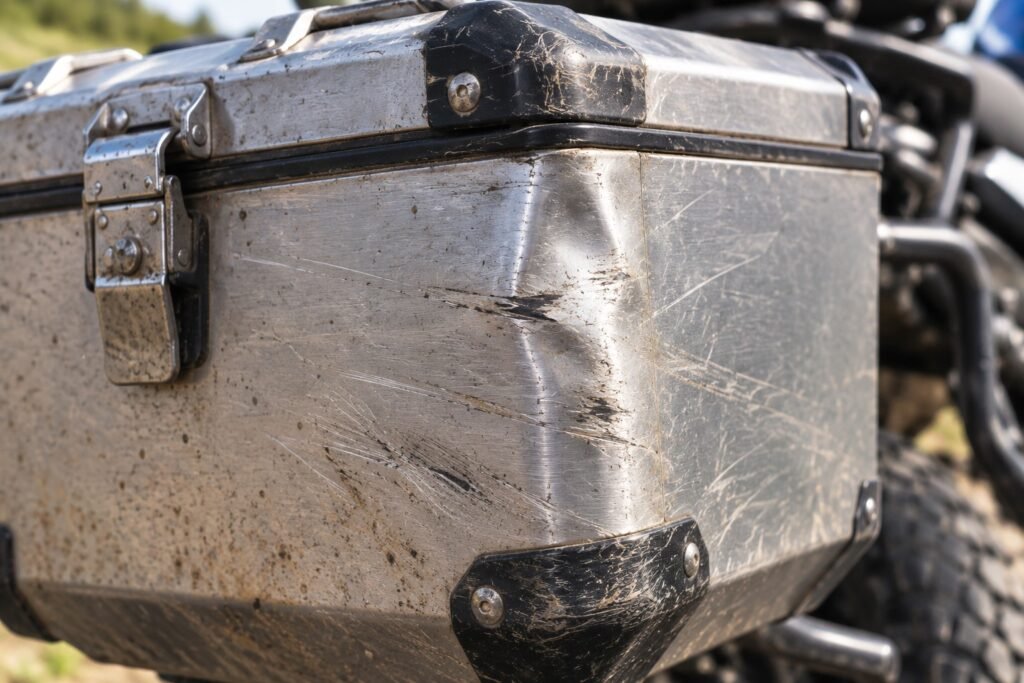
Aluminum sits at the top for pure impact resistance, and brands like Touratech and Zega built their reputation on it. However, aluminum dents instead of cracking, and a dented lid can jam the lock at the worst possible moment on a remote trail.
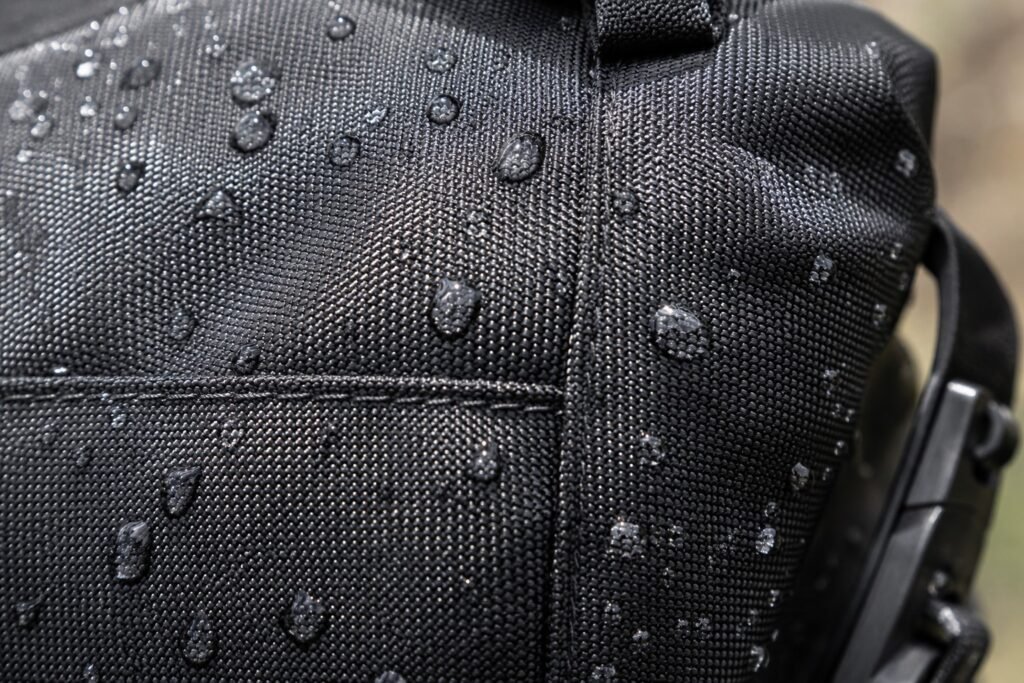
Soft motorcycle luggage plays a different game entirely. It absorbs force through woven fabric and tends to slide rather than shatter in a drop. Ballistic nylon, rated at 1000 to 1680 denier, shows up on nearly every premium soft pannier for exactly this reason.
Standard polyester bags cost less but also abrade faster. Lower-denier polyester frays at mounting straps and buckle points, especially where the bag rubs against the subframe for hours at a time.
Weight, Capacity, and Highway Stability
Is soft motorcycle luggage lighter than hard cases? Usually, yes. A typical pair of aluminum panniers weighs 15 to 22 pounds empty, including mounting hardware. A comparable pair of soft nylon saddlebags weighs just 6 to 10 pounds.
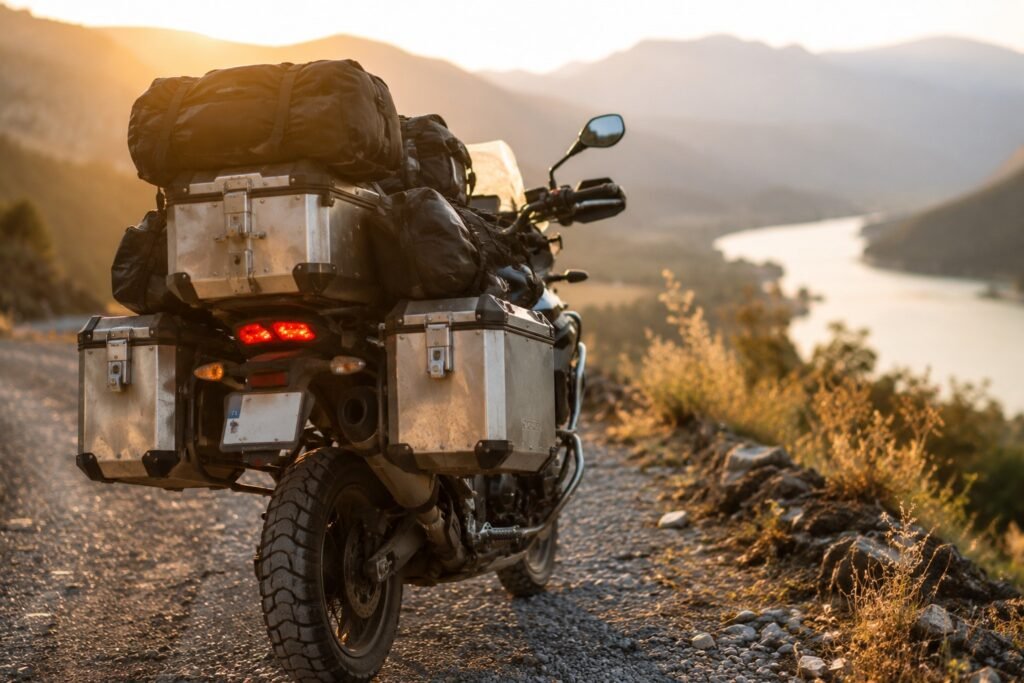
That gap matters more on a bike than in a car trunk, since every pound sits high and off-center. Consequently, luggage weight directly affects handling, especially when leaning into a curve fully loaded.
Hardside luggage pulls ahead on load security instead. A hard pannier holds its shape no matter how it’s packed, keeping weight distribution predictable. Soft bags can sag or bulge if packed poorly, which shifts balance more than most riders expect.
Best motorcycle luggage hardside vs softside setups also differ on aerodynamics. Hard panniers hold a fixed wind profile, which some riders find easier to compensate for at speed. Soft bags flex slightly in crosswinds, occasionally adding minor buffeting on exposed highway stretches.
Mounting security is the last practical difference in the hardside vs softside motorcycle luggage comparison. Hard panniers lock onto a rigid frame and detach fast at a hotel or campsite. Soft bags strap or buckle to a rack instead, which takes longer to remove but rarely rattles loose.
Weatherproofing & Environmental Protection
Waterproof hard cases vs softside motorcycle luggage is a comparison that matters more than most riders realize until they hit a real storm at highway speed. Hard aluminum and polypropylene panniers are, by design, largely watertight on the flat panels themselves, since neither material absorbs moisture.
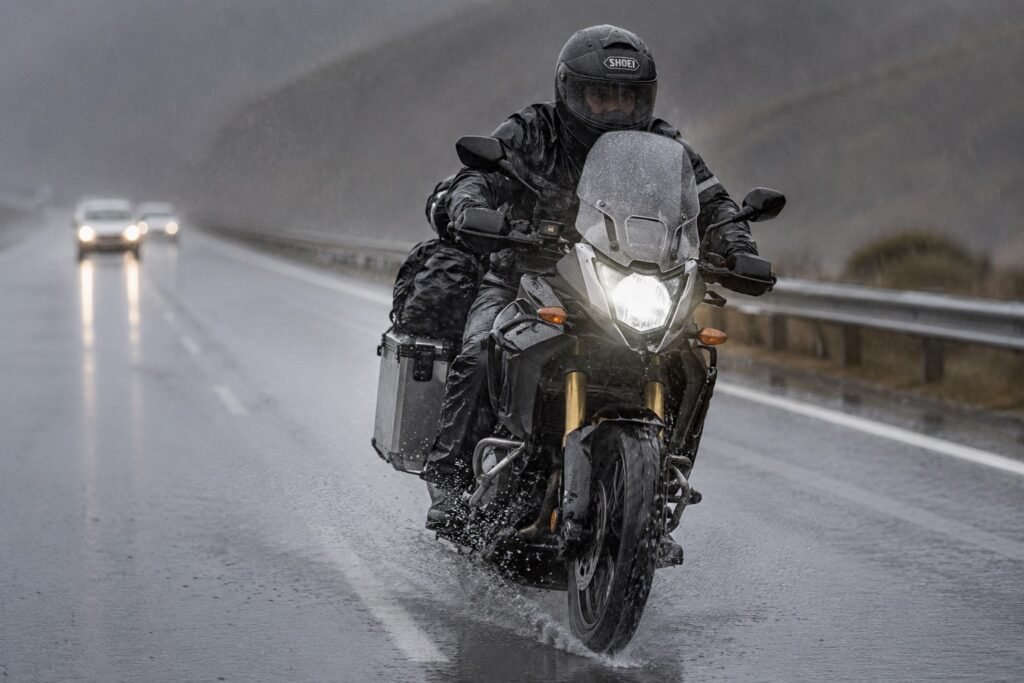
The vulnerability on hard panniers isn’t the shell — it’s the lid seal. Cheaper panniers use minimal gasket material around the lid, and after enough heat-cool cycles, that gasket can shrink and let water seep in during a sustained downpour. Premium hard cases use thicker rubber gaskets specifically to prevent this, and if you ride through unpredictable weather often, that gasket quality is worth checking before you buy.
Soft motorcycle luggage faces the opposite challenge, but the best designs solve it more completely than any suitcase does. Roll-top dry bags, now standard on most premium soft touring luggage, seal by rolling the fabric closed rather than relying on a zipper, and that design is genuinely waterproof rather than merely water-resistant. Zippered soft bags without a roll-top, however, let water in exactly the way a zippered suitcase does, so the specific design matters more than the fabric itself.
For riders headed into unpredictable mountain weather or long rain-soaked highway stretches, a roll-top soft bag or a gasket-sealed hard case both offer strong protection. A budget zippered soft bag is the one combination that consistently underperforms in real rain, so that’s the setup worth avoiding regardless of which side of the hardside vs softside motorcycle luggage debate you land on.
The Touring Stress Test: Deciding Your Use Case
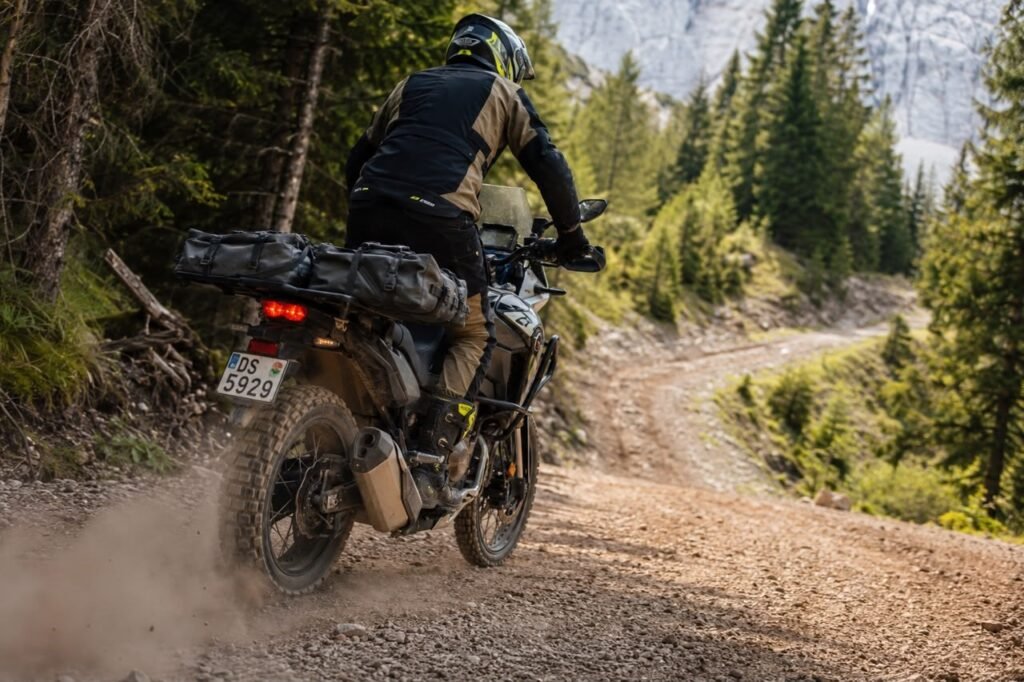
Is hard or soft luggage better for adventure and off-road riding? Off-road and adventure touring add variables that street riding rarely involves: rock strikes, deep water crossings, and the near-certainty of a tip-over at some point on technical terrain. These factors change the calculus considerably, and they’re usually where the hardside vs softside motorcycle luggage decision gets made for good.
For technical off-road terrain, soft luggage generally wins. It absorbs impacts by flexing instead of cracking, it doesn’t add a rigid edge that can catch on a rock or a tree during a fall, and a torn strap is far easier to field-repair with basic tools than a shattered pannier lid. Many experienced adventure riders who once ran aluminum switch to soft luggage specifically after a trail crash breaks a case in a location with no replacement parts available.
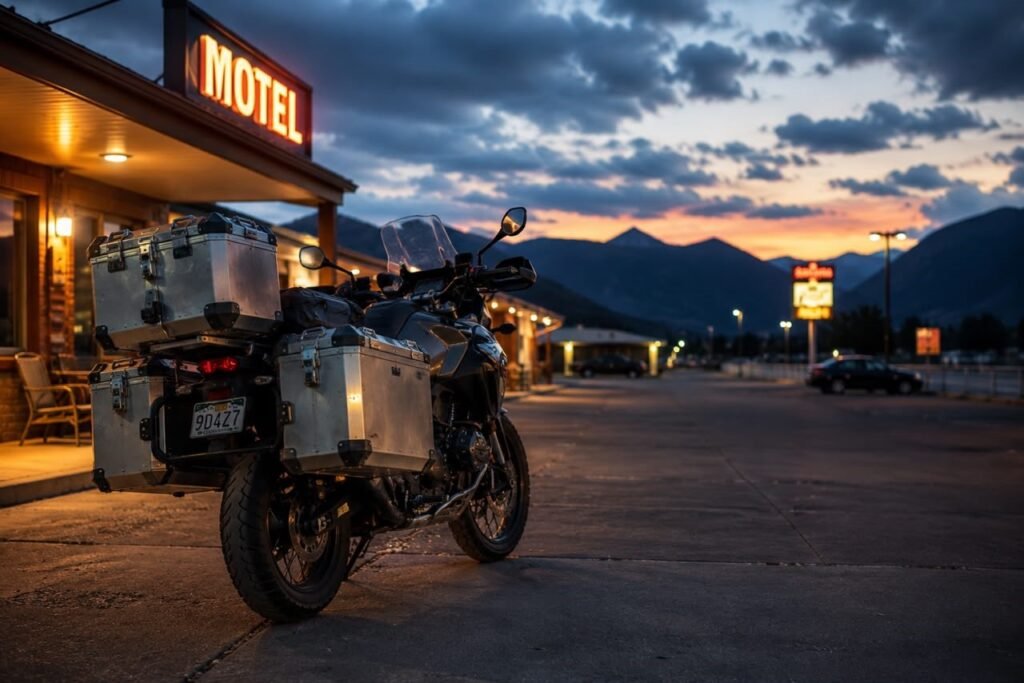
Long-haul highway touring shifts the advantage back toward hard cases. The security of a locking latch matters more when a bike sits unattended at a gas station or motel parking lot, and the fixed shape keeps a full touring load stable at sustained highway speeds over multiple days. If your trip is mostly pavement with overnight stops in populated areas, that lockable security is hard to replace with a strap and a padlock.
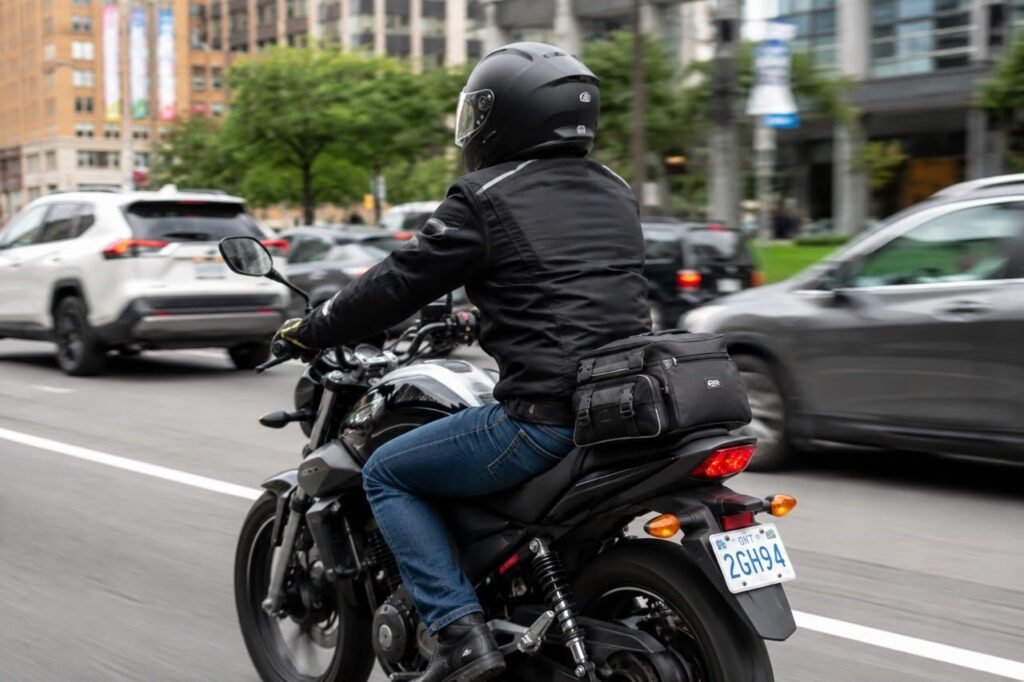
Commuters and short-trip riders often do best with soft tail bags rather than either full pannier system. A tail bag has zero risk of adding hip-width bulk in traffic lane-splitting, it’s easy to remove and carry inside a building, and it fits nearly any bike without permanent mounting hardware — the versatility matters more than either the hardside vs softside motorcycle luggage debate’s usual talking points for someone riding twenty minutes each way to work.
Ultimate Comparison Table
| Category | Hardside Motorcycle Luggage | Softside Motorcycle Luggage |
|---|---|---|
| Impact Protection | Excellent on pavement, risk of cracking/denting on rock strikes | Good — absorbs and slides rather than shattering |
| Weight (per pair) | 15–22 lbs plus mounting frame | 6–10 lbs plus straps or rack |
| Load Security | Fixed shape, predictable weight distribution | Can shift if packed unevenly |
| Locking Security | Strong — quick-release lock mechanisms | Weak to moderate — strap/buckle only |
| Water Resistance | Strong if gasket-sealed, weak if gasket is worn | Excellent with roll-top design, poor with plain zippers |
| Off-Road Suitability | Fair — rigid edges can catch or crack on rocks | Excellent — flexes and slides through crashes |
Buyer’s Guide: How to Choose Your Next Setup
The right choice in the hardside vs softside motorcycle luggage debate depends less on which style is objectively better and more on how and where you actually ride. Below are three common rider profiles and what tends to serve them best.
The Long-Haul Highway Tourer
Riders logging thousands of pavement miles benefit most from hard aluminum panniers with a quick-release mounting frame and a genuine rubber gasket seal. Look for a locking latch rated for real security, since these bikes spend more time parked unattended at gas stations and hotels than any other rider profile. A rigid subframe mount also keeps the load stable through long, sustained highway stretches.
The Adventure & Off-Road Rider
Riders heading into technical trails, water crossings, or genuine backcountry routes are almost always better served by soft roll-top luggage mounted to a lightweight rack. The reduced weight improves handling on technical terrain, and the flex-and-slide behavior in a crash beats a rigid pannier that can shatter miles from the nearest parts shop. Prioritize a rack system with quick-attach straps, since off-road crashes happen often enough that fast reattachment matters.
The Daily Commuter
Riders using a motorcycle for short, regular trips rarely need a full luggage system at all. A soft tail bag or magnetic tank bag covers laptop bags, groceries, and gym gear without adding width in traffic, and it detaches in seconds to carry inside without leaving anything exposed on the bike. Water-resistant zippers are usually sufficient here, since commuters can typically plan around forecasted rain more easily than a multi-day tourer can.
Conclusion
There’s no single winner in the hardside vs softside motorcycle luggage argument, and any dealer who tells you otherwise is pushing whatever they have in stock. Hard panniers win on locking security, load stability, and long highway touring where the bike sits parked and unattended. Soft luggage wins on weight, off-road crash resilience, and genuine waterproofing when it uses a roll-top design instead of a zipper.
If your riding is mostly pavement with overnight stops in towns, buy hard aluminum panniers with a real gasket seal and don’t cut corners on the locking mechanism. If your riding involves dirt, water crossings, or any real chance of a low-speed tip-over, buy soft roll-top luggage and skip aluminum entirely — you’ll thank yourself the first time you drop the bike on a rocky switchback.
Ultimately, the smartest touring riders often run both: hard panniers for the highway legs and a soft roll-top duffel strapped on top for the technical sections. That combination covers nearly every scenario a real trip can throw at you, and it beats betting everything on one style for a ride that rarely stays predictable for long.