
Ask any rider who has nearly dropped a fully-faired superbike in the garage and you’ll get the same thousand-yard stare. One second the bike feels balanced, the next second 200 kilograms of Ducati, Yamaha, or BMW starts leaning past the point of no return while your brain calculates the replacement cost of fairings, mirrors, levers, and pride.
That’s exactly why serious riders stop gambling with flimsy discount stands. A cheap stand with flexy tubing, tiny plastic wheels, weak welds, or sloppy geometry can turn a simple chain adjustment into a catastrophe. The difference between a proper stand and a bargain-bin special becomes painfully obvious the first time you lift a sportbike alone.
This guide to the Best Motorcycle Paddock Stands for Sportbikes is written for riders who actually wrench on their bikes, clean chains after late-night rides, warm slicks at the track, and need equipment they can trust repeatedly without drama. We’re going deep into construction quality, leverage ratios, wheel design, hardware, weld integrity, and real-world usability.
Some stands are built to survive decades of abuse. Others feel unstable the moment the rear tire leaves the ground. The goal here is simple: help you buy once, buy correctly, and avoid learning expensive lessons in your garage.
The Mechanics of a Great Stand
The Best Motorcycle Paddock Stands for Sportbikes all share one thing in common: rigidity under load. That sounds obvious, but the way manufacturers achieve it varies massively.
One-Piece vs. Bolt-Together Construction
The biggest structural difference between premium stands and budget models is usually the chassis design.
A one-piece stand uses continuous bent tubing with minimal junctions. Fewer joints mean fewer flex points. The entire stand behaves like a single structural component rather than a collection of connected pieces.
Premium manufacturers typically use:
- Thick-wall steel tubing
- Robotic or high-quality hand welds
- Tight manufacturing tolerances
- Reinforced stress points near the handle and wheel mounts
The advantage becomes obvious during lifting. The stand tracks smoothly, resists twisting, and loads evenly across both sides.
Bolt-together stands, by comparison, are cheaper to ship and manufacture. The downside is potential movement at the joints. Even small amounts of play create instability while lifting. Over time, repeated stress cycles loosen hardware and amplify flex.
That doesn’t automatically make every bolt-together stand bad. Some budget-conscious options use decent gusseting and quality hardware. But if you’ve ever felt a stand twist slightly while raising a bike, you already understand why track riders spend more on rigid designs.
Why Wheel Design Matters More Than Most Riders Think
Cheap stands usually fail at the wheels first.
Tiny hard-plastic rollers tend to:
- Bind under load
- Crack on rough garage floors
- Refuse to track straight
- Create jerky lifting motion
Higher-end stands use larger wheels with better bearings and wider contact patches.
Quad-wheel setups are especially impressive because they distribute load more evenly while dramatically improving stability during transitions. A stand with four large wheels tends to glide into position rather than fight you.
The best examples use oversized wheels that maintain smooth movement even on expansion joints, epoxy-coated floors, or rough concrete.
Leverage Ratios and Why Some Stands Feel “Heavy”
Leverage geometry is one of the least discussed but most important aspects of paddock stand design.
A well-designed stand multiplies your input force efficiently. That means:
- Less effort lifting the bike
- Better balance control
- Smoother engagement
- Reduced chance of upsetting the chassis mid-lift
Poor leverage geometry forces riders to muscle the bike upward. That’s where mistakes happen.
Track-focused stands typically use longer handles and carefully calculated pivot points to create a progressive lifting motion instead of a sudden load transfer.
When riders say a stand feels “easy,” they’re usually describing excellent leverage engineering.
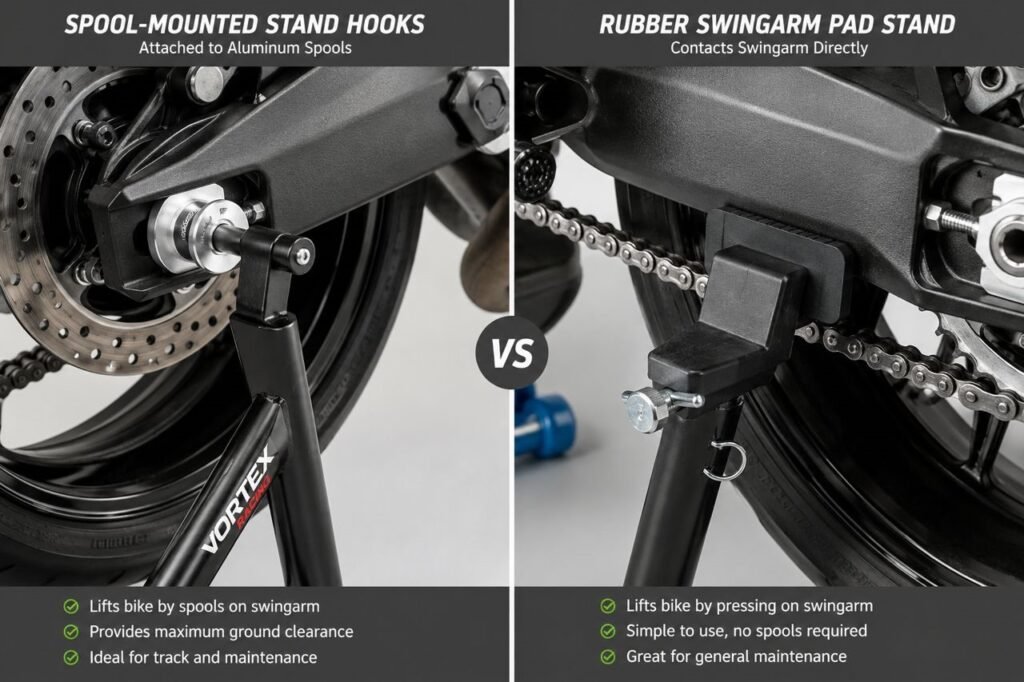
Spools vs. Swingarm Pads
If you’re shopping seriously, you’ll quickly run into the debate surrounding spools and rubber swingarm pads.
For most sportbike applications, spool-mounted stands are unquestionably superior.
Single-Sided Swingarms: A Critical Exception
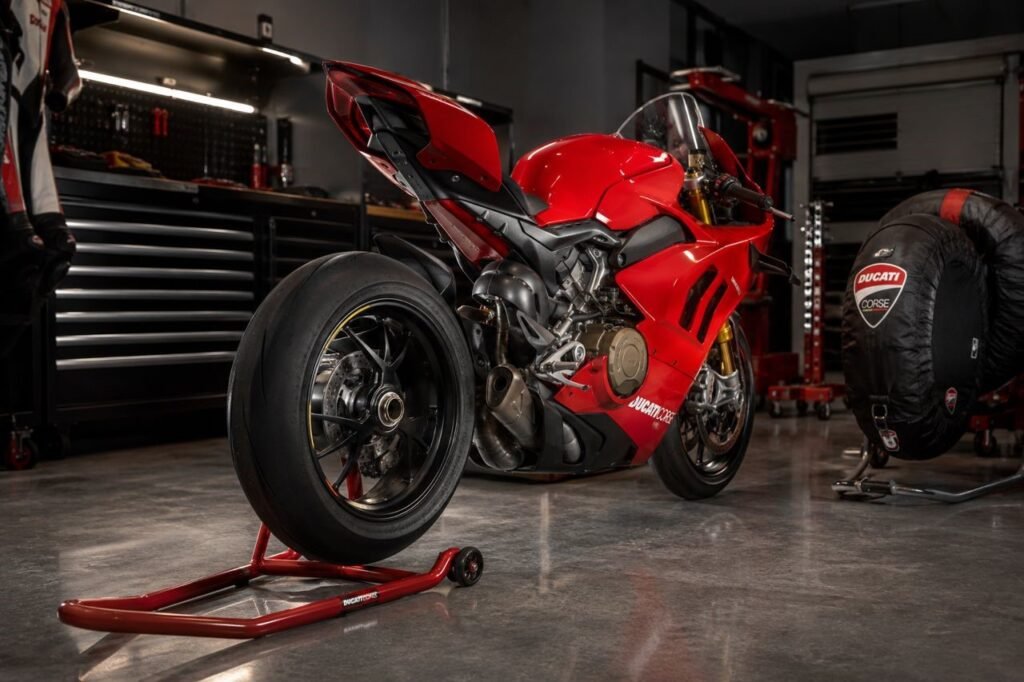
While the dual-arm stands reviewed above are the gold standard for conventional setups, it is crucial to note that many premium sportbikes—such as the Ducati Panigale V4, KTM 1290 Super Duke, and several MV Agusta models—utilize a single-sided swingarm. If you ride one of these machines, a standard spool or pad stand will not work. Instead, you will need a specialized single-sided paddock stand featuring a heavy-duty single pin that inserts directly into the rear axle hub. Manufacturers like Pit Bull and Woodcraft offer dedicated single-sided variants, but you must purchase the specific model and matching pin diameter engineered precisely for your bike’s make and model to ensure a safe, stable lift.
Why Spools Are the Gold Standard
Spools provide:
- Positive mechanical engagement
- Consistent lift points
- Reduced slip risk
- Faster stand alignment
- Better repeatability for solo use
Once the hooks capture the spools, the bike is effectively locked into the stand during lifting.
That’s a massive confidence boost when you’re handling a $15,000 machine alone.
Aluminum swingarms on modern sportbikes are also easily scratched or marred by low-quality rubber pads. Spools eliminate direct swingarm contact altogether.
If your bike supports spool installation, there’s very little reason not to use them.
When Rubber Pads Still Make Sense
Swingarm-pad stands still have valid uses.
They’re useful for:
- Bikes without spool mounts
- Temporary workshop setups
- Older motorcycles
- Riders using multiple bike types
A good pad stand with wide contact surfaces and quality rubber can still work safely. The key is proper alignment and patience during lifting.
Cheap narrow pads, however, are notorious for slipping if the bike shifts during the lift.
Superbike Stands
Superbike stands lift directly from the swingarm underside or axle area and are common in race paddocks.
These systems offer:
- Faster wheel changes
- Greater under-bike access
- Rapid setup during track sessions
They require more bike-specific compatibility knowledge, but experienced track riders love them for efficiency.
Head-to-Head Comparison Table
Here’s a quick breakdown of the Best Motorcycle Paddock Stands for Sportbikes currently dominating garages and paddocks.
| Brand / Model | Construction Type | Lifter Type | Key Feature | Best For |
|---|---|---|---|---|
| Pit Bull SS Rear Stand | One-Piece Welded Steel | Flip-Flop Spool/Pad | Legendary durability and stability | Riders wanting a lifetime stand |
| Woodcraft Adjustable Rear Superbike Stand | Modular Heavy-Duty Steel | Superbike | Incredible leverage and removable uprights | Track-day riders and racers |
| Dynamoto Dual-Axis Combo | Precision Multi-Part Alloy/Steel | Front & Rear Hybrid | Omni-directional movement | Tight garages and premium setups |
| Oxford Zero-G / Premium Lift | Bolt-Together Engineered Steel | Spool/Pad | Strong value for money | Budget-conscious home mechanics |
Pit Bull SS Rear Stand Review
Among hardcore riders, the Pit Bull name carries near-mythical status.
The Best Motorcycle Paddock Stands for Sportbikes conversation almost always includes the SS Rear Stand because these things are absurdly overbuilt.
Construction Quality
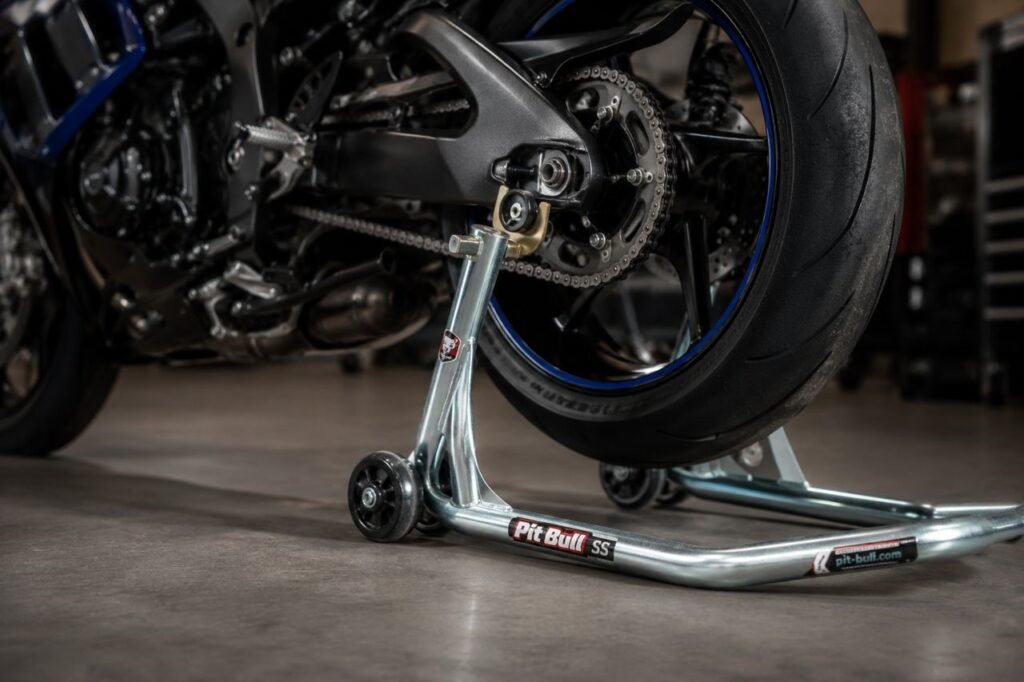
Pit Bull’s zinc-plated steel construction is the real deal.
Unlike powder-coated budget stands that chip and rust after a few winters, the zinc finish resists corrosion exceptionally well. Riders routinely use these stands for over a decade with nothing more than cosmetic wear.
The tubing diameter is substantial, the welds are clean, and the entire structure feels brutally rigid.
There’s no alarming flex mid-lift.
No creaking.
No sketchy wobble.
Just controlled, predictable movement.
Flip-Flop Adapter Design
One of the smartest features is the flip-flop adapter system.
You can switch between spool lifting and swingarm-pad lifting without buying separate stands. That flexibility matters if you own multiple motorcycles or occasionally help friends work on their bikes.
The adapters seat securely with very little slop.
Real-World Stability
What separates Pit Bull from cheaper competitors is confidence.
The bike feels planted once elevated.
You can aggressively clean chains, torque rear axles, remove wheels, or strap the bike for transport without constantly worrying about stand flex.
Made in USA Reputation
Pit Bull’s made-in-USA manufacturing has built enormous loyalty among track riders.
Replacement parts are easy to source, customer support is excellent, and these stands genuinely feel like lifetime workshop equipment.
Pros
- Extremely rigid construction
- Excellent corrosion resistance
- Superb long-term durability
- Outstanding stability under load
- Dual spool/pad flexibility
Cons
- Heavy compared to aluminum alternatives
- Premium pricing
- Less compact for transport
Woodcraft Adjustable Rear Superbike Stand Review
Woodcraft designed this stand for riders who spend serious time at racetracks.
Everything about it prioritizes efficiency, speed, and mechanical precision.
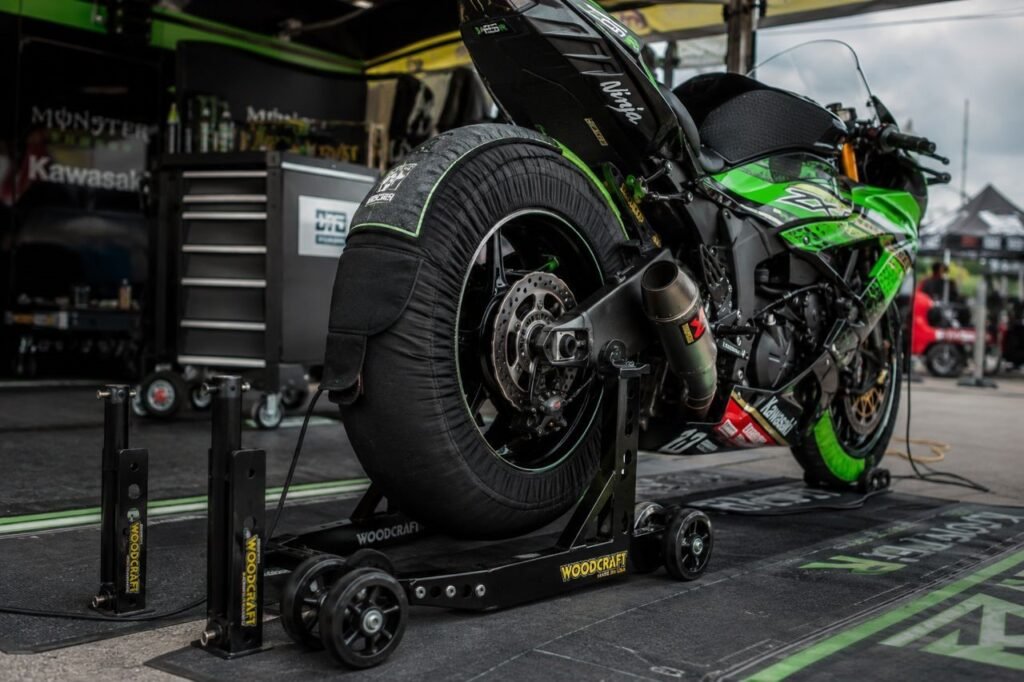
Quad 5-Inch Wheel Setup
The oversized quad-wheel arrangement completely changes the feel during lifting.
Instead of dragging or pivoting awkwardly, the stand glides into place with remarkable smoothness.
The extra wheel contact points stabilize the stand during transitions and reduce the twitchy feeling common on cheaper units.
Exceptional Leverage Ratio
This is one of the easiest stands to lift under a heavy superbike.
Woodcraft nailed the geometry.
The leverage curve feels progressive and controlled, allowing precise movement with minimal physical effort.
That’s especially valuable after a long track session when fatigue starts creeping in.
10-Second Removable Uprights
This feature sounds minor until you start loading bikes into trailers.
The removable uprights allow the stand to collapse quickly, saving huge amounts of space in crowded transport setups.
Track riders absolutely love this detail.
Integrated Hardware Holders
This is the kind of practical engineering that separates rider-designed products from corporate catalog filler.
Integrated axle and hardware holders prevent spacers, nuts, and axle hardware from disappearing into the chaos of a race paddock.
Small touch.
Massive real-world usefulness.
Pros
- Outstanding leverage design
- Excellent wheel stability
- Compact transport capability
- Race-focused engineering
- Smart hardware storage features
Cons
- Expensive for casual riders
- Superbike setup may confuse beginners
- More specialized than universal stands
Dynamoto Dual-Axis Front & Rear Combo Review
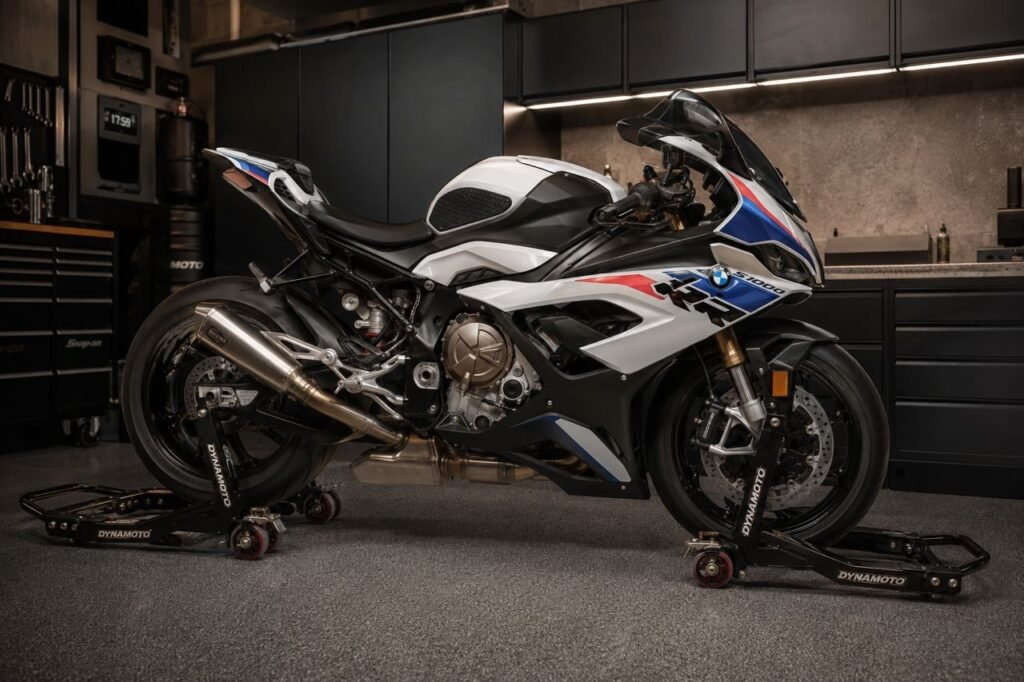
Dynamoto essentially reinvented what a paddock stand can do.
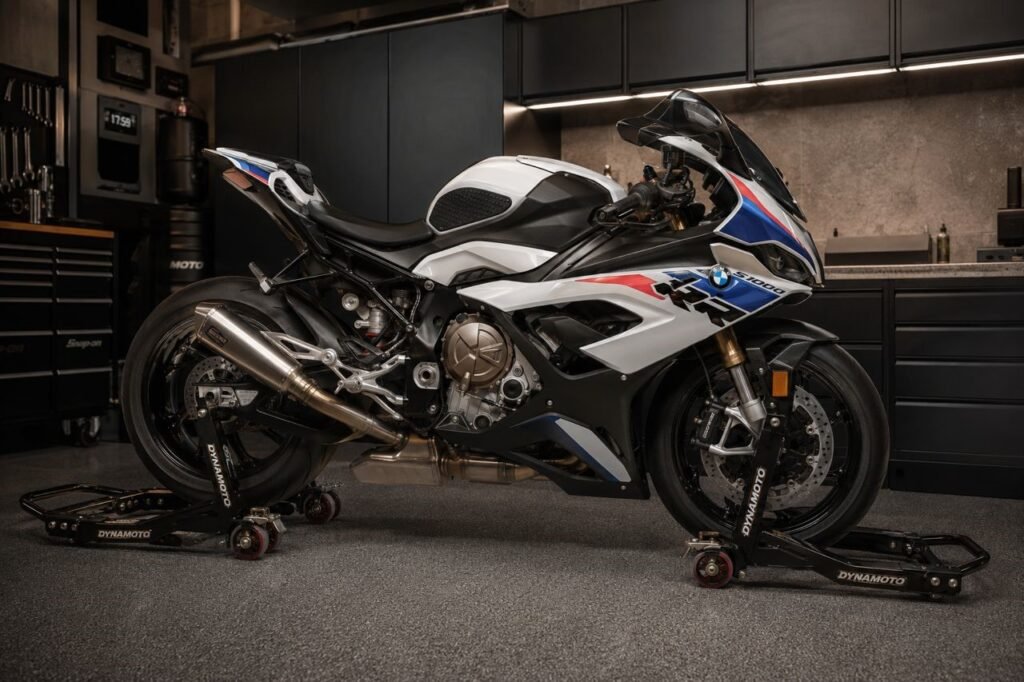
Instead of simply lifting the motorcycle, these stands allow full multi-directional movement using omni-wheel technology.
Omni-Wheel System
Traditional stands move forward and backward.
Dynamoto stands move in virtually every direction.
That means you can:
- Rotate bikes sideways
- Slide machines into tight corners
- Reposition motorcycles in crowded garages
- Maneuver heavy sportbikes with minimal effort
For riders with limited garage space, the system is genuinely transformative.
Premium Materials and Engineering
These stands look and feel expensive because they are.
Machining quality is excellent.
The wheel assemblies are sophisticated.
Hardware tolerances are tight.
Nothing about the system feels cheap.
Front and Rear Combo Benefits
Using the full front-and-rear setup allows complete chassis mobility.
You can reposition a large sportbike in ways impossible with traditional stands.
For collectors, workshop owners, or riders storing multiple bikes, this functionality becomes addictive.
The Reality of the Price Tag
Dynamoto sits firmly in premium territory.
Casual riders may struggle to justify the cost.
But if garage organization matters to you, there’s currently nothing else quite like it.
Pros
- Incredible maneuverability
- High-end construction quality
- Excellent for tight garages
- Smooth wheel operation
- Innovative design
Cons
- Extremely expensive
- Overkill for basic maintenance
- Heavier and bulkier than standard stands
Oxford Zero-G / Premium Lift Review
Not every rider needs race-team hardware.
Oxford’s Zero-G and Premium Lift stands target riders who want dependable lifting performance without draining the modification budget.
Strong Entry-Level Construction
Unlike ultra-cheap online no-name stands, Oxford uses reasonably robust engineered steel tubing with respectable weld quality.
The chassis feels substantially more rigid than bargain-basement alternatives.
You still get some flex compared to Pit Bull-level equipment, but it remains controlled and predictable for normal home maintenance.
Value-Focused Design
Oxford clearly focused on practical usability.
Assembly is straightforward.
The wheels roll smoothly enough for garage use.
The lifting points engage securely when properly aligned.
For riders searching for the best budget motorcycle paddock stands, Oxford consistently lands near the top because it avoids the terrifying instability common in ultra-cheap imports.
Where Budget Limitations Appear
You’ll notice compromises in:
- Hardware refinement
- Wheel smoothness
- Long-term corrosion resistance
- Ultimate rigidity
Still, for chain cleaning, tire warming, wheel removal, and winter storage, these stands deliver impressive value.
Pros
- Affordable pricing
- Good beginner-friendly usability
- Decent rigidity for the money
- Widely available
- Suitable for home maintenance
Cons
- Not as rigid as premium stands
- Wheels aren’t track-grade
- Long-term durability is lower than high-end rivals
How to Use a Paddock Stand Alone Safely
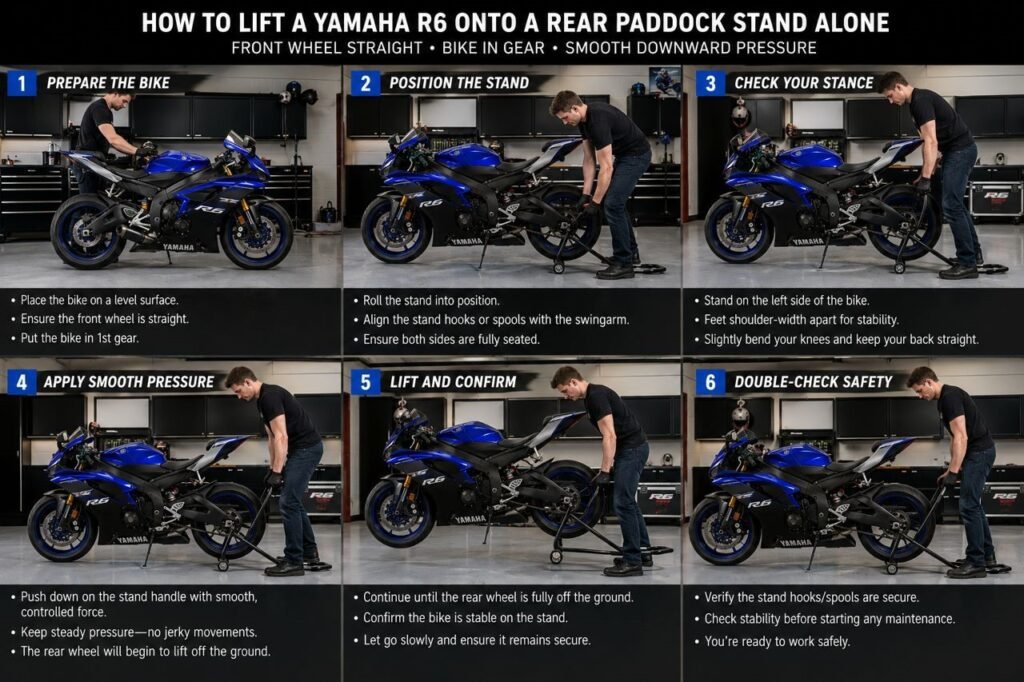
Learning how to use a paddock stand alone safely is one of the most valuable garage skills a rider can develop.
The Best Motorcycle Paddock Stands for Sportbikes still require proper technique. Even excellent equipment can’t compensate for rushed lifting or poor positioning.
Step 1: Choose Stable Ground
Avoid soft asphalt, gravel, or uneven concrete.
The stand wheels must roll smoothly during the lift.
Any interruption can destabilize the motorcycle.
Step 2: Put the Bike in Gear
Leaving the motorcycle in first gear prevents rolling during setup.
That tiny detail dramatically improves stability.
Step 3: Keep the Front Wheel Straight
A turned handlebar shifts weight unpredictably.
Keep the front wheel perfectly straight before lifting.
Step 4: Check Spool or Pad Alignment Carefully
Before applying lifting force:
- Confirm both hooks engage fully
- Ensure pads contact evenly
- Verify the stand sits centered behind the bike
Rushing this stage causes most garage mishaps.
Step 5: Use a Wood Block Under the Kickstand if Necessary
Some lowered bikes lean excessively on the side stand.
A small wood block beneath the kickstand can reduce lean angle and make initial stand engagement much easier.
Step 6: Control the Balance Point
This is where riders panic.
As the bike transitions upward, the center of gravity changes quickly.
Use smooth pressure on the stand handle rather than jerky movements.
Don’t muscle the bike.
Let the leverage geometry do the work.
Step 7: Confirm Stability Before Working
Once elevated:
- Gently shake the bike
- Verify wheel contact on the stand
- Confirm the stand sits evenly
- Check for floor movement
Only then should you begin maintenance.
Buying Advice and Final Recommendations
The Best Motorcycle Paddock Stands for Sportbikes aren’t simply accessories. They’re workshop safety equipment.
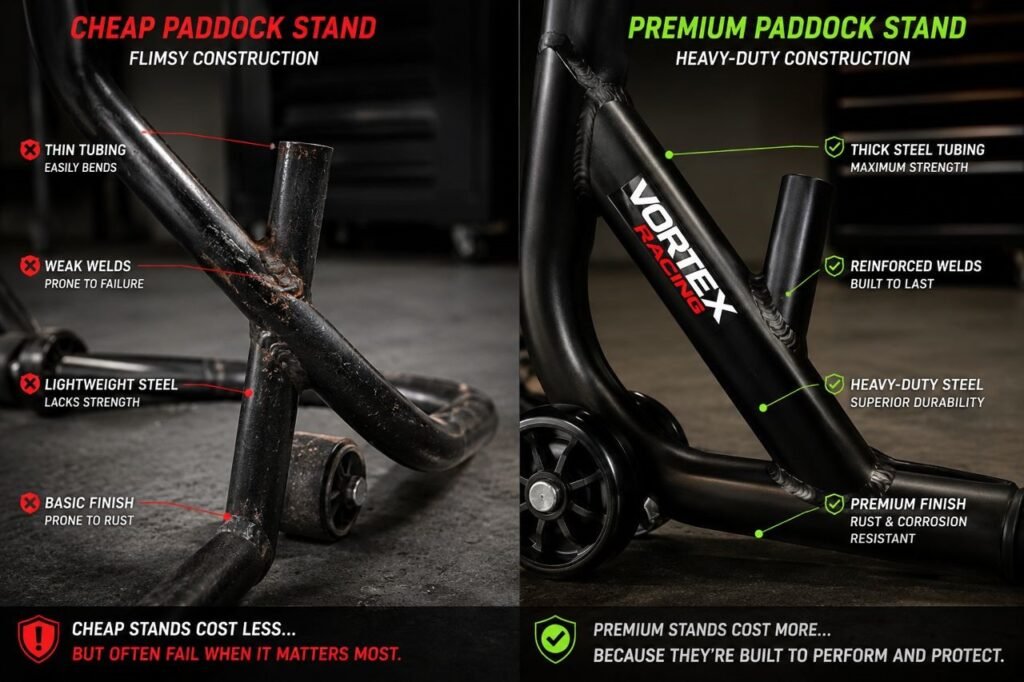
That’s why experienced riders eventually stop chasing the absolute cheapest option.
A bad helmet annoys you.
A bad paddock stand damages motorcycles.
Buy Once vs. Upgrade Later
If you ride frequently, maintain your own bike, or attend track days, premium stands become worth the investment surprisingly quickly.
Pit Bull remains the benchmark for long-term ownership durability.
Woodcraft dominates the track-focused category with outstanding leverage and race practicality.
Dynamoto completely changes garage management for riders with limited storage space.
Oxford delivers strong value for riders entering the sport or maintaining bikes casually.
What Matters Most for Solo Riders
If you routinely work alone, prioritize:
- Large stable wheels
- Excellent leverage geometry
- Spool compatibility
- Minimal chassis flex
- Predictable lifting motion
Those factors matter far more than flashy finishes or marketing claims.
Track Riders vs. Garage Mechanics
Track riders benefit most from:
- Fast setup
- Removable components
- Superbike lifting systems
- Heavy-duty wheel assemblies
Home mechanics usually prioritize:
- Stability
- Simplicity
- Storage convenience
- Price-to-performance value
Final Verdict
The Best Motorcycle Paddock Stands for Sportbikes ultimately come down to trust.
When you’re lifting an expensive superbike alone at midnight after a ride, you want equipment that feels completely planted, predictable, and engineered properly.
That confidence is exactly what separates premium stands from disposable garage clutter.
Buy the strongest stand your budget realistically allows, install proper spools, learn correct lifting technique, and your maintenance routine becomes faster, safer, and dramatically less stressful.