
Disclosure: This article contains Amazon affiliate links. If you make a purchase through these links, we earn a small commission at no extra cost to you. This helps support the site and allows us to keep creating detailed motorcycle gear guides. Thank you for your support!
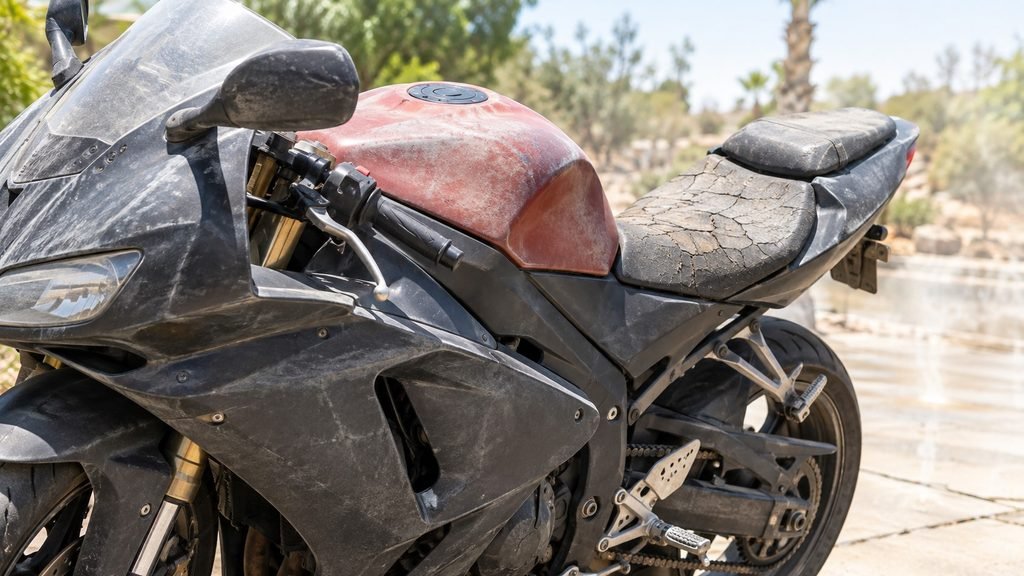
Your motorcycle spends far more time parked than it does moving. Even if you ride every weekend, the bike sits still for most of the week, and that is when sunlight, rain, humidity, and temperature swings do their slow, quiet damage. Faded paint, cracked seats, cloudy plastics, rusty bolts, and sticky switches rarely come from riding. They come from parking.
The good news is that it doesn’t take a big budget or a fancy garage to protect your motorcycle from sun and rain. A few smart habits, the right cover, and some basic maintenance can add years to your bike’s appearance and mechanical life. Most of it takes only a few minutes a week.
In this guide, we’ll explain how sun and rain damage a motorcycle, where to park, how to choose a cover, and which maintenance steps matter most. By the end, you’ll have a simple routine that fits the way you ride and park.
How Sun and Rain Damage Your Motorcycle
Before fixing a problem, it helps to understand it. Sun and rain attack your bike in different ways, and some of the worst damage happens when the two combine.
What the Sun Does
Sunlight carries ultraviolet (UV) radiation, which breaks down the chemical bonds in paint, plastic, rubber, and vinyl. You see the results gradually:
- Faded paint and clear coat. Bright reds and blacks go dull, and the clear coat can start to peel or look hazy.
- Cracked and chalky plastics. Fairings, fenders, and trim turn gray and brittle.
- Hard, split seats. Vinyl dries out, loses flexibility, and cracks along the seams. Once the surface splits, water gets into the foam.
- Perished rubber. Tires, grips, hoses, and seals develop tiny surface cracks that grow over time.
- Dull gauges and windscreens. Instrument lenses and windshields can yellow or cloud.
Heat adds to the problem. A dark bike parked in direct summer sun can get hot enough to soften adhesives, bake dirt onto the paint, and stress the battery.
What Rain Does
Rain is not just water. It carries dirt, road salt residue, pollution, and minerals that settle on your bike and stay there after the water evaporates. Over time, rain and the moisture around it cause:
- Rust and corrosion on bolts, the chain, brake components, exhaust hardware, and any exposed steel.
- Pitting on chrome and aluminum, which shows up as white, chalky spots.
- Electrical problems, because water in connectors, switches, and the fuse box causes corrosion and intermittent faults.
- Water spots that etch into paint if they dry in the sun.
- Mold and mildew on seats and any fabric surfaces that stay damp.
The worst combination is rain followed by hot sun. Water droplets can act like tiny magnifying lenses and bake spots into the finish, and trapped moisture under a poorly fitted cover can become a steam bath for your bike.
Start With the Right Parking Spot
The easiest way to protect your motorcycle from sun and rain is to keep both away from it in the first place. Where you park matters more than almost any product you can buy.
Garage or Indoor Storage
A garage is the gold standard. It blocks direct sun, rain, wind, and most temperature extremes. Even then, a light cover helps keep dust off, and good airflow prevents damp air from settling around the bike. If your garage is humid, leave a little space around the bike and consider a small dehumidifier.
Carport or Covered Parking
A carport or roofed parking space is the next best option. It stops rain from falling directly on the bike and blocks overhead sun. The weakness is that wind can still blow rain sideways and low-angle sun can hit the bike in the morning or evening, so a cover is still a good idea.
Parking Outside
If the bike lives outdoors, think carefully about where it sits:
- Park in shade when possible. A spot shaded in the afternoon is better than one shaded in the morning, because afternoon sun is hotter.
- Avoid parking under trees. Shade is nice, but sap, bird droppings, and falling branches can do more damage than the sun.
- Choose higher ground. Standing water around the tires and lower components promotes rust.
- Face the bike away from the prevailing wind to reduce flapping and rain spray hitting vulnerable spots.
- Use a solid surface. Parking on grass or bare dirt traps moisture underneath the bike. Concrete or pavement is better, and a rubber mat or board under the tires helps further.
If you park on a soft surface, always use a wide kickstand pad. Wet ground can swallow a sidestand, and a bike that tips over can cost far more than any cover.
Use a Quality Motorcycle Cover
If you can’t park indoors, a good cover is the single best purchase you can make. It is the simplest and most affordable way to protect your motorcycle from sun and rain when the bike has to sit outside. A cover works like a roof you can carry around, blocking UV rays, rain, dust, bird droppings, and curious hands.
But not every cover is worth buying. A cheap, ill-fitting tarp can do more harm than good by trapping moisture and rubbing the paint. Here is what to look for.
Fabric and Denier
Product listings love to advertise denier numbers such as 210D and 300D. The “D” stands for denier, which measures the thickness of the threads. Higher numbers mean thicker, heavier, and generally more durable fabric.
- 210D is lighter, folds small, and costs less. It works well for garage storage, travel, and mild climates.
- 300D is thicker and more resistant to tears and abrasion. It is usually the better pick for long-term outdoor storage in harsh weather.
Keep in mind that denier measures thread thickness, not waterproofing. A well-made 210D cover with a quality coating and sealed seams can shed rain better than a thick 300D cover with a thin coating and open stitching. If you want a deeper comparison, our guide to the difference between 210D and 300D motorcycle covers covers it in detail.
Waterproof Coating and Seams
The coating, usually polyurethane (PU) or PVC, is what keeps rain out. Seams are where water most often sneaks in, so look for taped or sealed seams if heavy rain is common where you live. Phrases like “waterproof coating” and “taped seams” are good signs.
UV Protection
Since the sun is half of the problem, make sure the cover itself resists UV. A cover without UV treatment will fade, weaken, and crack within a season or two. Look for UV resistance in the product specifications instead of assuming it’s included.
Breathability and Vents
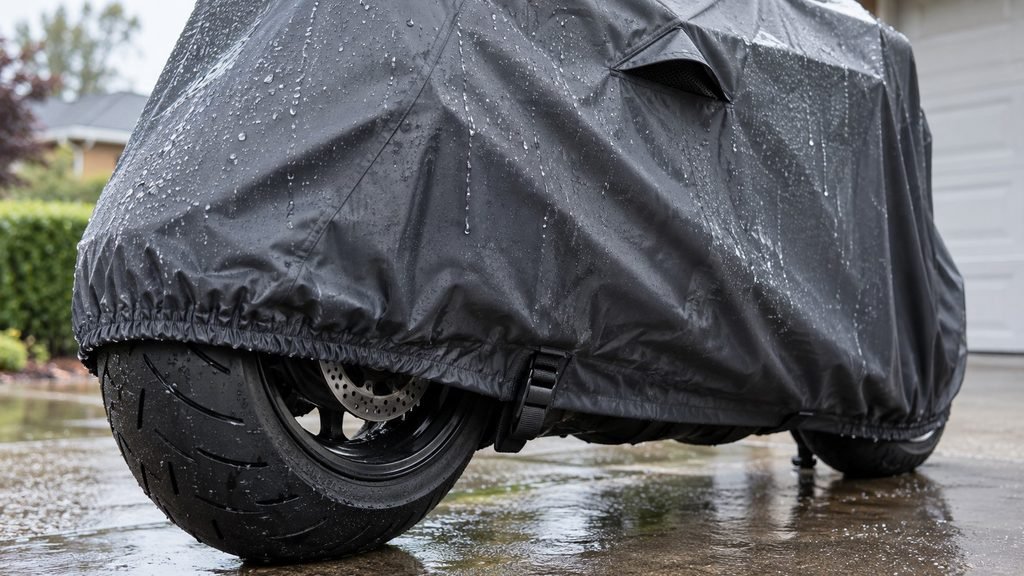
This is the feature most riders overlook. A cover that is fully waterproof but has no vents can trap humidity against the bike. Trapped moisture causes rust, mold, and cloudy mirrors. Look for air vents, usually on the sides or near the top, that let damp air escape while keeping rain out.
Fit and Straps
A cover that is too loose will flap in the wind and rub the paint like sandpaper. A cover that is too small will leave parts of the bike exposed. Measure your motorcycle from the front of the tire to the rear of the tail, and remember to account for a windshield, luggage, or a tall backrest. Then compare your numbers to the size chart.
Also look for:
- Windproof straps or buckles that secure the cover under the bike
- Elastic hems for a snug fit around the wheels
- Lock holes so you can secure the cover and bike together with a cable or chain
- A soft inner lining to protect paint, mirrors, and clear plastics
- Reflective strips to help drivers see a parked bike at night
Cover Safety Tips
Never put a cover on a hot engine or exhaust. Hot pipes can melt the fabric and create a fire risk. Let the bike cool completely first.
Also avoid putting a cover on a very dirty bike. Grit trapped between the fabric and the paint will scratch the finish every time the wind moves the cover. A quick wipe-down first makes a big difference.
Keep the Paint and Body Protected
Even with a cover, regular care keeps your bike’s finish strong against the elements.
Wash Regularly
Dirt, dust, and bird droppings hold moisture against the surface and speed up damage. Wash the bike with mild soap and plenty of water, using a soft microfiber mitt or sponge. Avoid washing in direct sun, because the soap and water dry too quickly and leave spots. Dry the bike completely afterward with a clean microfiber towel or a leaf blower, paying special attention to crevices where water likes to hide.
Wax or Seal the Paint
A layer of wax, paint sealant, or ceramic coating acts like sunscreen for your bike. It gives UV rays and water something sacrificial to attack instead of the clear coat. Water also beads and rolls off a waxed surface, which reduces water spotting.
- Wax is affordable and easy to apply but needs reapplying every few months.
- Sealants last longer and usually offer better UV resistance.
- Ceramic coatings last the longest but cost more and take more careful application.
Whichever you choose, apply it to a clean, dry bike and keep it off black plastic trim, brake discs, and tires.
Protect Plastics and Rubber
Unpainted plastic is one of the first things to fade in the sun. Use a UV-protectant product made for plastic and vinyl on fairings, fenders, trim, and rubber parts. Apply a thin layer and wipe off the excess so the surface doesn’t turn greasy. Reapply every few weeks during the sunniest months.
Care for the Seat
Seats take a beating from both sun and rain. Clean the seat with a vinyl-safe cleaner and apply a UV-protective conditioner to keep the material flexible. If the seat has small cracks or splits, repair them early. Water that soaks into the foam can cause a soggy seat, bad smells, and mold, and it can be very hard to dry completely.
For extra defense, a seat cowl or a simple waterproof seat cover works well if you park outside without a full cover for a short period.
Protect the Mechanical and Electrical Parts
Looks are only half of the story. Sun and rain also go after the parts that keep your bike running.
The Chain
A dry or dirty chain will rust quickly after rain. Clean and lubricate the chain regularly, and always re-lube after riding in the wet. Wipe off excess lube so it doesn’t fling onto the wheel and tire.
The Battery
Heat shortens battery life, and long periods of sitting drain it. If your bike sits for weeks at a time, connect a battery tender to keep the charge steady. Check the terminals for white or green corrosion and clean them with a wire brush when needed.
Electrical Connections
Water in connectors and switches causes some of the most annoying faults. A small amount of dielectric grease on exposed connectors helps block moisture. Check rubber boots and covers, and replace any that are cracked or missing.
Exposed Metal and Hardware
Bolts, fasteners, brake and clutch levers, and the exhaust are all vulnerable to rust. A light spray of corrosion inhibitor on exposed metal parts gives them a protective film. Stay away from brake discs, pads, and tires when you spray.
Brakes and Cables
Water and humidity can seize brake pistons and make cables stiff. Check brake fluid regularly, since it absorbs moisture over time, and lubricate cables according to your owner’s manual.
Fuel and Fluids
If the bike will sit for more than a month, use a fuel stabilizer to prevent the fuel from going stale and gumming up the carburetor or injectors. Heat accelerates fuel breakdown, so this matters most in summer.
Seasonal Storage Tips
If you stop riding during the colder or wetter months, a little preparation helps your bike come out of storage in great shape. Seasonal storage is a major chance to protect your motorcycle from sun and rain and the damage that comes from sitting for months.
- Wash and dry the bike completely. Dirt left on the surface will cause damage while it sits.
- Change the oil. Used oil contains contaminants that can harm the engine over time.
- Fill the tank and add stabilizer. A full tank limits moisture build-up inside.
- Connect a battery tender. This keeps the battery healthy through the offseason.
- Inflate the tires to the correct pressure. If possible, raise the bike on stands to prevent flat spots.
- Lubricate the chain and apply corrosion protection to exposed metal.
- Cover the bike with a breathable cover. Avoid plastic tarps that trap condensation.
- Check on the bike occasionally to make sure the cover is secure and no moisture is building up.
A Simple Routine to Protect Your Motorcycle
You don’t need to do everything at once. A short, repeatable routine is more effective than a big cleaning session twice a year. Here is an easy schedule.
After every ride:
- Let the bike cool, then wipe off dust, bugs, and moisture
- Cover the bike if it’s parked outside
- Shake out the cover and fold it with the dirty side inward
Every week:
- Check the cover for dirt, tears, and loose straps
- Wipe down the seat and plastics
- Check tire pressure
Every month:
- Wash and dry the bike
- Lube the chain
- Apply UV protectant to plastics, rubber, and the seat
- Check the battery terminals
Every season:
- Wax or seal the paint
- Inspect seals, hoses, and cables
- Replace the cover if the fabric is thin, cracked, or no longer water-resistant
Following a routine like this is the most reliable way to protect your motorcycle from sun and rain without spending much time or money.
Common Mistakes to Avoid
Even careful riders make mistakes that undo their efforts. Watch out for these.
- Using a cheap tarp. Tarps flap, trap moisture, and scratch paint. A proper fitted cover is worth the money.
- Covering a wet or dirty bike. Moisture and grit trapped underneath will damage the finish.
- Covering a hot bike. This can melt the fabric and create a fire risk.
- Ignoring ventilation. A waterproof cover with no vents can turn into a humidity trap.
- Skipping the wax. Without a protective layer, UV rays hit the clear coat directly.
- Parking under a tree. Sap, droppings, and branches can cause more harm than the shade prevents.
- Forgetting the cover itself. Covers wear out. A cracked, faded cover offers little protection, so replace it when it fails.
- Leaving the bike on bare ground. Soil and grass hold moisture and encourage rust.
Recommended Covers for Sun and Rain Protection
If you’re ready to shop, here are two popular options that match the two main use cases we’ve covered. Both are examples of the kind of covers that can help you shield your bike for the long haul.
The ROWYEET 210D is a lighter, more affordable pick. It suits riders who want easy handling for regular use, garage storage, or occasional outdoor parking. It’s compact, which makes it convenient to pack on trips.
Orange 210D, Fits up to 96.5″, Lock-Holes, Storage Bag & Night Reflective Design, Powersports Vehicle Covers
“Want to see if the ROWYEET 210D fits your bike? Click the button below to check the current price and read real customer reviews on Amazon:”

The EcoZoro 300D takes the heavier-duty approach. The thicker fabric suits bikes that sit outside for long stretches and face constant sun, wind, and rain.
All-Weather Rain & UV Protection with Windproof Buckle Straps, Lock-Holes, Reflective Strips & Storage Bag Fits Up to 96.5″
“If your bike lives outdoors, a heavier-duty cover may be worth it. Click the link below to check the current price and read real customer reviews on Amazon:”

Quick takeaway:
- Choose the ROWYEET 210D if you value portability, convenience, and budget.
- Choose the EcoZoro 300D if durability and long-term outdoor protection come first.
Whichever you pick, double-check the size chart against your motorcycle’s dimensions. Even the best fabric can’t protect a bike if the cover is too small or too baggy.
Final Thoughts
Sun and rain are patient enemies. They rarely cause dramatic damage overnight, but they steadily wear down paint, plastic, rubber, metal, and electronics. The riders who keep their bikes looking new for years aren’t lucky. They simply build a few good habits and stick with them.
To protect your motorcycle from sun and rain, start with the basics. Park indoors or under cover whenever possible, and use a well-fitted, breathable, UV-resistant cover when you can’t. Wash the bike regularly, apply wax or sealant, and treat plastics, rubber, and the seat with UV protectant. Keep the chain lubed, the battery healthy, and exposed metal coated against rust.
Remember that fit, coating, seams, ventilation, and UV resistance matter just as much as fabric thickness. A snug, well-built cover will beat a thick but poorly designed one every time.
Choose the setup that matches how you actually ride and park, and your motorcycle will stay clean, dry, and protected for years.