
The One Upgrade Most Track Riders Completely Ignore
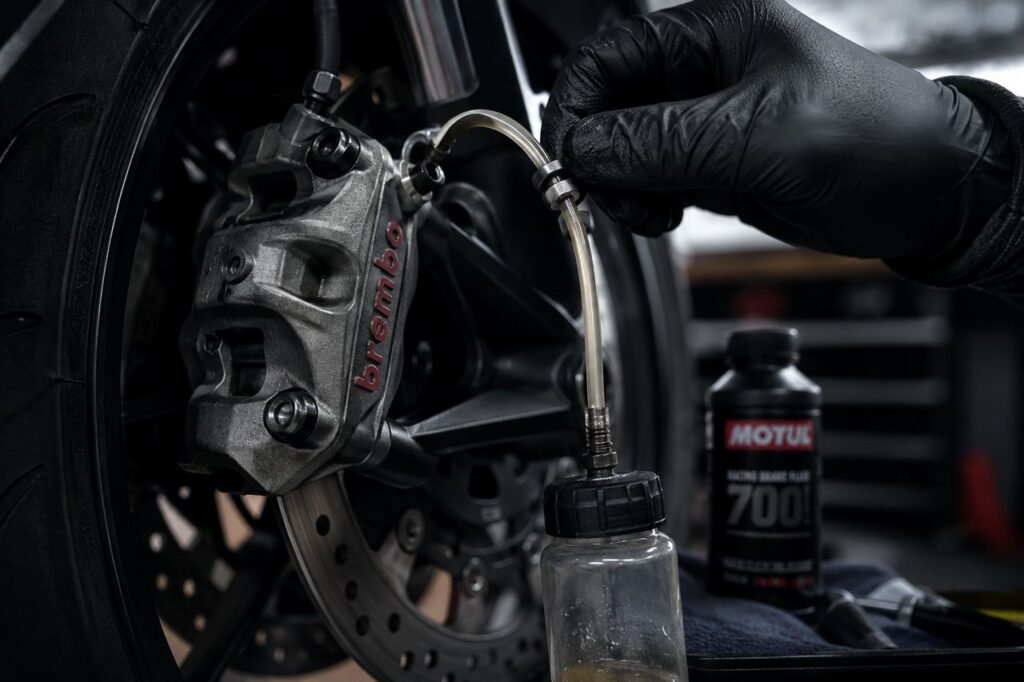
You have spent serious money on sticky Pirelli Supercorsas. You have braided stainless lines and Brembo pads that cost more than your first dirt bike. But inside your calipers sits the same $6 bottle of DOT 4 you grabbed at AutoZone two years ago.
Here is the hard truth. Brake fluid is the single most overlooked performance variable on a sportbike. It does not sound exciting. It does not look cool on Instagram. But it works against you every time you brake hard into a corner.
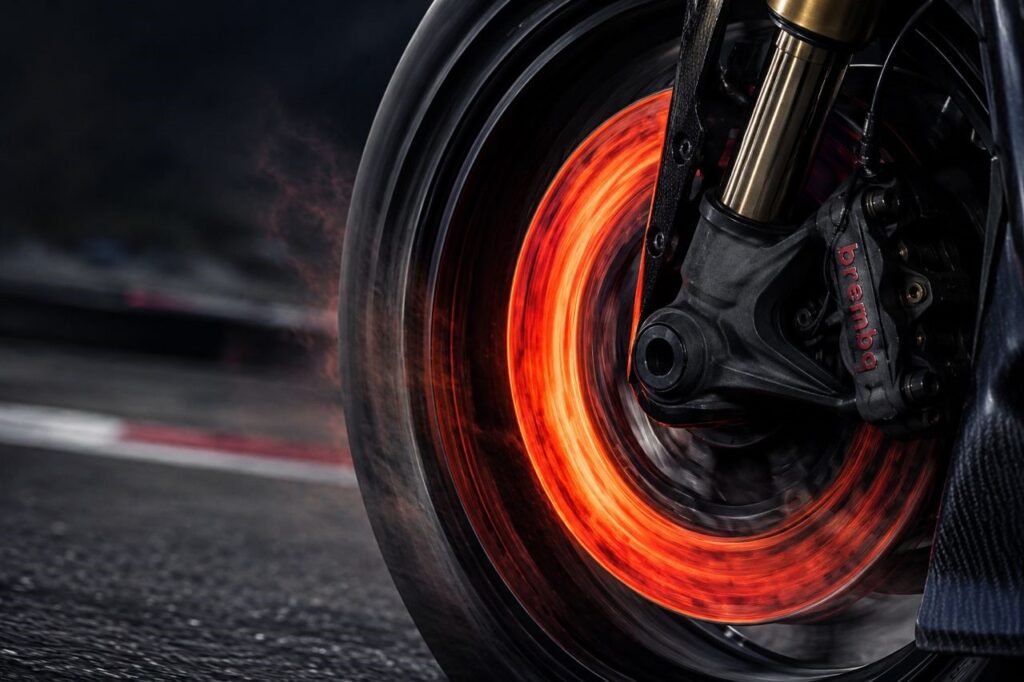
So what actually happens under heavy braking? Your brake calipers get brutally hot. That heat moves straight into your fluid. Cheap fluid hits its boiling point fast. When it boils, it creates tiny vapor bubbles throughout the system. Gas compresses under pressure. Brake fluid does not. So instead of pressure transmitting cleanly to your pistons, your lever travels halfway to the bar before anything happens. That is brake fade — and it will catch you off guard mid-corner.
Choosing the best motorcycle brake fluid for high performance is not about brand loyalty. It is about matching your fluid’s boiling thresholds to how hard you actually ride. Whether you chase lap times or flog canyon roads on weekends, there is a right fluid for your riding style. The wrong one can get you into serious trouble.
Finding the best motorcycle brake fluid for high performance starts with two numbers: dry boiling point and wet boiling point. We break both down in detail below.
Quick Comparison: Top High-Performance Brake Fluids
Before diving into full reviews, here is how the top contenders stack up. These are the fluids that come up most often when riders get serious about finding the best motorcycle brake fluid for high performance. Real numbers, no marketing fluff.
| Brand | Dry Boiling Point | Wet Boiling Point | Avg. Price (USD) | Best Used For |
|---|---|---|---|---|
| Castrol SRF React Racing | 608°F (320°C) | 518°F (270°C) | ~$65.00 (1L) | Ultimate Endurance / Pro Track Days |
| Motul RBF 660 | 617°F (325°C) | 400°F (204°C) | ~$30.00 (500ml) | Pure Sprint Racing / Hard Sportbikes |
| Maxima Racing DOT 4 | 600°F (316°C) | 381°F (194°C) | ~$19.00 (500ml) | Crossover / Aggressive Canyon Riding |
| Motul DOT 5.1 | 522°F (272°C) | 365°F (185°C) | ~$11.00 (500ml) | High-Performance Street & ABS Systems |
Dry boiling point means fresh-out-of-the-bottle performance. Wet boiling point is the rating after the fluid absorbs atmospheric moisture — which happens continuously once a bottle or system is opened. The wet number is what matters most in the real world. It is also where most cheap fluids fall apart fast.
Product Reviews: The Best Brake Fluids Money Can Buy
Castrol SRF React Racing — The Apex Predator
Castrol SRF has been the quiet standard at endurance races and serious track days for decades. Its wet boiling point is the reason why.
At 518°F (270°C) in wet conditions, SRF’s degraded performance still beats the fresh dry boiling point of many budget competitors. Let that sink in for a moment.
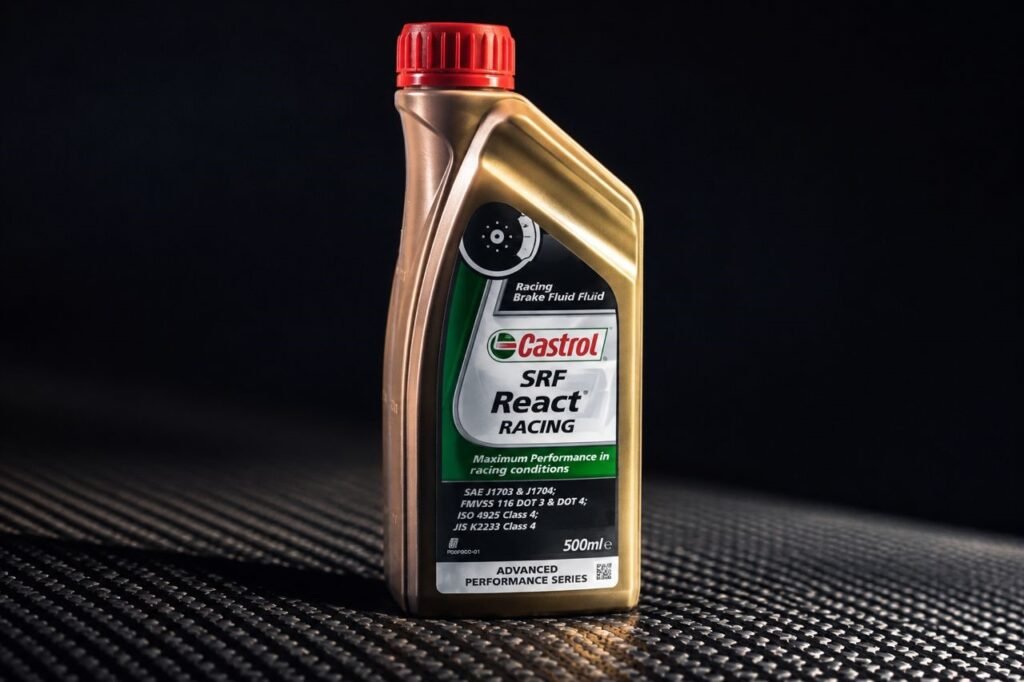
Most racing fluids show a huge gap between their dry and wet specs — sometimes over 200°F. SRF’s gap is only about 90°F. It absorbs moisture more slowly and holds its boiling threshold better when it does absorb it.
For endurance riding — long track days, multi-session weekends, or events where you cannot flush between sessions — SRF stands in a class of its own. The formula is glycol-based, fully compatible with standard rubber seals, and works smoothly with ABS systems.
Yes, it costs around $65 per liter. But if you run track days multiple weekends a season without flushing between every event, SRF pays for itself. You get consistent, predictable braking feel from session one all the way through session five.
Pros: Extraordinary wet boiling point, minimal dry-to-wet performance gap, long service life under repeated stress.
Cons: Premium price point, overkill for casual street riders.
Motul RBF 660 — The Sprint Racer’s Secret Weapon
If Castrol SRF is the endurance athlete, Motul RBF 660 is the all-out sprinter. Its dry boiling point of 617°F (325°C) is the highest on this list. That is genuinely impressive for a glycol-based fluid.
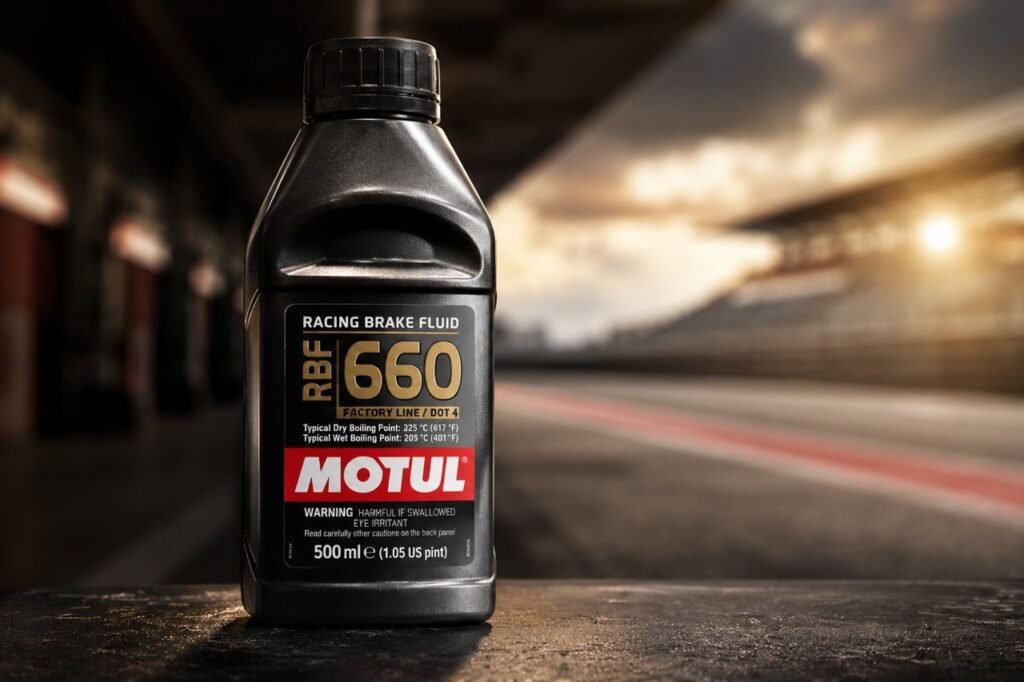
RBF 660 is built for conditions where riders flush fluid aggressively and often. Think race weekends where every session gets a fresh fill.
That matters because the wet spec tells a different story. At 400°F (204°C), RBF 660 absorbs moisture more quickly than SRF. Its real-world shelf life inside your system is shorter as a result. Use it hard, flush it often, and it performs brilliantly. Neglect it for a full season and you give up a significant safety margin.
For riders running closed-course sprint events or track days with dedicated paddock support, RBF 660 is an excellent choice. The lever feel is crisp and confidence-inspiring, with zero sponginess under repeated hard stops.
At around $30 for 500ml, it also offers real value for what you get in terms of raw heat performance.
Pros: Highest dry boiling point on the list, excellent lever feel, mid-range price for racing-grade fluid.
Cons: Wet spec drops more sharply — requires disciplined flush intervals.
Maxima Racing DOT 4 — Best Bang for Your Buck
Not everyone races or laps Laguna Seca. Some riders attack canyon roads hard, do the occasional track day, and want real performance without a racing budget. For those riders, Maxima Racing DOT 4 is hard to beat.
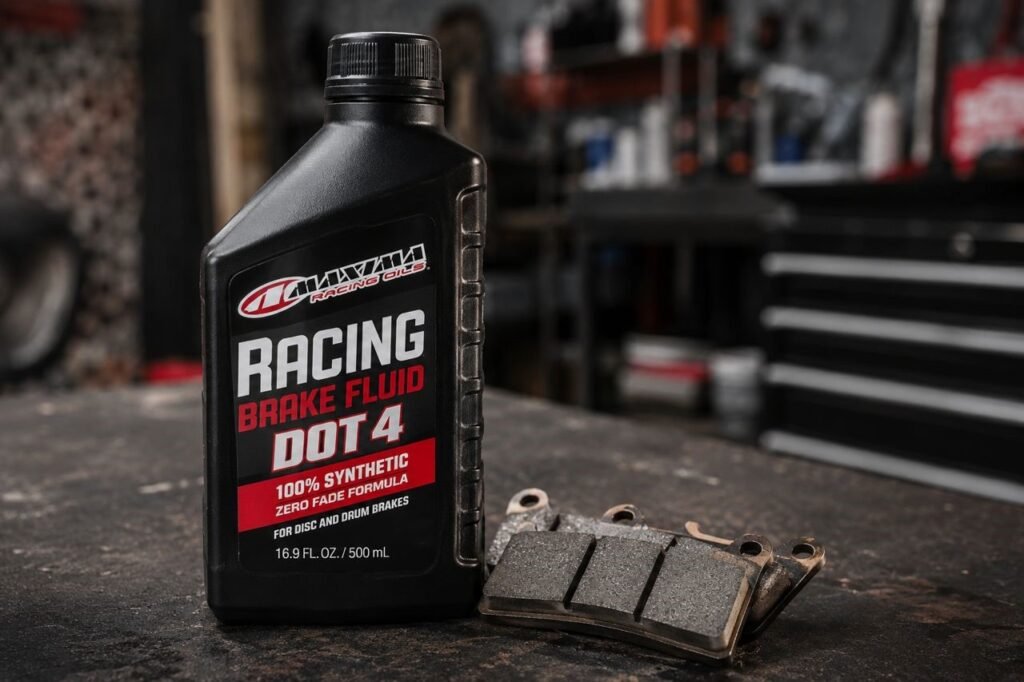
Its dry boiling point sits at 600°F (316°C). A 500ml bottle costs around $19. That combination delivers genuine racing-grade heat resistance at a price that makes regular flushing practical. And regular flushing is the real key to brake system longevity.
Maxima’s formula is fully DOT 4 compliant. It works with all OEM rubber seals and ABS systems. It also holds up well under the abuse a hard street rider puts on a brake system day after day.
For riders searching for the best motorcycle brake fluid for high performance without paying premium racing prices, Maxima hits a sweet spot that nothing else on this list quite matches. It is not trying to be RBF 660. Instead, it is purpose-built for the crossover rider who splits time between spirited street riding and track days — and for that rider, it absolutely delivers.
Pros: Exceptional value, high dry boiling point for the price, street and track compatible.
Cons: Wet spec is lower than premium options — more frequent flushing is needed for track use.
Motul DOT 5.1 — Purpose-Built for Modern ABS Systems
Here is where many riders get confused. Motul DOT 5.1’s boiling points — 522°F dry and 365°F wet — are lower than the race fluids above. So why does it belong on a high-performance list?
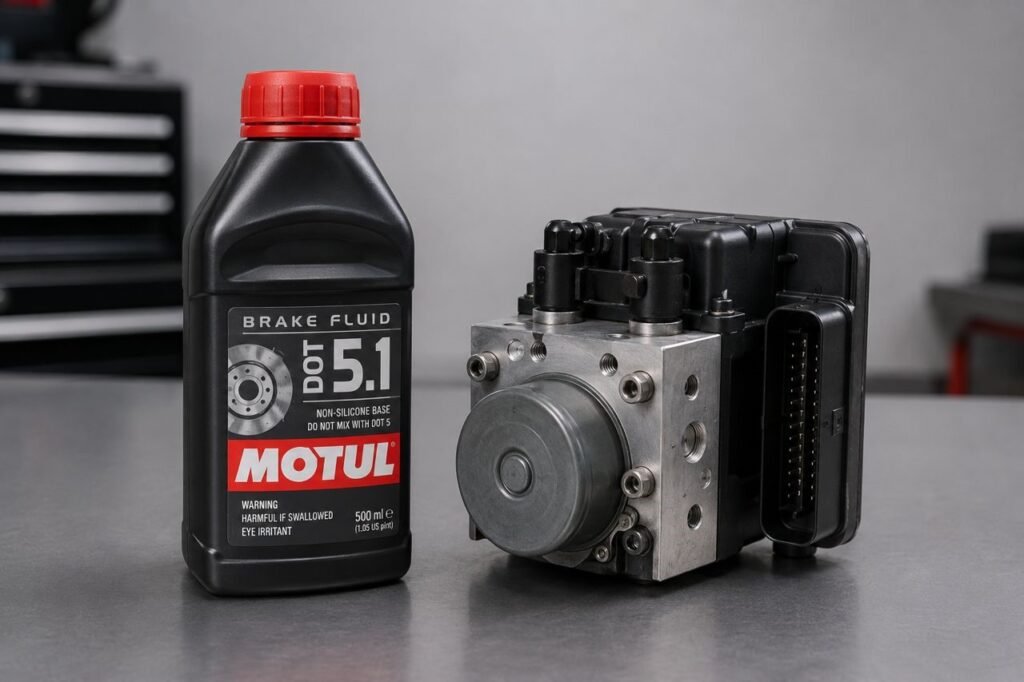
Because modern ABS systems are extremely sensitive to fluid viscosity. Those electronic brake management systems use micro-valves that pulse dozens of times per second during an ABS event. Thicker, heavier fluids create resistance in those tight passages. Motul DOT 5.1 is engineered with a lower viscosity index to cycle cleanly and quickly through ABS modulators. That keeps brake response sharp and immediate even during aggressive threshold braking.
For street riders on modern sportbikes with cornering ABS — think BMW S 1000 RR, Ducati Panigale, or Aprilia RSV4 — this matters more than chasing the highest boiling point on a spec sheet. If your ABS feels grabby or sluggish, old, thick DOT 4 sitting in your lines could be part of the problem.
At around $11 for 500ml, it is also one of the most affordable fluids here. That makes it easy to flush annually without second-guessing the cost.
Pros: Low viscosity ideal for ABS micro-valves, affordable and easy to flush frequently, solid street performance.
Cons: Lower boiling points — not suitable for aggressive track days without frequent flushing.
High-Performance Buying Guide: What to Know Before You Pour
Why Brake Fluid Acts Like a Sponge
Every glycol-based brake fluid — DOT 3, DOT 4, and DOT 5.1 — is hygroscopic. In simple terms, it acts like a sponge. These fluids actively pull moisture from the air. That happens through reservoir caps, brake line fittings, and even the seal interfaces inside your calipers.
So what does that mean for you? That old half-bottle of fluid sitting open on your garage shelf for eight months needs to go in the trash. It has already absorbed a meaningful amount of atmospheric moisture. Its wet boiling point has dropped before it even touches your system. This is not paranoia — it is basic fluid chemistry that has caused real crashes.
When shopping for the best motorcycle brake fluid for high performance, always buy sealed bottles from reputable suppliers. Check the seal before you buy. Use or discard opened bottles within a few weeks of opening.
DOT 4 vs DOT 5.1: Which Is Right for Your Bike?
This question comes up a lot, and the answer is simpler than most people think. DOT 5.1 offers a higher minimum boiling point standard than DOT 4 under FMVSS 116 specification. However, many high-performance DOT 4 formulas far exceed the DOT 5.1 minimum in real-world testing.
For modern ABS-equipped bikes, DOT 5.1’s lower viscosity is the real advantage — not just the boiling point. For track bikes or older sportbikes without ABS, a performance DOT 4 like SRF or RBF 660 is typically the better choice. Always check your OEM specification before switching between fluid types.
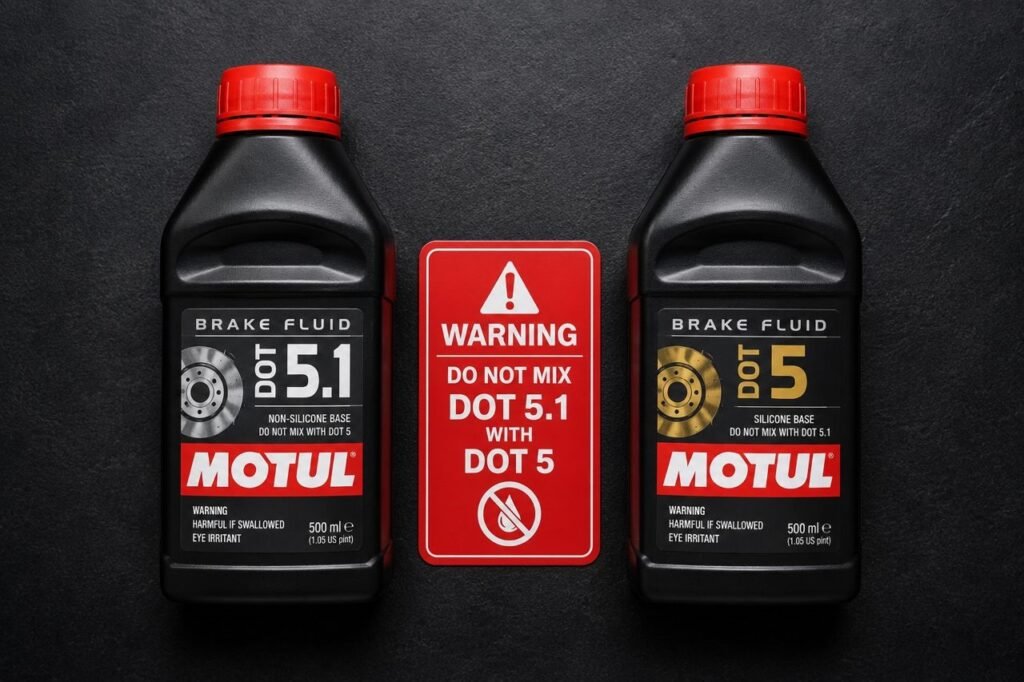
⚠️ CRITICAL SAFETY WARNING: Never use DOT 5 silicone-based fluid in a glycol-based brake system. DOT 5 is completely incompatible with standard rubber seals, master cylinder internals, and ABS pump components. Mixing even a small amount of DOT 5 into a glycol-based system causes seal swelling, system failure, and complete loss of braking. DOT 5 is NOT a better version of DOT 5.1. They are chemically incompatible. If you are unsure what is currently in your bike, flush the entire system before adding anything new.
Choosing the best motorcycle brake fluid for high performance comes down to your riding frequency, flush discipline, and whether your bike runs ABS. Match those factors to the right fluid, stick to a proper flush schedule, and your braking system will never be the weak link.
Frequently Asked Questions
Can I use car brake fluid in my motorcycle?
Technically yes — DOT ratings are standardized across cars and motorcycles. A DOT 4 from an auto parts store meets the same minimum spec as a motorcycle-specific bottle. However, there is an important practical difference. Motorcycle-specific fluids are formulated with stronger anti-foaming additives. Motorcycle brake systems live inside a high-vibration chassis. That vibration introduces tiny air bubbles into the fluid during normal operation. Cheaper automotive blends can foam up under those conditions. When that happens, compressibility enters the system and your lever feel softens in ways that are subtle at first but dangerous at speed. The few extra dollars for a bike-specific blend are always worth it.
How often should I flush my brake fluid?
For a street bike with regular use, the standard recommendation is every two years or every 12,000 to 15,000 miles — whichever comes first. However, that schedule is built around moderate riding. If finding the best motorcycle brake fluid for high performance matters to your riding — meaning hard canyon sessions, track days, or any situation where you push your brakes seriously — then flush annually at minimum. Ideally, flush at the start of every track season. Serious racers flush before every race day. On a track bike, sustained heat cycles degrade fluid far faster than simple calendar time. When in doubt, pick up a brake fluid tester at any auto supply store. The moisture content reading will tell you exactly where your fluid stands.
The Bottom Line: Stop Treating Brake Fluid Like an Afterthought
Your brakes are the most important safety system on your bike. Brake fluid is what makes the whole system work. Every dollar you spent on sticky tires, braided lines, and performance pads gets quietly wasted the moment cheap, moisture-saturated fluid turns your firm lever into a sponge mid-corner.
If you run multi-session track days and cannot flush between every event, Castrol SRF is worth every penny of its premium price. If you sprint race with fresh fluid before every session, Motul RBF 660’s raw heat resistance is unmatched. For the rider who wants genuine performance fluid at a price that makes regular flushing easy, Maxima Racing DOT 4 is the sweet spot. And if you ride a modern ABS-equipped sportbike primarily on the street, Motul DOT 5.1’s low viscosity keeps those electronic systems running exactly as designed.
Whatever you choose, buy fresh sealed bottles. Commit to a real flush schedule. Never let an open bottle sit forgotten on a garage shelf. Brake fluid is the cheapest performance upgrade you will ever make on a motorcycle — and the most dangerous thing you will ever neglect. Ride fast. Stop faster.