
By Chris Mchenga · Updated May 2026
There are plenty of upgrades riders obsess over. Exhaust systems. Suspension kits. Tire compounds. ECU flashes. But when a car suddenly pulls across your lane or traffic locks up in front of you on a wet highway, none of that matters as much as your brakes.
Stopping power shapes every part of the riding experience. It affects how deep you can brake into a corner, how stable the bike feels under pressure, and how much confidence you carry into unpredictable situations. Riders often focus on calipers and braided lines, but brake pads are the real working surface doing the hard job every single ride.
The challenge is that riders constantly search for the “best motorcycle brake pads” as if there is one universal answer. There isn’t. The right pad for a lightweight naked bike ridden aggressively through mountain roads can feel terrible on a heavy touring machine crossing long highway miles. A commuter weaving through city traffic has completely different needs than a rider spending weekends at track days.
Brake pad choice changes lever feel, initial bite, heat management, rotor wear, wet-weather behavior, noise levels, and long-term maintenance costs. Even two pads that look identical in the box can behave completely differently once heat builds up.
That’s why experienced riders stop looking for marketing hype and start matching pad compounds to real riding conditions. Once you understand how different materials behave under heat and pressure, choosing the right setup becomes far easier — and your motorcycle instantly feels more controlled, predictable, and enjoyable.
Sintered vs Organic Motorcycle Brake Pads
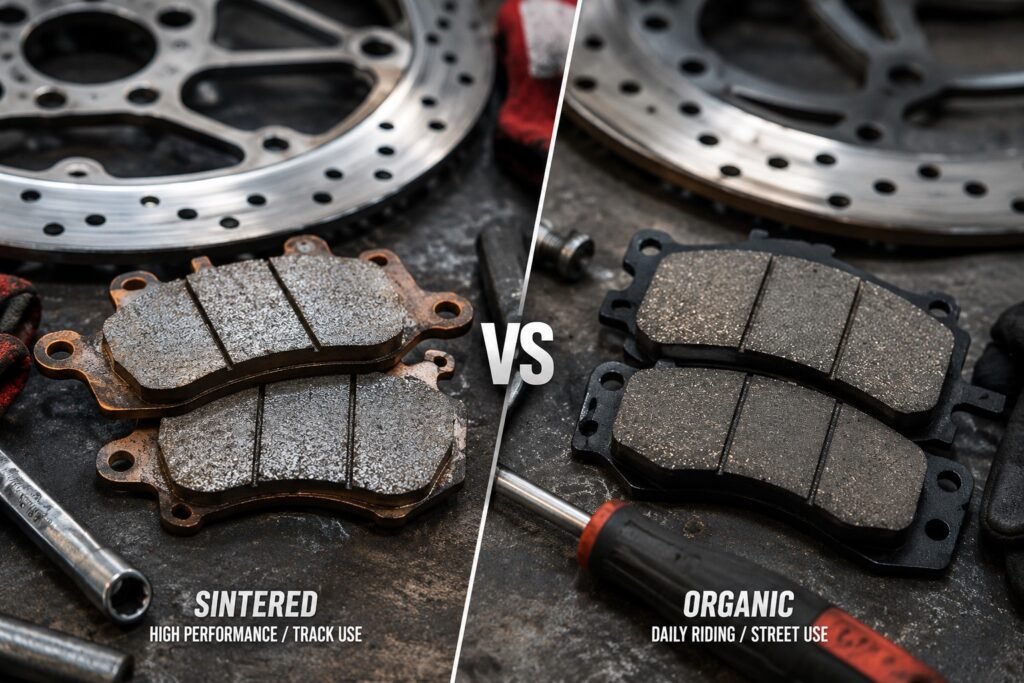
The biggest debate in the motorcycle braking world has existed for decades: sintered versus organic compounds. Ceramic pads entered the conversation later as a premium option, but most riders still end up deciding between metallic aggression and softer organic feel.
Understanding how each compound is built explains almost everything about how it behaves on the road.
Sintered (Metallic) Brake Pads
Sintered pads are created by fusing metallic particles together under extreme heat and pressure. Manufacturers use combinations of copper, bronze, iron, graphite, and other metallic compounds, compressing them into an incredibly dense friction material.
The result is a brake pad that thrives under punishment.
Heat is the enemy of braking performance. As temperatures climb, cheaper compounds lose friction efficiency and the lever begins to feel vague or weak. Riders call this brake fade. Sintered pads resist fade exceptionally well because metallic compounds maintain stable friction characteristics even under repeated hard braking.
That’s why sintered pads dominate modern sportbikes, fast canyon riding, and track-focused machines. Riders pushing aggressive speeds need predictable stopping power after repeated high-speed braking zones, not just during the first stop.
One reason many riders consider sintered compounds among the best motorcycle brake pads for performance riding is their powerful initial bite. The moment the lever is squeezed, the pads grab the rotor aggressively. That sharp response creates confidence during fast riding and emergency braking.
Wet-weather performance is another major advantage. Water disperses quickly from metallic surfaces, so sintered pads usually recover braking efficiency faster during rain. Riders who commute year-round often appreciate this consistency.
But there are tradeoffs.
Sintered compounds can feel abrupt on lightweight bikes or cruisers. Some riders describe the response as overly sharp or grabby at low speeds. They also generate more rotor wear over time because metallic friction materials are harder on brake discs.
Noise can become another issue. Sintered pads sometimes squeal, especially during low-speed braking or after contamination. Performance-focused riders usually tolerate the noise because the braking performance is worth it.
Heat transfer is another overlooked factor. Metallic pads can push more heat into calipers and fluid systems during repeated hard riding. High-end motorcycles are designed around this reality, but older machines or budget braking systems may reveal weaknesses sooner.
Still, for riders prioritizing outright stopping force and thermal stability, sintered pads remain the dominant choice.
Organic (Resin/NAO) Brake Pads
Organic pads — often called resin or NAO (Non-Asbestos Organic) pads — are built from a completely different philosophy.
Instead of metallic compounds, manufacturers use blends of fibers, rubber materials, glass, Kevlar, carbon compounds, and resins bonded together under pressure.
The result is a softer, smoother friction material that behaves more progressively during everyday riding.
Organic pads usually deliver gentler initial bite compared to sintered options. Instead of grabbing immediately, braking force builds gradually as pressure increases at the lever. Many riders actually prefer this behavior because it creates smoother low-speed control.
Cruiser riders especially appreciate this character. Large V-twins with relaxed riding styles don’t always benefit from hyper-aggressive braking response. A predictable, linear lever feel often feels more natural during city riding or long highway touring.
Another advantage is reduced rotor wear. Because organic compounds are softer, brake discs generally last longer. Riders covering massive mileage every year often notice this difference.
Noise levels are also lower. Organic pads are typically quieter and smoother during daily operation, with less squealing or vibration.
Where they struggle is extreme heat.
Repeated hard braking generates temperatures that can overwhelm organic materials more quickly than sintered compounds. During aggressive mountain riding or track sessions, lever feel may become softer as temperatures rise.
That doesn’t mean organic pads are weak. Modern premium organic compounds are dramatically better than older designs. Many street riders will never approach the thermal limits of a quality resin pad.
For commuting, relaxed touring, urban traffic, and riders who prioritize smooth modulation over aggressive bite, organic compounds remain an excellent choice.
Ceramic Brake Pads
Ceramic pads sit in the premium middle ground.
These compounds use ceramic fibers combined with fine copper materials and specialized bonding agents. The goal is to create a pad with excellent thermal stability while reducing dust, noise, and harsh rotor wear.
The conversation around ceramic vs sintered motorcycle brake pads usually comes down to refinement versus aggression.
Ceramic pads generally feel smoother and more controlled than aggressive metallic compounds while still tolerating high temperatures better than many organic options. They also produce far less brake dust, which riders with expensive wheels appreciate.
Noise reduction is another major benefit. Quality ceramic pads tend to operate quietly even after significant mileage.
Thermal consistency is impressive as well. Under repeated braking, ceramic compounds maintain stable friction characteristics without becoming excessively grabby.
The downside is cost.
Premium ceramic pads can be significantly more expensive than organic or standard sintered compounds. Availability can also be more limited depending on the motorcycle.
Some riders chasing maximum track performance still prefer the sharper bite of dedicated sintered race compounds. But for high-end street motorcycles where comfort, refinement, and strong braking balance matter equally, ceramic pads offer a compelling option.
Brake Pad Compound Comparison
| Attribute | Sintered Pads | Organic Pads | Ceramic Pads |
|---|---|---|---|
| Initial Bite | Very aggressive and immediate | Smooth and progressive | Strong but refined |
| Heat Tolerance | Excellent under extreme heat | Moderate under sustained heavy braking | Very high and stable |
| Rotor Wear | Higher rotor wear over time | Lower rotor wear | Moderate rotor wear |
| Noise Level | Can squeal or vibrate | Usually very quiet | Extremely quiet |
| Ideal Riding Style | Sport riding, canyon runs, track days | Commuting, cruisers, casual touring | Premium street riding, sport touring |
Top Categories: Matching Pads to Your Ride
Choosing the right compound becomes easier once you honestly evaluate how and where you ride. Motorcycle braking systems operate under wildly different demands depending on bike weight, rider aggression, terrain, and climate.
The best aftermarket motorcycle brake pads are not always the most expensive option. In many cases, riders discover the best motorcycle brake pads only after testing compounds across different seasons, tire setups, and riding environments. The smartest choice is the one matched correctly to the motorcycle’s actual workload.
Aggressive Street Riding and Track Days
Fast street riding creates enormous thermal stress.
Hard braking into corners repeatedly heats rotors and pads far beyond what most commuters ever experience. Add a track day into the mix and temperatures climb even further.
This environment rewards compounds with strong initial bite, consistent friction under heat, and excellent fade resistance.
That’s why many riders searching for the best motorcycle brake pads for street riding eventually move toward premium sintered compounds. A good metallic pad creates confidence during deep braking zones and rapid speed transitions.
Sportbike riders often notice the improvement immediately. Lever feel becomes firmer. Initial response sharpens. The bike feels more stable entering corners because braking force arrives instantly and consistently.
Track-focused riders push these demands even harder.
The best track day motorcycle brake pads must tolerate repeated heat cycles without glazing or fading. During a twenty-minute session, braking systems can experience brutal thermal punishment, especially on heavier superbikes.
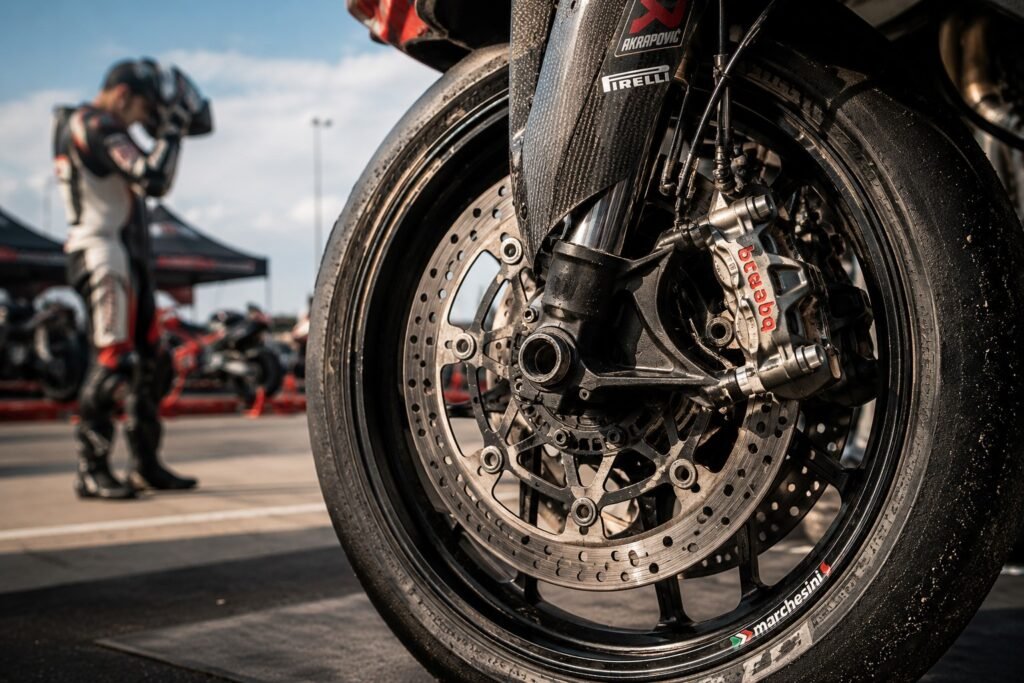
Race-oriented sintered compounds are designed specifically for this environment. Some require heat before reaching peak performance, which is why certain race pads feel weak during cold street riding.
Rotor condition matters heavily here as well. High-performance compounds paired with warped or heavily grooved rotors create vibration and inconsistent braking. Riders upgrading pads should always inspect rotor thickness and surface condition carefully.
Braided steel brake lines and high-quality fluid complete the package. Even the strongest pad compound cannot compensate for boiling fluid or expanding rubber lines.
Heavy Cruisers and Long-Distance Touring
Heavy motorcycles create a different kind of braking challenge.
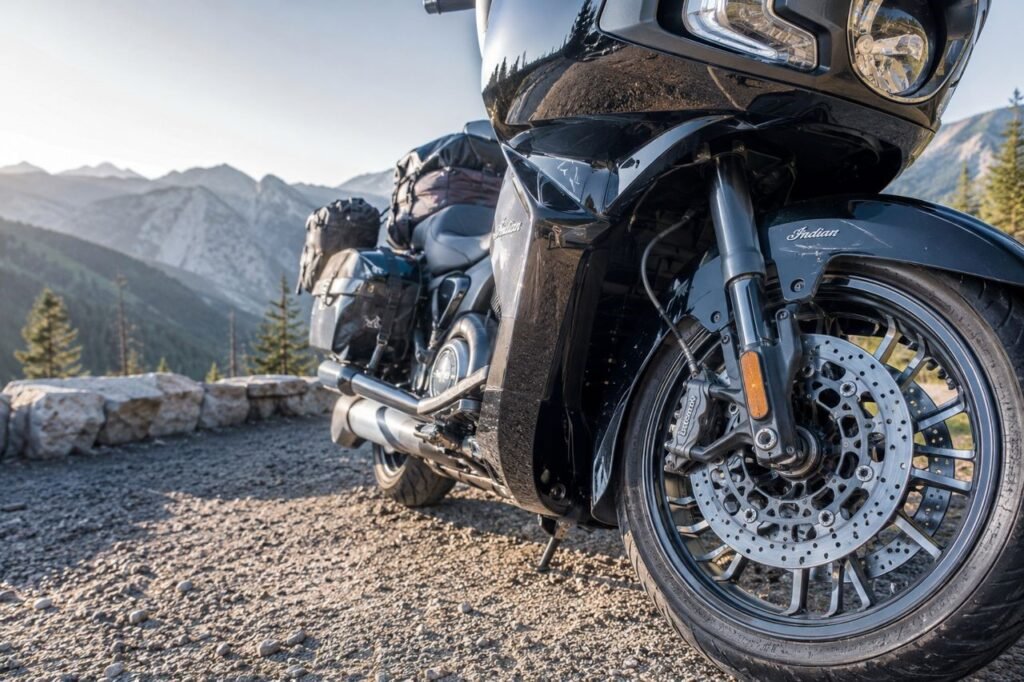
A fully loaded touring bike carrying luggage and a passenger generates enormous momentum. The goal is not razor-sharp race-bike aggression. Instead, riders need predictable stopping power, long pad life, and stable braking in all weather conditions.
The best heavy cruiser motorcycle brake pads usually prioritize smooth modulation and durability.
Many touring riders prefer premium organic or balanced ceramic compounds because they offer easier low-speed control. During parking lot maneuvers or stop-and-go traffic, softer initial bite can actually improve comfort and confidence.
Long-distance touring also exposes braking systems to changing weather. Morning fog, mountain rain, highway heat, and cold descents all influence pad behavior.
That’s why many experienced touring riders still choose high-quality sintered pads despite the sharper feel. Wet-weather consistency matters enormously on cross-country trips.
Pad longevity becomes another important factor.
Large touring motorcycles consume rear brake pads surprisingly quickly because of weight distribution and extended braking loads during downhill riding. Riders covering thousands of highway miles appreciate compounds capable of surviving long intervals between maintenance.
Heat management also matters during mountain riding. Descending steep grades on a fully loaded touring bike creates sustained thermal load unlike anything seen during flat highway cruising.
A balanced ceramic or touring-oriented sintered pad often works best here because it combines durability with predictable modulation.
Daily Commuters and Urban Riders
Urban riding punishes brakes differently.
Constant stoplights, unpredictable traffic, wet roads, dust, and lower operating temperatures all shape braking behavior.
Commuters often benefit from pads that perform consistently without needing aggressive heat buildup. Organic compounds shine in this environment because they deliver smooth engagement during low-speed riding.
Noise reduction also matters more in city use. Riders sitting in traffic every day quickly become annoyed by constant squealing.
Many commuters searching for the best motorcycle brake pads eventually realize they care more about consistency and comfort than maximum stopping aggression. For commuters who ride year-round, the best motorcycle brake pads are often the ones that feel predictable every single morning, regardless of temperature or road conditions.
Short-trip riding creates another hidden issue: brakes may never fully heat cycle. Race-oriented compounds can feel disappointing during everyday commuting because they are engineered for higher operating temperatures.
For most urban riders, a quality organic or mild sintered street compound provides the best balance.
Maintenance and Longevity: The Practical Guide
Brake pads are consumable components. No matter how advanced the compound is, every pad eventually wears out.
One of the most common rider questions is simple: how long do motorcycle brake pads last?
Unfortunately, there is no universal mileage answer.
A relaxed touring rider on open highways may get 20,000 miles from a set of front pads. An aggressive canyon rider on a superbike might destroy a set in a few thousand miles.
Several variables control pad lifespan:
- Riding style
- Motorcycle weight
- Passenger and luggage load
- Riding environment
- Brake pad compound
- Rotor condition
- Weather exposure
Urban stop-and-go riding usually wears pads faster than highway cruising because the brakes are constantly being applied.
Aggressive riders naturally consume pads more quickly because higher speeds require more braking energy. Track riding accelerates wear dramatically because temperatures and friction loads become extreme.
Pad material also matters.
Organic compounds generally wear faster than sintered metallic compounds, especially under aggressive riding. Ceramic pads often offer excellent lifespan but cost more initially.
Even riding technique changes wear rates.
Some riders trail the rear brake constantly through corners or traffic. Others ride the front brake aggressively while barely using the rear. Each habit shapes wear patterns differently.
When to Replace Motorcycle Brake Pads
Inspection should become routine maintenance, not an emergency reaction.
Modern motorcycles make pad inspection relatively easy. Most calipers allow riders to visually check remaining material without removing components.
As a general rule, brake pads should be replaced when friction material reaches roughly 2mm thickness.
Waiting longer risks damaging the rotor itself, which becomes dramatically more expensive.
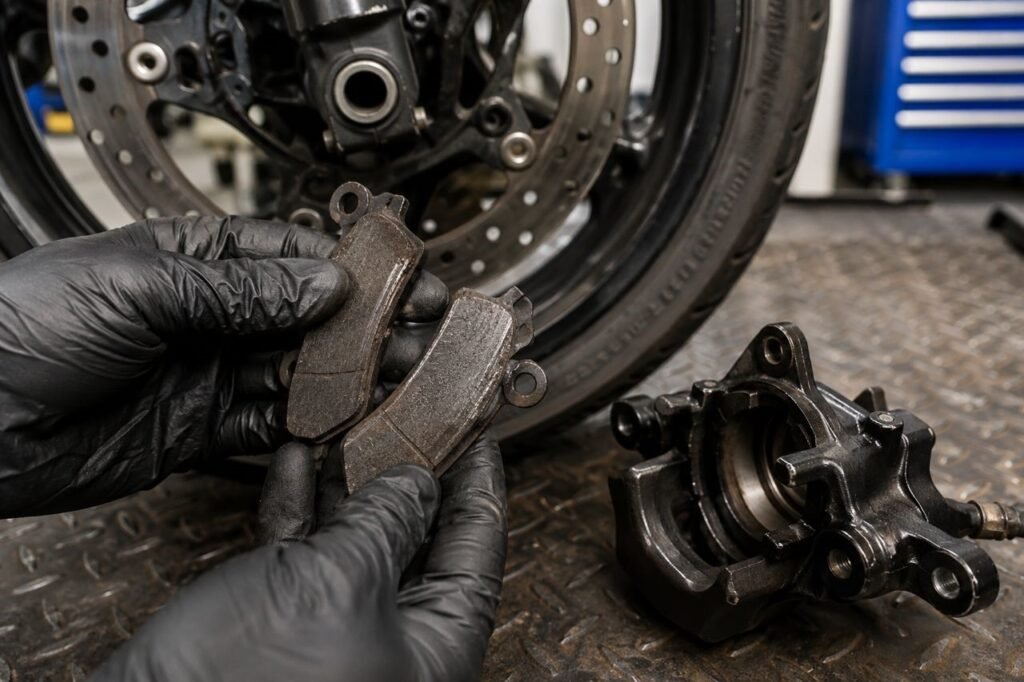
Use this checklist to identify warning signs before braking performance becomes dangerous:
- Wear groove indicators have disappeared or pad thickness falls below 2mm.
- The brake lever or pedal suddenly feels soft, vague, or spongy.
- Braking distances increase despite normal lever pressure.
- Squealing or screeching appears during normal braking.
- Metallic grinding noises develop under braking.
- The motorcycle pulls slightly during braking.
- Visible scoring or discoloration appears on the rotor surface.
Grinding noises should never be ignored.
Once the friction material wears completely away, the metal backing plate contacts the rotor directly. At that point, rotor destruction happens quickly.
Brake fluid condition matters too.
Some riders mistake old contaminated fluid for worn pads because both problems create weak lever feel. If braking suddenly feels soft, inspect both pad thickness and fluid condition together.
Why Are My Motorcycle Brakes Squeaking?
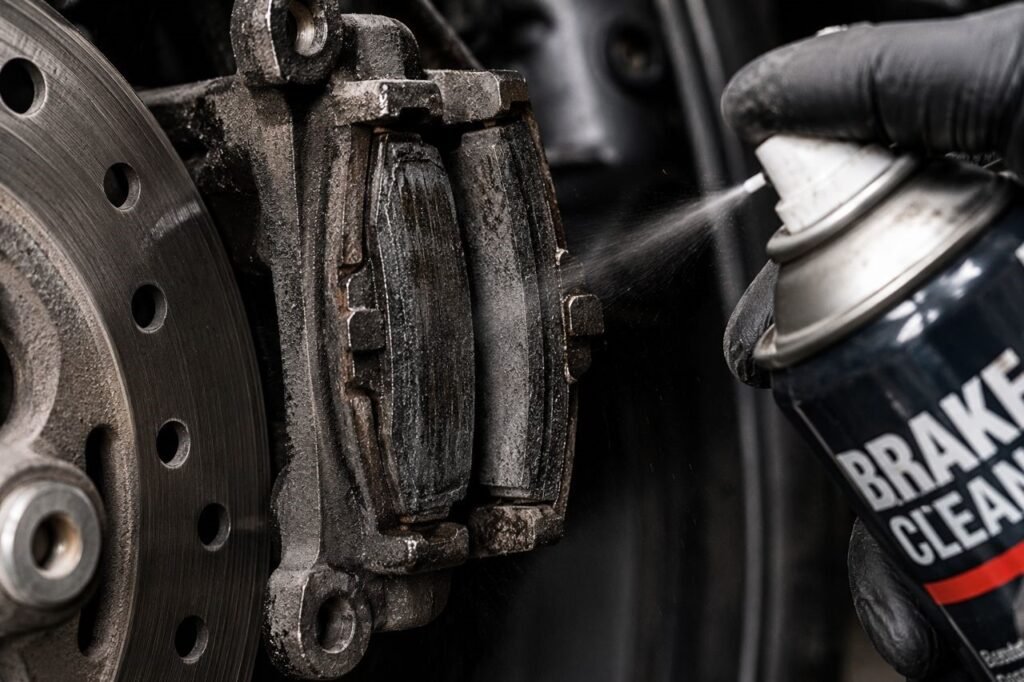
Brake squeal frustrates riders constantly.
Sometimes the noise is harmless. Sometimes it signals a developing problem.
One common cause is glazing.
Glazing happens when excessive heat hardens the pad surface into a smooth, shiny layer. Instead of creating stable friction, the glazed surface vibrates against the rotor and creates noise.
Improper bedding-in procedures often cause this issue. New pads should always be heat-cycled gradually through controlled braking rather than abused immediately.
Dust buildup creates another common problem.
Brake dust accumulates around pad edges and caliper surfaces over time. Combined with moisture and road grime, it can trigger squealing during light braking.
Cleaning calipers regularly helps prevent this.
Lack of anti-seize or brake grease on the backing plate contact points can also create vibration noise. Importantly, lubricant should never touch the friction material or rotor surface itself.
Rotor condition matters as well.
Warped rotors, uneven wear, or contamination from chain lube can all generate strange noises and inconsistent braking feel.
Some sintered pads simply produce more noise by nature. Aggressive metallic compounds prioritize stopping force over quiet operation.
Temperature and weather influence squealing too. Morning moisture or cold temperatures often create temporary brake noise that disappears after a few stops.
The key is recognizing the difference between harmless occasional squeal and warning signs tied to poor braking performance.
Conclusion and Final Recommendations
Motorcycle brake pads shape far more than stopping distance alone. They influence confidence, corner entry stability, wet-weather control, lever feel, and the overall personality of the motorcycle.
The riders who end up happiest with the best motorcycle brake pads are usually the ones who choose compounds honestly based on how they actually ride rather than what sounds most aggressive online.
Sintered pads dominate high-performance street riding and track use because they tolerate heat incredibly well. Organic compounds remain excellent for commuters, cruisers, and riders who value smooth predictable modulation. Ceramic options bridge the gap with refined braking feel, low dust, and strong thermal consistency.
No matter which material you choose, inspection and maintenance matter just as much as the compound itself. Fresh fluid, healthy rotors, proper bedding-in, and regular wear checks keep braking systems operating safely.
And when you finally install a properly matched set of the best motorcycle brake pads, the transformation is immediate. Lever feel sharpens. Confidence rises. The motorcycle feels calmer entering corners and more controlled during emergency stops.
That confidence changes the entire riding experience — every single mile.