
Updated: July 25, 2026 | By Chris Mchenga
Disclosure: This article contains Amazon affiliate links. If you make a purchase through these links, we earn a small commission at absolutely no extra cost to you. This helps support the site and allows us to continue creating detailed motorcycle maintenance guides. Thank you for your support!
My six-month, three-bike GoPro vs DJI Osmo Action motorcycle test — engine buzz, wind roar, dead batteries, and all.
The first time I pulled footage off my chin mount after a canyon run, I almost deleted the whole clip. My triple’s engine buzz had turned twenty minutes of good riding into jello. That’s the real reason I started digging into GoPro vs DJI Osmo Action motorcycle setups in the first place—not spec sheets, but footage that looked like it was shot underwater.
If you ride, you already know the drill. Wind roar eats your commentary. Batteries tap out somewhere around hour two. And vibration turns smooth pavement into a washing machine on camera, even when the ride itself felt fine. So I spent six months running both cameras back to back on a sport bike, an adventure bike, and a naked street bike to see which one actually survives the ride.
This comparison covers stabilization, audio, low-light performance, battery life, mounting durability, and which camera makes more sense depending on how you ride. No sponsor money here—just what I saw in the footage.
I’m not going to pretend either camera is perfect. Both have quirks that only show up once you’re actually riding, not sitting on a bench testing indoors. That’s the gap most reviews miss, and it’s exactly what this GoPro vs DJI Osmo Action motorcycle breakdown is built to close.
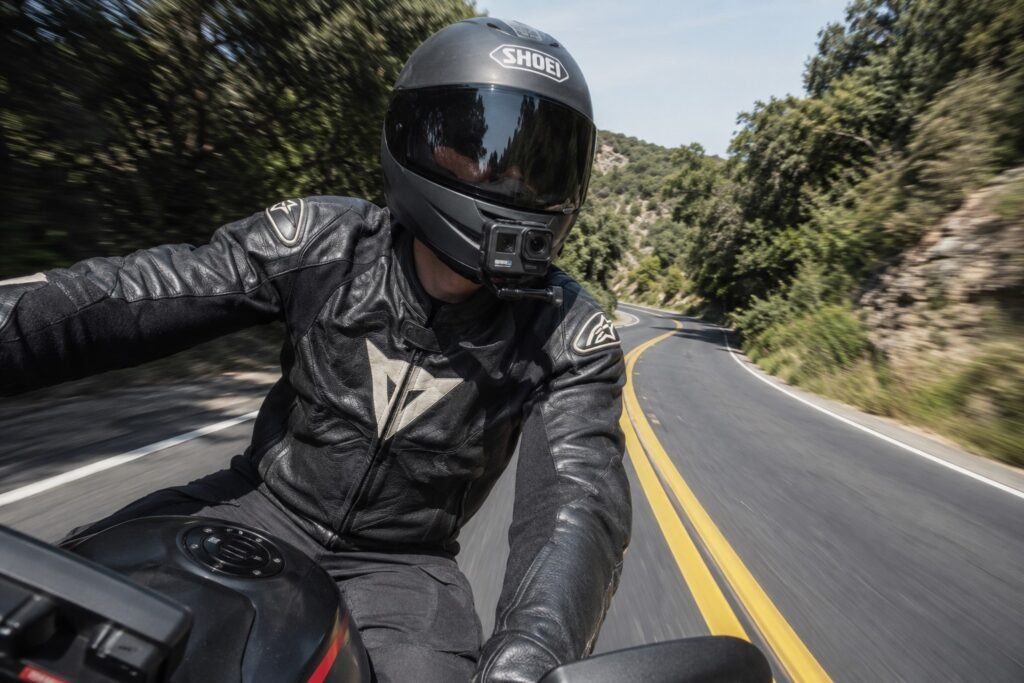
At-a-Glance: GoPro vs DJI Osmo Action Motorcycle Comparison Table
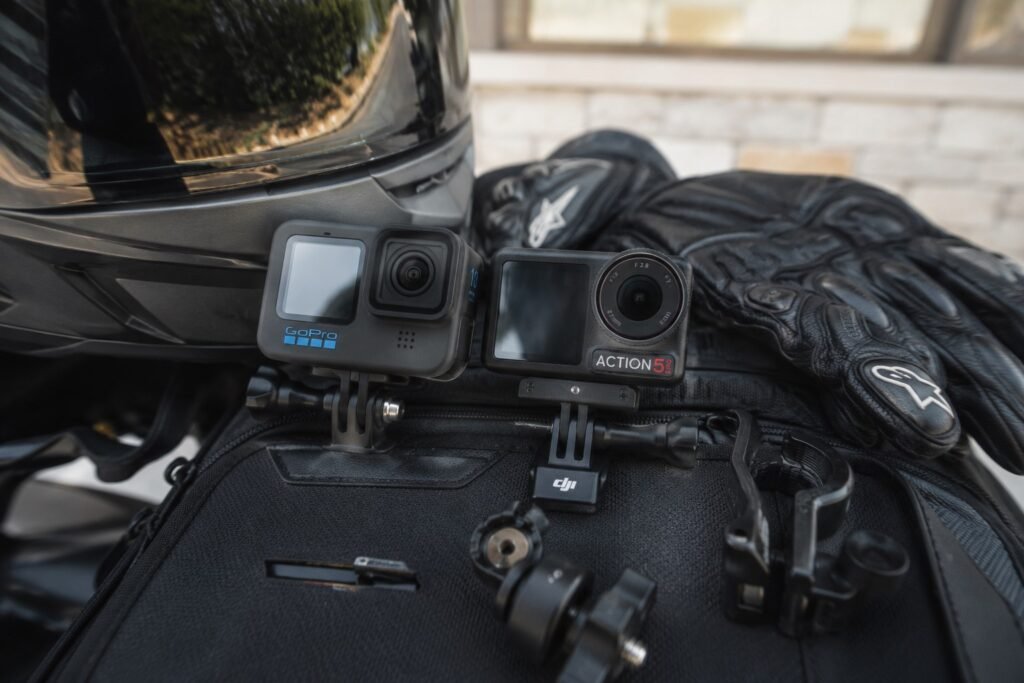
| Feature | GoPro Hero 13 | DJI Osmo Action 5 Pro |
|---|---|---|
| Sensor Size | 1/1.9-inch | 1/1.3-inch |
| Battery Life (4K/60) | ~70–90 min (Enduro) | ~100–140 min |
| Overheating Limits | Shuts down faster in direct sun, no airflow | Runs cooler, longer thermal buffer |
| Stabilization Tech | HyperSmooth 6.0 | RockSteady 3.0+ / HorizonSteady |
| Mic Syncing | Media Mod (wired/mount-based) | Native Bluetooth (DJI Mic 2/Mini) |
| Mounting System | Dual-prong folding legs | Magnetic quick-release latch |
| Cold Weather Operation | Solid with Enduro battery | Rated tougher (-4°F/-20°C claims) |
That’s the quick version. Now let’s get into why each of these numbers actually matters once you’re riding, not just reading a box.
GoPro vs DJI Osmo Action Motorcycle: Stabilization & Vibration Testing
Here’s the thing nobody tells you before you strap a camera to your helmet: it’s not the big bumps that ruin footage. It’s the high-frequency stuff. Engine vibration, road texture, wind buffeting at speed — all of that shows up as a fine, ugly jitter that no amount of editing fixes after the fact.
This is where any real GoPro vs DJI Osmo Action motorcycle test lives or dies, honestly, because stabilization footage on a bench means almost nothing once you’re out on real pavement.
On chin mounts, GoPro’s HyperSmooth 6.0 handled my inline-four’s vibration well at moderate RPM. However, once I got into higher revs on a twisty road, I started seeing a faint shimmer at the edges of the frame. It’s subtle, but if you’re pixel-peeping on a big screen, you’ll catch it.
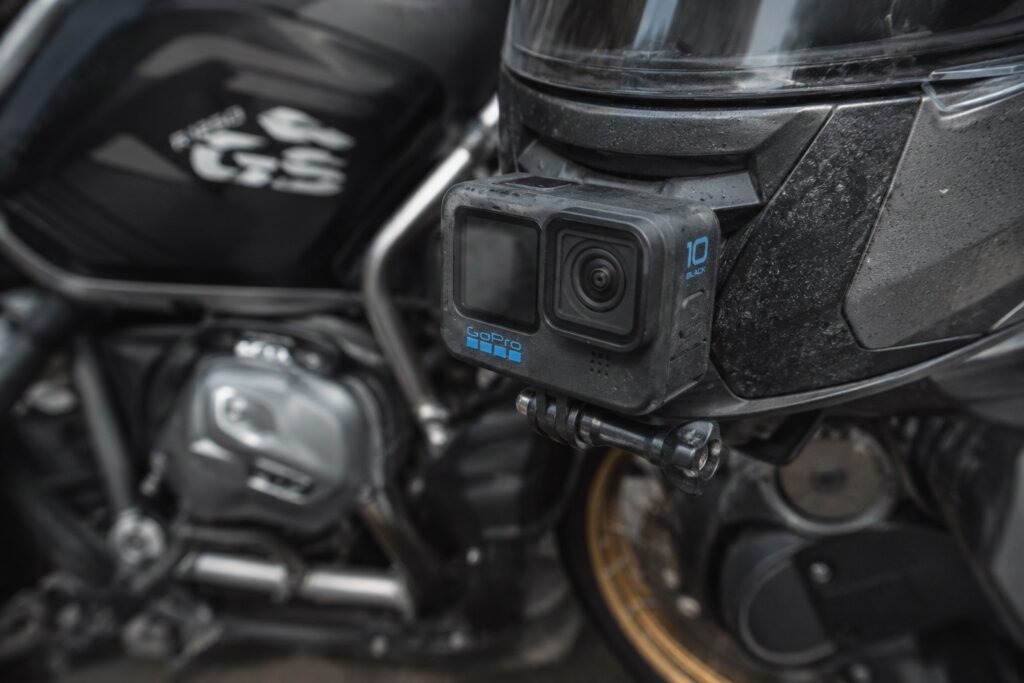
I also tested both cameras through a stretch of chip-sealed backroad, which is about as rough as pavement gets without going off-road. The high frequency vibration on that surface is brutal on any action camera high frequency vibration motorcycle mount, and it exposed weaknesses in both systems that smoother roads had hidden.
DJI’s RockSteady 3.0+ paired with HorizonSteady did something I didn’t expect: it kept the horizon locked even when I was leaned way over in a corner. That’s a big deal for anyone doing GoPro vs DJI Osmo Action motorcycle comparisons specifically for track days, since a tilted horizon makes footage look amateur fast.
On handlebar mounts, the gap closes. Both cameras do a solid job because handlebar vibration is lower frequency than what hits your helmet. So if you’re mostly bar-mounting, this category matters less to your decision.
GoPro vs DJI Osmo Action Motorcycle: Audio, Wind Noise & Mic Setups
Wind noise at 70 mph is brutal. At helmet level, you’re getting a constant roar that swallows your voice, and neither camera’s built-in mic handles that cleanly on its own. I learned this the hard way trying to record commentary on an interstate stretch — my voice was basically gone by minute three.
GoPro’s built-in wind reduction helps at lower speeds, but it starts to break down past 50 mph or so. On top of that, GoPro vs DJI Osmo Action wind noise motorcycle testing showed the Hero 13 picking up more low-frequency rumble through the mount itself, which the software can’t fully filter out.
DJI leans harder into external audio, and it shows. Their Bluetooth pairing with the DJI Mic 2 or Mini connected fast and stayed locked through an entire two-hour ride with zero dropouts for me. That’s a genuinely useful motovlogging external mic setup, since you’re not fumbling with cables while wearing gloves.
If you’re using a helmet intercom system instead, both cameras can work, but you’ll want a dedicated mic clipped inside your helmet either way. Relying on the onboard mic alone, on either camera, isn’t going to give you usable dialogue once you’re past parking-lot speeds.
Low-Light Night Riding: Sensor Size Actually Matters Here
During the day, both cameras produce footage that’ll satisfy most riders. Dynamic range is strong on both, and colors look natural without a ton of grading. That said, night riding is where the sensor gap becomes obvious.

GoPro’s 1/1.9-inch sensor does fine under decent streetlights, but it introduces visible grain the moment you’re on a dark backroad with just your headlight. Meanwhile, DJI’s larger 1/1.3-inch sensor on the Osmo Action 5 Pro pulls in noticeably more light, and the noise stays controlled even in near-total darkness.
I ran a canyon loop at 9 PM with almost no ambient light, just to settle the GoPro vs DJI low light night riding question for myself. The DJI footage stayed watchable. The GoPro footage got muddy fast, with shadows crushing to black and headlights blowing out.
If most of your riding happens after sunset — commuting home late, or night track sessions — this alone might decide things for you.
I also compared how the GoPro Hero 13 vs DJI Osmo Action 5 Pro for motorcycle night riding handled headlight glare from oncoming traffic. GoPro tended to bloom more around bright points, washing out detail nearby. DJI held highlight detail together noticeably better, which matters a lot if you’re riding rural roads with zero streetlights.
Battery Life, Overheating & Cold Weather Riding
Nothing kills a ride log faster than a dead battery at hour two. In real-world 4K/60fps testing, the GoPro Hero 13 with an Enduro battery got me roughly 70 to 90 minutes before dying, depending on temperature and screen brightness. The DJI Osmo Action 5 Pro stretched closer to 100 to 140 minutes under the same conditions.
Planning an all-day ride? Carrying an extra Enduro Battery means you can swap batteries and keep filming instead of ending your ride early. Check today’s price on Amazon

Overheating was the bigger surprise, honestly. Mounted behind a windscreen with limited airflow, the GoPro tends to throw thermal warnings faster, especially on hot days with the camera baking in direct sun. As a result, I had a couple of rides get cut short mid-recording, which is frustrating when you’re chasing good light.
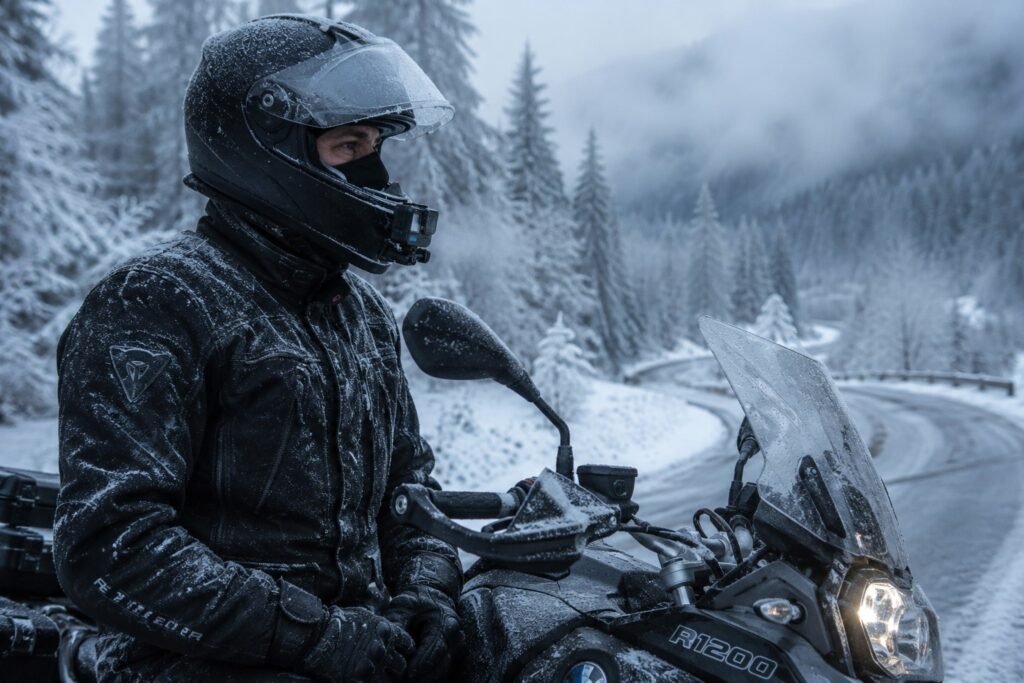
DJI’s Extreme Battery setup ran cooler in the same mounts and gave me a longer buffer before any thermal shutdown risk. For cold weather riding, DJI’s -4°F rating held up in testing better than I expected, while GoPro’s Enduro battery is solid but starts losing runtime noticeably once temps drop into the 30s.
So for GoPro vs DJI battery life cold weather riding specifically, if you tour in winter or ride at altitude where it’s genuinely cold, DJI has the edge right now.
On top of that, I noticed the overheating issue got worse the longer a ride went behind a full fairing windscreen. Meanwhile, adventure bike setups with more open airflow around the mount barely triggered thermal warnings on either camera. So mount placement matters here almost as much as the camera you pick for this GoPro vs DJI Osmo Action motorcycle comparison.
Mounting Systems & Real-World Usability with Gloves On
This part matters more than people expect. GoPro’s dual-prong folding legs are the industry standard, so you’ve got endless third-party mount options. That’s a real advantage if you already own a pile of GoPro accessories.
However, that mount is fiddly with thick winter gloves. The latch mechanism needs precision, and I fumbled it more than once trying to swap from chin mount to tail mount mid-ride.
DJI’s magnetic quick-release latch, on the other hand, is the best helmet mount camera setup I’ve used for quick swaps. Snap it on, snap it off, no latch to fight with. Switching between chest harness and tail mount takes seconds, even with gloves on.
That said, the magnetic system does mean you’ll want to double-check it’s fully seated before hitting the highway. I never had one pop loose, but the peace-of-mind factor with GoPro’s mechanical latch is real for high-speed riding.
For anyone still deciding on the best helmet mount camera GoPro vs DJI setup for their gear bag, I’d say it comes down to how often you swap positions mid-ride. If you’re constantly moving the camera between chin, chest, and tail, DJI saves you real time. If you set it once and leave it, GoPro’s mount is plenty durable, and this part of the GoPro vs DJI Osmo Action motorcycle decision becomes less important than it first seems.
Buying Guide: Which Camera Should You Actually Buy?
Let’s make this simple, because at the end of the day, your riding style should drive this decision, not the spec sheet. Think about how you actually ride, not how you wish you rode, and the choice usually sorts itself out fast.
Buy the GoPro Hero 13 if you want:
- The widest mount and accessory ecosystem on the market
- A camera with a longer track record on motorcycles specifically
- Slightly better vibration handling at moderate RPM on chin mounts
Ready to start recording your rides? Check today’s Amazon price on the GoPro Hero 13 before you buy

Buy the DJI Osmo Action 5 Pro if you want:
- Better low-light and night riding performance
- Longer battery life and better cold-weather endurance
- A faster, glove-friendly magnetic mounting system
- Cleaner native Bluetooth mic pairing for motovlogging
Want the better all-round motorcycle camera? Check the latest Amazon price for the DJI Osmo Action 5 Pro.

Neither camera is a bad choice. This comparison of GoPro Hero 13 vs DJI Osmo Action 5 Pro for motorcycle use really comes down to whether you prioritize mounting flexibility or all-around performance in tougher conditions.
Conclusion & Verdict
After six months of switching these cameras between three bikes, here’s where I landed. Track riders chasing the cleanest horizon lock and best vibration control will lean toward DJI’s RockSteady and HorizonSteady combo. Long-distance touring riders, especially anyone riding into cold weather or riding late, will appreciate DJI’s battery life and low-light edge too.
Daily motovloggers who already have a GoPro accessory collection, or who want the biggest third-party mount ecosystem, will still get great results from the Hero 13. It’s not falling behind — it’s just playing a different game.
So is DJI Osmo Action better than GoPro for motovlogging specifically? In my experience, yes, mostly because of the mic pairing and low-light performance. But for pure mounting versatility, GoPro still has the deeper bench. Either way, this GoPro vs DJI Osmo Action motorcycle comparison should give you enough to pick the camera that actually survives your kind of ride.